

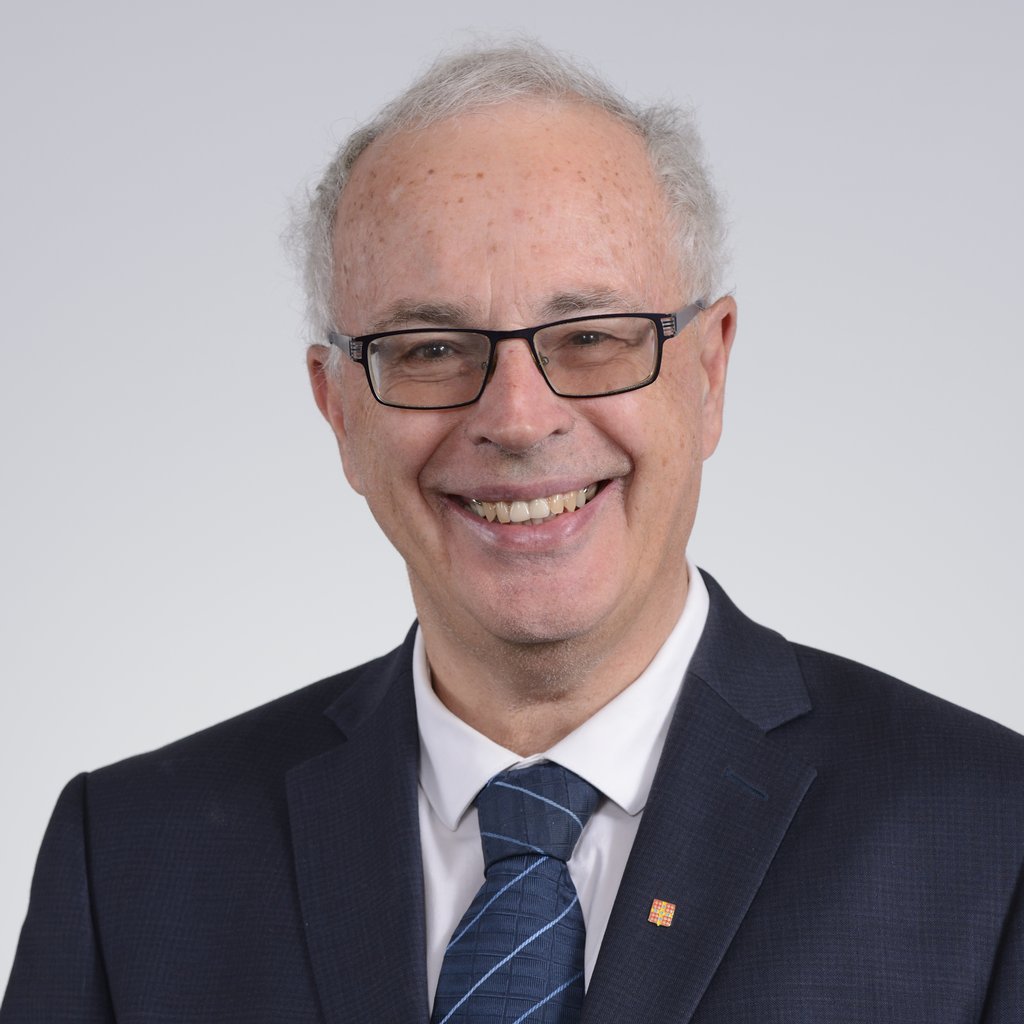
Dear Members of the Academy of Social Sciences,
I hope you are all well and wish you a wonderful year in 2026. I am writing to you from beautiful Québec City, near the great St. Lawrence River. Both have played important roles in various founding moments of Canada and continue today to shape the lives of the members of our federation.
In November 2025, I succeeded Barbara Neis as President of the Academy of Social Sciences. I would first like to express my deep appreciation for her work at the RSC and for her support in facilitating the transition process. She will continue to be involved, most notably as a member of the RSC Task Force on Knowledge System Resilience. I am pleased to uphold her commitment by overseeing the selection of the RSC Fellows and award recipients associated with our academy. As President of the Academy, I sit on the RSC Board of Directors and Council and also serve on the Governance and Ethics Committee.
Like my predecessor, I accepted my nomination in part because I was inspired by the work carried out by the RSC during the COVID-19 pandemic. The impressive breadth of expertise mobilized across a wide range of disciplines in response to the pandemic demonstrated the RSC’s ability to bring together its members and the broader community to address pressing challenges facing Canada and the world. As we all know in 2026, we have no shortage of challenges and issues to confront. Drawing on my first discipline, political science, I find the current rise of neo-imperialist and neo-obscurantist forces – both on our continent and elsewhere – particularly troubling. I am confident, however, that Canada, as a bilingual country and a benevolent yet complex federation, can play an important role in protecting the liberal international order grounded in the rule of law and human dignity. This order traces its roots to Greco-Roman antiquity, was further developed during the Western modern era, and gained renewed prominence in the aftermath of the Second World War. As a Quebecer, I am also convinced that our distinct national society can both flourish and contribute powerfully to the growth of today's Canada.
The RSC has recently adopted a new strategic plan, and I look forward to working toward its implementation under the leadership of our new President, Françoise Baylis, in collaboration with my colleagues who chair the Academy of Sciences (Robert Boily), the Academy of Arts and Humanities (James Grier), and the College (Audrey Moores). It will also be a pleasure to work with the new secretary of the Royal Society, Gary Slater, our new international Chair Linda Cardinal, and the new secretary of the Academy of Social Sciences, Catherine Beaudry from Polytechnique Montréal. In partnership with Catherine, I will try to prepare two issues of the Bulletin of the President of the Academy of Social Sciences before the end of 2026.
In 2025, the selection committees of the Academy of Social Sciences reviewed a total of 95 nominations in 2025, including 89 for Division 1 and 6 for Division 2. Of these, 23 nominations were selected for Division 1, and 3 for Division 2, representing an overall success rate of 27.4%. I would like to take this opportunity to thank the presidents and members of the selection committees for their hard work in 2025. Recognizing excellence within the RSC involves nearly 100 members each year, who serve on these committees, as well as the indispensable support of RSC staff. Our committees are currently reviewing the nominations for the 2026 competition.
The 2025 RSC Celebration of Excellence and Engagement (COEE) took place in Montréal from November 13 to 16, 2025, and was hosted by the Université de Montréal, HEC Montréal, and Polytechnique Montréal. It was a pleasure to connect with so many colleagues as we welcomed the incoming class of new RSC Fellows and College Members and celebrated the 2025 award recipients.
Honourees included Cindy Blackstock of the Academy of Social Sciences, recipient of the inaugural RSC Prize for Indigenous Engagement, in recognition of her tireless advocacy for the rights and well-being of Indigenous children, and Sean B. Rourke, the inaugural recipient of the RSC Eric Jackman Prize in the Human Behavioural and Social Sciences. On November 14, Dr. Rourke delivered a lecture showcasing his award-winning research, which focuses on removing healthcare barriers and expanding access to testing and care, particularly in the area of HIV.
I encourage you to visit the RSC website to learn more about RSC awards and to stay informed about award opportunities.
As always, if you have any questions or suggestions on how we might improve the work of the Academy of Social Sciences, or the RSC as a whole, I would be very pleased to hear from you.
Friendly and warm regards,
Guy Laforest, FRSC
President, RSC Academy of Social Sciences
laforestguy8@gmail.com