
Ce Sommet, le second organisé dans le cadre d’un Partenariat tri-académique regroupant la Société royale du Canada, la Royal Society Te Apārangi et l’Australian Academy of Science, a été dirigé par des membres autochtones de ces trois organisations.
Au cours de trois journées d’allocutions, de wānanga, d’activités culturelles et de tables rondes, des leaders intellectuels maoris et pasifikas notables ont discuté avec des experts des Premières Nations du Canada et d’Australie, notamment des membres de cinq académies savantes australiennes.
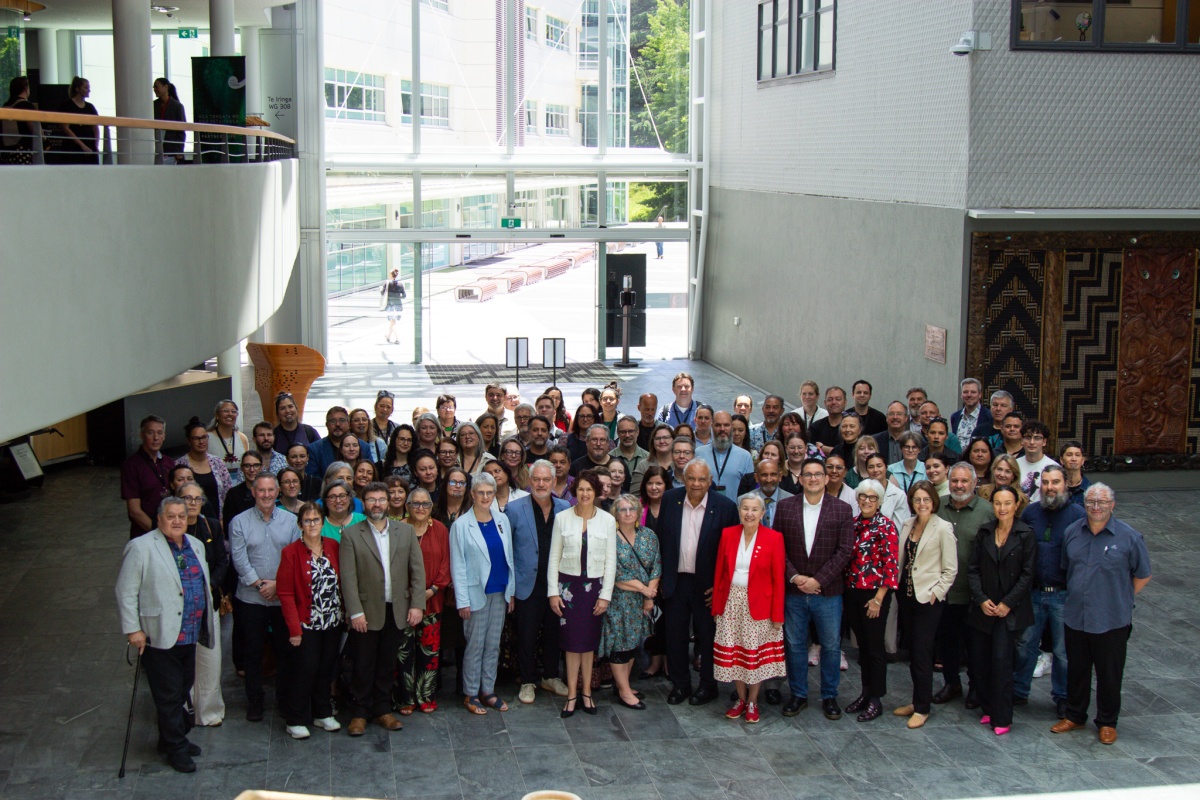
Photo : Les délégués de la Nouvelle-Zélande, de l’Australie et du Canada (source : la Royal Society Te Apārangi)
Les participants ont notamment abordé la nécessité d’abattre les obstacles et les iniquités qui entravent les étudiants et chercheurs autochtones du milieu universitaire, de partager le pouvoir décisionnel touchant les pratiques et les priorités de recherche, et d’élaborer des programmes de recherche qui sont axés sur les savoirs autochtones et qui traitent des défis importants auxquels sont confrontés les peuples autochtones.
Les éminents universitaires et détenteurs de savoirs autochtones ont relaté les expériences qu’ils ont vécues dans le milieu universitaire et ont présenté des recherches portant sur des sujets allant de l’étude des histoires, des cultures, des connaissances et des langues autochtones jusqu’à la gestion de l’environnement et aux systèmes juridiques traditionnels.
Ces universitaires et détenteurs de savoirs autochtones ont promu et dirigé des initiatives d’éducation et de recherche menées par, avec et pour les communautés autochtones, qui ont suscité un regain d’intérêt et une prise de conscience à l’égard des savoirs traditionnels au moyen du langage, d’activités culturelles et de créations artistiques. Ils ont exploré dans leurs travaux les systèmes de connaissances autochtones et se sont appuyés sur eux pour générer de nouvelles perspectives, telles que des méthodologies de recherche et des cadres éthiques basés sur les visions du monde et les valeurs traditionnelles.
À l’issue du Sommet, les délégués autochtones ont publié un communiqué exhortant les académies à soutenir une transformation du secteur de l’enseignement supérieur qui viserait à contrer le racisme structurel et les iniquités. Ils ont réclamé l’instauration d’un « paysage mondial de la recherche qui serait inclusif, respectueux et transformateur et qui accorderait aux peuples autochtones un rôle de partenaires à part entière et de leaders au regard de la recherche et de l’application des connaissances ».
Les président·e·s de la Société royale du Canada, de la Royal Society Te Apārangi et de l’Australian Academy of Science ont convenu avec les délégués de la nécessité de corriger les pratiques de recherche actuelles, qui ont jusqu’à maintenant contribué à la marginalisation, à la déformation et à l’appropriation des savoirs autochtones. Dans leur déclaration, ils ont réaffirmé leur engagement à travailler en partenariat avec les peuples autochtones afin de protéger le droit et la responsabilité de ces derniers de déterminer leurs propres programmes de recherche, d’explorer, de préserver et de développer leurs systèmes de connaissances traditionnels, de participer activement à la recherche et de bénéficier de ses applications et de ses résultats.
Le prochain sommet du Partenariat tri-académique se tiendra en 2026 et sera organisé par l’Australian Academy of Science et ses partenaires.
Consultez la page consacrée au sommet (en anglais) pour en savoir plus sur le programme de l’événement et les intervenants qui y ont figuré, et pour lire le communiqué adopté par les délégués et la déclaration des président·e·s des trois académies.