

Vous êtes ici
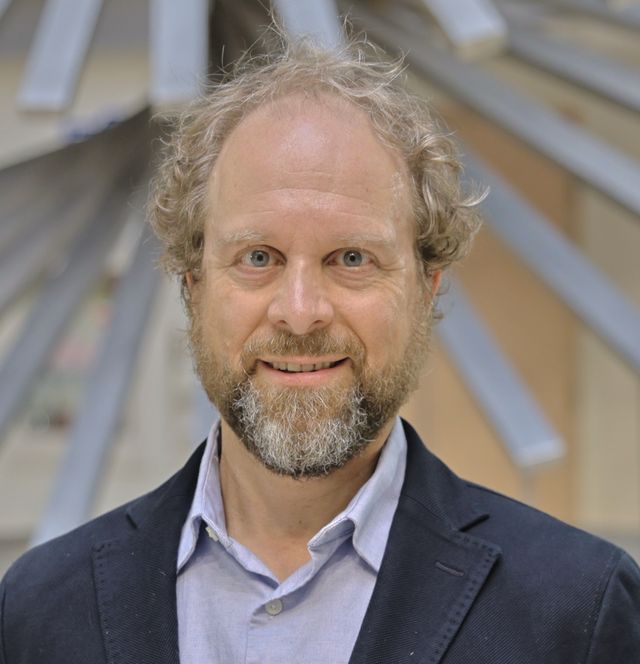
Prof. Brian Levine
Membre de la SRC, Academy of Social Sciences
Affiliation: Baycrest Academy for Research and Education
Induction Year: 2025
Learn more
Plus d'informations
Contact
Brian Levine is a clinician-scientist whose research has transformed the understanding of memory, thinking, and behaviour in the real world. In addition to advancing research on topics that were previously considered intractable, Dr. Levine has innovated practical solutions for people affected by cognitive impairment. His research has legitimized everyday memory and behaviour as a topic of scientific study and improved the lives of people who have experienced challenges in memory, thinking, and behaviour.
Brian Levine est un clinicien-chercheur dont les travaux ont révolutionné notre compréhension de la mémoire, de la pensée et du comportement humain dans le monde réel. En plus de faire progresser la recherche sur des sujets jusque-là considérés comme insondables, le Dr Levine a mis au point des solutions pratiques pour les personnes atteintes de troubles cognitifs. Ses recherches ont légitimé la mémoire et le comportement quotidiens en tant que sujets d’études scientifiques et ont amélioré la vie de nombreuses personnes qui ont des difficultés dans ces domaines.
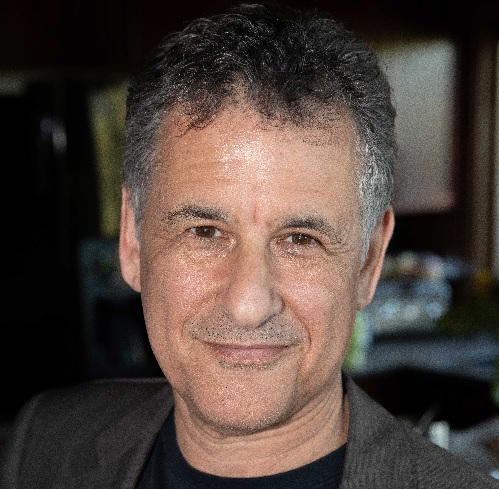
Dr. Daniel Levitin
Membre de la SRC, Academy of Social Sciences
Affiliation: McGill University
Keywords: Music and the Brain, Music Cognition, Neurosciences of Music, Productivity, Aging, Creativity, Rock music
Induction Year: 2013
Learn more
Plus d'informations
Contact
Daniel J. Levitin is recognized as a world leader in the psychology and neuroscience of music. He has made a number of vital and fundamental discoveries about the nature of musical memory, the neuroanatomical underpinnings of musical processing, and quantitative methods for analyzing musical data that have deeply influenced the field. In addition to his role as a rigorous scientist, he has had a profound impact on the public’s understanding of neuroscience, through numerous talks, public outreach programs, interviews, and best-selling books, demonstrating an unparalleled talent for communicating science in the public interest.
Daniel J. Levitin est reconnu mondialement comme expert en psychologie et en neuroscience de la musique. Ses découvertes fondamentales sur la nature de la mémoire musicale, sur les fondements neuro-anatomiques du traitement musical et sur les méthodes quantitatives d’analyse des données musicales ont eu de profondes répercussions dans son domaine de spécialité. En plus d’être un scientifique rigoureux, il a beaucoup contribué à faire connaître la neuroscience auprès du grand public grâce à ses nombreuses conférences, à ses multiples activités de vulgarisation, aux entrevues qu’il a accordées et aux ouvrages à succès qu’il a publiés. Il est un remarquable vulgarisateur scientifique.

Prof. Charles Levkoe
Membre du collège RSC
Affiliation: Lakehead University
Induction Year: 2022
Learn more
Plus d'informations
Contact
Charles Levkoe is a Canada Research Chair in Equitable and Sustainable Food Systems and Director of the Sustainable Food Systems Lab. His community engaged research uses a food systems lens to better understand the importance of, and connections between social justice, ecological regeneration, regional economies, and active democratic engagement. Charles studies the evolution of civil society networks that view the right to food as an essential part of more just sustainable futures.
Charles Levkoe est titulaire de la Chaire de recherche du Canada sur les systèmes alimentaires équitables et durables et directeur du Sustainable Food Systems Lab. Ses recherches communautaires adoptent l’optique des systèmes alimentaires pour mieux comprendre l’importance de la justice sociale, de la régénération écologique, des économies régionales et de la participation démocratique active ainsi que les liens qui existent entre ces domaines. Il étudie l’évolution des réseaux de la société civile qui considèrent le droit à l’alimentation comme un élément essentiel d’un avenir durable plus juste.

Mark Lewis
Membre de la SRC, Academy of Sciences
Affiliation: University of Alberta
Keywords: Mathematical Ecology, biological invasions, wildlife disease management, population spread, territorial pattern formation, global change, dynamical systems, applied mathematics, COVID-19, Covid-19, corona virus
Induction Year: 2015
Learn more
Plus d'informations
Contact
Updated July 6, 2015
LEWIS, Mark, Departments of Mathematical and Statistical Sciences and Biological Sciences, University of Alberta.
Mark Lewis, Canada Research Chair in Mathematical Biology, U Alberta, is a world leader in mathematical ecology who brings mathematical methods to bear on environmental questions, including biological invasions, wildlife disease, animal movement patterns and effects of climate change. He has made profound contributions to the basic science of applied mathematics, solving fundamental questions about nonlinear dynamical systems applied to ecological problems that have had lasting impact on public policy.
Updated July 6, 2015
Mark Lewis, Chaire de recherche du Canada en biologie mathématique, U de l'Alberta, est un chef de file mondial en matière d'écologie mathématique qui apporte des méthodes mathématiques pour porter sur les questions environnementales, y compris les invasions biologiques, les maladies de la faune sauvage, les habitudes de déplacement des animaux et des effets du changement climatique. Il a apporté des contributions profondes à la science fondamentale des mathématiques appliquées, de résoudre des questions fondamentales sur les systèmes dynamiques non linéaires appliquées aux problèmes écologiques qui ont eu un impact durable sur la politique publique.

Prof. Stephen P. Lewis
Membre du collège RSC
Affiliation: University of Guelph
Keywords: Self-injury, mental health, participatory action research, advocacy, outreach, recovery
Induction Year: 2024
Learn more
Plus d'informations
Contact
Stephen Lewis is a Research Leadership Chair and Professor in
the Department of Psychology at the University of Guelph. His
research program centres people’s lived experience of nonsuicidal
self-injury and related mental health difficulties. An
internationally renowned researcher and advocate, he challenges dominant
theoretical and clinical paradigms with a resulting impact reaching far beyond
academia to shape social media policy, create practical training, and empower
individuals to work toward recovery.
Stephen Lewis est titulaire d’une chaire de recherche et
professeur au département de psychologie de la University of
Guelph. Son programme de recherche porte sur l’expérience
vécue par les gens de l’automutilation non suicidaire et des
difficultés de santé mentale qui en découlent. Chercheur et défenseur de
renommée internationale, il remet en question les paradigmes théoriques
et cliniques dominants, ayant des conséquences bien au-delà du monde
universitaire, pour façonner la politique en matière de médias sociaux, créer
des formations pratiques et donner aux individus les moyens de travailler à
leur rétablissement.

Prof. Diana Lewis
Membre du collège RSC
Affiliation: University of Guelph
Induction Year: 2025
Learn more
Plus d'informations
Contact
Diana Lewis is a member of Sipekne’katik First Nation and Associate Professor/Canada Research Chair (Tier II), Indigenous Environmental Health Governance, Department of Geography, Environment & Geomatics at the University of Guelph. Dr. Lewis is Director of the IndigenERA Lab. Her research focuses on promoting the understanding of Indigenous worldviews and advocating for Indigenous-led approaches to give communities baseline health data, and sovereignty over the data in environmental decision-making.
Diana Lewis est membre de la Première Nation Sipekne’katik et professeure agrégée et titulaire d’une Chaire de recherche du Canada (niveau II) en gouvernance autochtone de la santé environnementale au Département de géographie, d’environnement et de géomatique de la University of Guelph. Elle est directrice du laboratoire IndigenERA. Ses recherches visent à promouvoir la compréhension des visions du monde autochtones et les approches dirigées par des Autochtones afin de fournir aux communautés des données de référence sur la santé et la souveraineté sur ces données dans la prise de décisions liées à l’environnement.
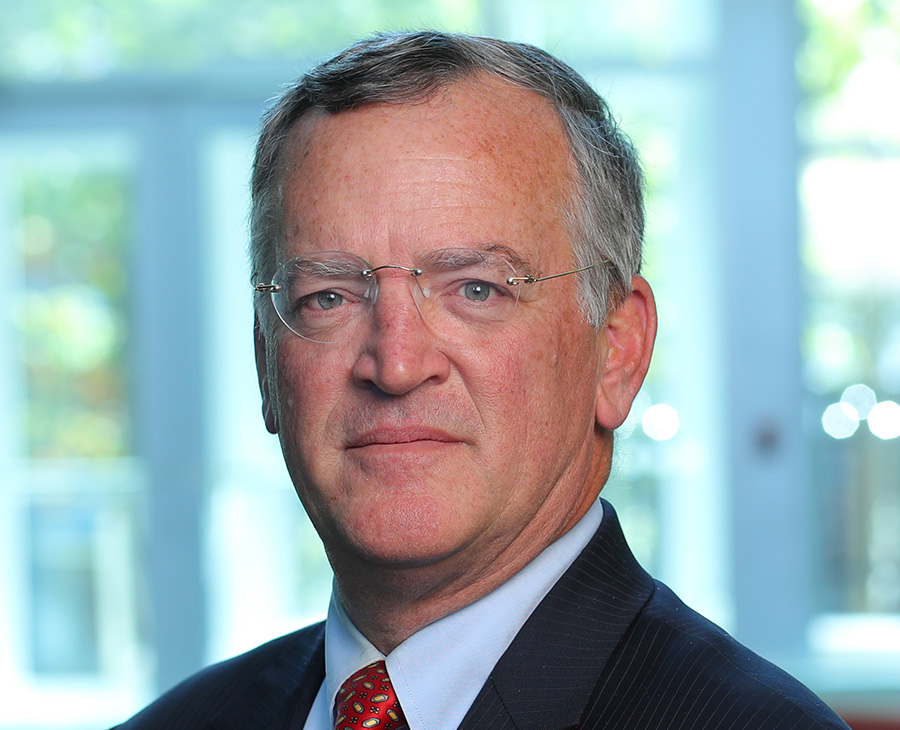
Prof. Marlon Lewis
Membre de la SRC, Academy of Sciences
Affiliation: Dalhousie University
Keywords: Satellite oceanography, primary production, light in the oceans, remote sensing
Induction Year: 2018
Learn more
Plus d'informations
Contact
LEWIS, Marlon - Department of Oceanography, Dalhousie University
By combining insightful theory with ground-breaking measurements of light in the oceans, Professor Marlon Lewis has pioneered our ability to remotely observe, describe and understand pelagic ecosystems. Additionally, his leadership of the development of satellite oceanography and its commercialization has substantially furthered ocean observation technology. Professor Marlon Lewis is the very model of an influential innovator and a preeminent interdisciplinary oceanographer.
LEWIS, Marlon - Department of Oceanography, Dalhousie University
En combinant une théorie avec des mesures novatrices de la lumière dans les océans, le professeur Marlon Lewis a été un pionnier dans notre capacité à observer, décrire et comprendre les écosystèmes pélagiques. En outre, sa direction du développement de l’océanographie par satellite et de sa commercialisation a considérablement amélioré la technologie de l’observation des océans. Le professeur Marlon Lewis est le modèle même d’un innovateur influent et d’un océanographe interdisciplinaire de premier plan.
Dr. Jane Lewis
Membre de la SRC, Academy of Social Sciences
Affiliation: London School of Economics
Keywords: Family policy, gender and social policy, history of social policy
Learn more
Plus d'informations
Contact
Jane Lewis has made major contributions to the literatures in two fields, the analysis of contemporary public health and welfare policy in Europe and North America, and the history of social welfare, motherhood, marriage and family in twentieth century Britain. Her Canadian work on family adaptations to offshore oil employment, and community medicine in Ontario and Quebec is a key part of her compelling and formative rethinking of the relationships among state interventions, gender and age hierarchies and class differences in households and communities. Her current research on the gendering of European welfare regimes and the history of British and North American social work continues her admirable pattern of simultaneous engagement in pointed and effective contemporary policy analysis and finely textured and original retrospective research.
Prof. Jason Lewis
Membre de la SRC, Academy of the Arts and Humanities
Affiliation: Concordia University
Induction Year: 2021
Learn more
Plus d'informations
Contact
Professor Jason Edward Lewis’ multidisciplinary research and creative practice has been central to developing Indigenous media art in Canada and worldwide, generating vital conversations at the intersection between Indigenous cultures and computational technologies. His outstanding contributions comprise scholarly writing, art making and technology research, as well as his leadership of the Initiative for Indigenous Futures and his co-founding of the Indigenous Futures Research Centre.
Prof. Jason Edward Lewis, ses recherches multidisciplinaires et sa pratique créative ont joué un rôle central dans le développement de l'art médiatique autochtone au Canada et dans le monde, générant des conversations essentielles à l'intersection entre les cultures autochtones et les technologies informatiques. Ses contributions exceptionnelles comprennent l'écriture scientifique, la création artistique et la recherche technologique, ainsi que la direction de l'Initiative for Indigenous Futures et sa co-fondation de l'Indigenous Futures Research Centre.
Dr. David Ley
Membre de la SRC, Academy of Social Sciences
Affiliation: The University of British Columbia
Keywords: Inner city, immigration, gentrification, landscapes of consumption, social polarization
Learn more
Plus d'informations
Contact
David Ley, Department of Geography, The University of British Columbia, is one of the most distinguished of contemporary social geographers and one of the most astute analysts of the Canadian city. Author of five books and of some seventy-five articles, he is among the most internationally known and respected of Canadian geographers. His work deals with the changing social fabric of the inner city and also raises important questions about representation, culture, and politics, and about the ways in which we know and enframe space. He has always balanced rich empirical content, practical relevance, and theoretical insight. His many publications constitute a remarkable record of an able mind long preoccupied with the social spaces of cities and with our ways of understanding them.
Colin Leys
Membre de la SRC, Academy of Social Sciences
Affiliation: Queen's University
Learn more
Plus d'informations
Contact
Colin Leys, since 1975 Professor of Political Science at Queen's is also joint Co-ordinator of the Programme of Studies in National and International Development. Previously he had taught at Oxford, Sussex, Sheffield and a number of African universities. In 1959 he attracted widespread attention when he revised, in an article in "Political Studies", the heretofore sacrosanct 'law' of Duverger about the relation between electoral and party systems. His interest later shifted to Africa and the developing world generally. In a number of seminal books and articles he illumined (and continues to illumine) political phenomena in the third world. Working in a modern political economy context, he has been exceptionally successful in relating economic and socio-political aspects of human experience. His most recent book ("Politics in Britain") is an original and innovative application of the political economy approach to the United Kingdom.
Prof. Kevin Leyton-Brown
Membre de la SRC, Academy of Sciences
Affiliation: The University of British Columbia
Induction Year: 2023
Learn more
Plus d'informations
Contact
Kevin Leyton-Brown is a professor of Computer Science and a Distinguished University Scholar at the University of British Columbia, a Canada CIFAR AI Chair at the Alberta Machine Intelligence Institute and an associate member of the Vancouver School of Economics. He received his PhD and M.Sc. from Stanford University (2003; 2001) and B.Sc. from McMaster University (1998). He studies artificial intelligence, mostly at the intersection of machine learning and (1) the design and operation of electronic markets and (2) the design of heuristic algorithms.
Kevin Leyton-Brown est professeur d'informatique et chercheur au sein de University of British Columbia, titulaire d'une chaire CIFAR Canada en intelligence artificielle au sein de l’Alberta Machine Intelligence Institute et membre associé de la Vancouver School of Economics. Il est titulaire d'un doctorat et d'une maîtrise en sciences de la Stanford University (2003 ; 2001) et d'une licence en sciences de la McMaster University (1998). Il étudie l'intelligence artificielle, principalement à l'intersection de l'apprentissage automatique et (1) de la conception et du fonctionnement des marchés électroniques et (2) de la conception d'algorithmes heuristiques.
Jing Li
Membre du collège RSC
Affiliation: Simon Fraser University
Keywords: international investment strategies; emerging-market firms; foreign direct investments; innovation; int'l joint ventures; real options theory
Induction Year: 2016
Learn more
Plus d'informations
Contact
Jing Li, Canada Research Chair in Global Investment Strategy at SFU, is an emerging leader in strategic management. Her research on where and how firms from emerging markets invest, and what factors contribute to successful global investment, is relevant to strengthening Canada’s innovation and investment environments and the performance of firms in an open market. She is senior editor of Asia Pacific Journal of Management and Management and Organizational Review.
Jing Li, titulaire de la Chaire de recherche du Canada sur les stratégies internationales d’investissement à la SFU, est une chef de file émergente en gestion stratégique. Sa recherche sur l’endroit et la façon dont les entreprises des marchés émergents investissent et les facteurs qui contribuent à un investissement mondial couronné de succès est pertinente pour consolider les environnements d’innovation et d’investissement du Canada, ainsi que le rendement des entreprises dans un marché libre. Elle est la rédactrice en chef de l’ « Asia Pacific Journal of Management » et de « Management and Organizational Review ».
Prof. Peter Li
Membre de la SRC, Academy of Social Sciences
Affiliation: University of Saskatchewan
Keywords: Immigration, Chinese Canadian, Race, Ethnicity
Induction Year: 2009
Learn more
Plus d'informations
Contact
Peter Li, one of the most accomplished sociologists in North America, is a pioneering scholar of the Chinese in Canada. His highly original theoretical and empirical writings on the Chinese, immigration, and race relations have profoundly influenced both academe and the world of public policy.
------------------
LI, Peter S. –Department of Sociology, University of Saskatchewan
Peter Li, one of the most accomplished sociologists in North America, is a pioneering scholar of the Chinese in Canada. His highly original theoretical and empirical writings on the Chinese, immigration, and race relations have profoundly influenced both academe and the world of public policy. His work has been indispensable in several areas of sociology, and has served as the basis of the Chinese Head Tax Redress movement. His influential writings on immigration explain many aspects of immigrant life, including self-employment, entrepreneurship, economic integration, and racial inequality. He is the author of over seventy academic papers and seven books.
Dr. Chao-Jun Li
Membre de la SRC, Academy of Sciences
Affiliation: McGill University
Keywords: green chemistry, organic synthesis, organic chemistry
Induction Year: 2012
Learn more
Plus d'informations
Contact
LI, Chao-Jun - Department of Chemistry, McGill University
Chao-Jun Li is an international leader in Green Chemistry—the vitally important field involving the discovery and development of environmentally benign chemicals and chemical processes. He has received both the US Presidential Green Chemistry Challenge Award and the Canadian Green Chemistry and Engineering Award on the subject. In 2007, the Canadian Chemical News listed his research as “one of the most important chemistry discoveries of the past century in Canada”.
LI, Chao-Jun - Département de chimie, Université McGill
Chao-Jun Li est un leader international en chimie verte, ce domaine d’une importance vitale qui vise la découverte et le développement de composés et de processus chimiques inoffensifs pour l’environnement. Il a mérité et le prix Presidential Green Chemistry Challenge Award du président des États-Unis et le prix Canadian Green Chemistry and Engineering Award. En 2007, la revue Canadian Chemical News, a qualifié les résultats de ses travaux de « l’une des plus importantes découvertes de la chimie au cours des cent dernières années au Canada ».

Tania Li
Membre de la SRC, Academy of Social Sciences
Affiliation: University of Toronto
Induction Year: 2016
Learn more
Plus d'informations
Contact
Updated July 27, 2015
LI, Tania, Faculty of Arts & Science, University of Toronto
University of Toronto socio-cultural anthropologist Professor Tania Li has established an international reputation for pioneering work that is characterized by original theorizations, strong empirical research, and powerful inter-disciplinary boundary-crossing. Writing about the uneven effects of economic development across Indonesia, she challenges the assumption that economic growth brings universal stability and prosperity. Her insightful scholarship has influenced policy and practice not only in Asia, but also in Africa and Latin America.
Updated, translated August 28 by RSC
Professeur d’anthropologie socio-culturelle à l’University of Toronto, Tania Li s’est forgé une réputation internationale pour ses travaux pionniers caractérisés par des théorisations originales, des recherches empiriques, et le dépassement des limites inter-disciplinaires. Dans ses ouvrages sur les effets inégaux du développement économique en Indonésie, elle remet en question l’hypothèse selon laquelle la croissance économique apporte stabilité et prospérité universelles. Ses recherches instructives ont influencé les politiques et les pratiques non seulement en Asie, mais également en Afrique et en Amérique latine.
Prof. Jonathan Jun Jun Li
Membre de la SRC, Academy of Sciences
Affiliation: University of Waterloo
Induction Year: 2023
Learn more
Plus d'informations
Contact
Jonathan Jun Li is an internationally recognized leader in pointgrammetry and remote sensing. He pioneered AI-based theory and technology for creating high-definition maps using mobile laser scanning point clouds and earth observation images. This breakthrough research has advanced geomatics and 3D vision, leading to commercialization, and continues to shape the development of autonomous vehicles and digital twin cities. He is a fellow of Canadian Academy of Engineering, Engineering Institute of Canada, and IEEE.
Jonathan Jun Li est un chef de file reconnu sur le plan international dans le domaine de la photogrammétrie et de la télédétection. Il est à l'origine d'une théorie et d'une technologie basées sur l'IA pour créer des cartes haute définition à partir de nuages de points obtenus par balayage laser mobile et d'images d'observation de la terre. Cette recherche révolutionnaire a fait progresser la géomatique et la vision en 3D, menant à la commercialisation, et continue de façonner le développement des véhicules autonomes et des villes jumelles numériques. Il est membre de l'Académie canadienne du génie, de l'Institut canadien des ingénieurs et de l'IEEE.
Xing-Fang Li
Membre de la SRC, Academy of Sciences
Affiliation: University of Alberta
Keywords: Analytical and Environmental Chemistry and Toxicology
Induction Year: 2021
Learn more
Plus d'informations
Contact
Xing-Fang Li is an internationally recognized expert in analytical chemistry and water research. Her innovative techniques enabled ultrasensitive detection of environmental contaminants, microbial pathogens, and biomolecular interactions. Her discovery of new classes of water disinfection byproducts, of toxicological significance, opens a vital new direction of research. Her patented technological innovations and research findings contribute greatly to public health protection in Canada and the world.
Xing-Fang Li est une experte reconnue sur le plan international dans le domaine de la chimie analytique et de la recherche hydrologique. Ses techniques novatrices ont permis la détection ultrasensible de contaminants environnementaux, d'agents pathogènes microbiens et d'interactions biomoléculaires. Sa découverte de nouvelles classes de sous-produits de désinfection de l'eau, ayant une importance toxicologique, ouvre une nouvelle perspective de recherche essentielle. Ses innovations technologiques brevetées et ses travaux contribuent grandement à la protection de la santé publique au Canada et dans le monde.
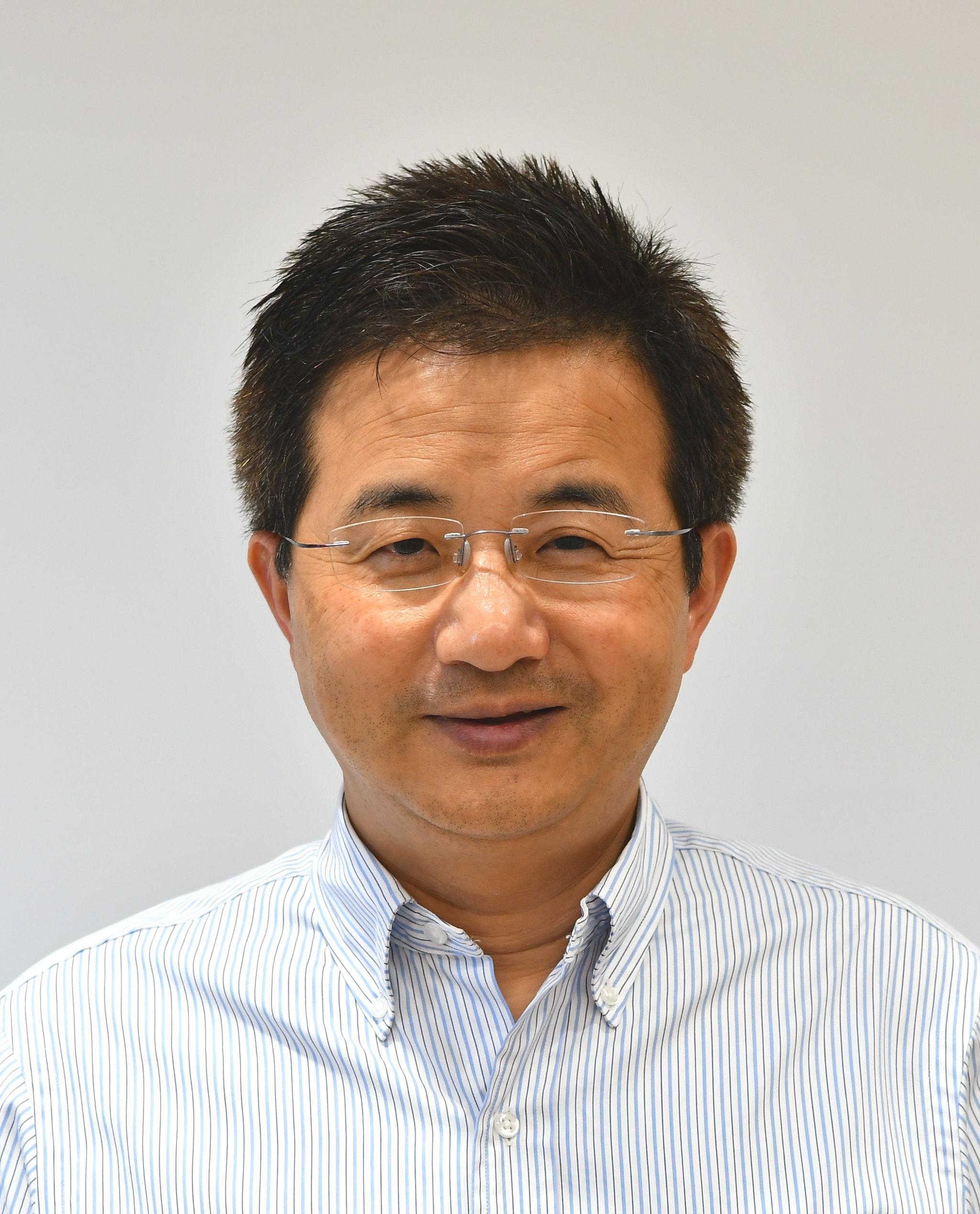
Prof. Liang Li
Membre de la SRC, Academy of Sciences
Affiliation: University of Alberta
Keywords: analytical chemistry mass spectrometry metabolomics proteomics
Induction Year: 2019
Learn more
Plus d'informations
Contact
LI, Liang – Department of Chemistry, University of Alberta
Liang Li is a Canada Research Chair in Analytical Chemistry. He is best known for developing ground-breaking techniques for advancing proteomics and metabolomics research using mass spectrometry. He is a pioneer in creating metabolomics tool for comprehensive analysis of small molecules with transformational impact in disease biomarker discovery and biology studies. His innovative analytical tools, embodied in commercial products, advance the life sciences.
Liang Li est titulaire d’une chaire de recherche du Canada en chimie analytique. Il est surtout connu pour le développement de techniques révolutionnaires ayant permis l’avancement de la recherche en protéomique et métabolomique par spectrométrie de masse. Il est un des pionniers du développement d’outils pour l’analyse globale des petites molécules ayant des impacts transformationnels pour la découverte de biomarqueurs de maladies et pour les études biologiques. Ses outils analytiques innovants, dont la plupart sont commercialisés, font progresser des sciences de la vie.
Prof. Ming Li
Membre de la SRC, Academy of Sciences
Affiliation: University of Waterloo
Keywords: Kolmogorov complexity, algorithms, bioinformatics, learning theory, computational complexity
Learn more
Plus d'informations
Contact
Long Citation
Dr. Li is a leading expert on Kolmogorov complexity, the dominant modern theory of randomness and information. His work has led to a new method for proving lower bounds and analyzing average-case complexity of algorithms, and to the solution of a number of long standing major open questions in computer science. Dr. Li is also an influential international leader in the development of bioinformatics algorithms and software. He and his coauthors have produced theorems, algorithms, and proofs that are included in major computational biology books, as well as software packages used widely.
Short Citation
Ming Li is a leading expert on Kolmogorov complexity. His work has led to a new method for proving lower bounds and analyzing average-case complexity of algorithms and to the solution of a number of long standing major open questions in computer science. He is an influential international leader in the development of bioinformatics algorithms and software who, along with his coauthors, has produced theorems, algorithms, and proofs that are included in major computational biology books and software packages used widely.
Prof. Xia Li
Membre du collège RSC
Affiliation: Concordia University
Keywords: Lithium batteries, solid-state batteries, synchrotron radiation, operando characterization
Induction Year: 2024
Learn more
Plus d'informations
Contact
Xia Li is an Associate Professor of Chemical and Materials
Engineering, Concordia University Research Chair in high-energy
rechargeable batteries, and Associate Director of the Concordia
Collaborative Centers on Energy and its Transition (C2ET). Dr.
Li’s research focuses on developing advanced materials for energy storage
devices such as lithium-/sodium-based batteries and solid-state batteries, with
the goal of understanding the synthesis-structure-performance relationship
and applying that fundamental understanding to new battery technologies.
Xia Li est professeure agrégée de génie chimique et des
matériaux, titulaire de la chaire de recherche de la Concordia
University sur les batteries rechargeables à haute énergie et
directrice adjointe du Concordia Collaborative Centers on
Energy and its Transition (C2ET). Les recherches de Prof. Li portent sur le
développement de matériaux avancés pour les dispositifs de stockage
d’énergie tels que les batteries à base de lithium/sodium et les batteries
à l’état solide, dans le but de comprendre la relation synthèse-structureperformance
et d’appliquer cette compréhension fondamentale à de
nouvelles technologies de batteries.
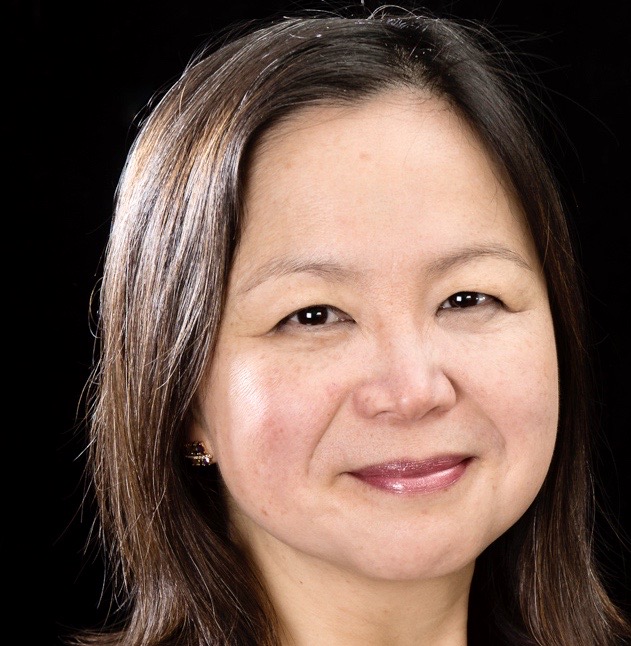
Prof. Kai Li
Membre de la SRC, Academy of Social Sciences
Affiliation: The University of British Columbia
Induction Year: 2022
Learn more
Plus d'informations
Contact
Kai Li is the world’s leading expert in empirical corporate finance research. Her groundbreaking critical analysis of corporate governance and innovation has transformed research on executive compensation design, shareholder monitoring, and corporate innovation. Her research on human capital and technological synergies in corporate takeovers has profound policy implications for fostering creative breakthroughs, while her pioneering approach to measuring organizational cultures has reinvigorated research on their influence on business decision-making.
Kai Li est la plus éminente spécialiste au monde de la recherche empirique sur la finance d’entreprise. Son analyse critique avant-gardiste de la gouvernance et de l’innovation des entreprises a transformé la recherche sur la conception de la rémunération des dirigeants, la surveillance des actionnaires et l’innovation des entreprises. Ses recherches sur le capital humain et les synergies technologiques dans l’acquisition d’entreprises ont eu de profondes répercussions sur les politiques visant à encourager les percées créatives, tandis que son approche novatrice en matière de mesure des cultures organisationnelles a revigoré la recherche sur leur influence sur la prise de décision des entreprises.
Prof. Eric Li
Membre du collège RSC
Affiliation: The University of British Columbia
Induction Year: 2022
Learn more
Plus d'informations
Contact
Eric Li is an Associate Professor and Principal’s Research Chair (Tier 2) in Social Innovation for Health Equity and Food Security at the University of British Columbia – Okanagan Campus. His research employed an interdisciplinary and community-based approach to addressing wicked problems such as health inequity and food insecurity. He actively engages trainees at all levels (undergraduate to post-doctoral) to co-develop innovative and community-centered solutions and initiatives to tackle societal and system-wide challenges.
Eric Li est professeur agrégé et titulaire d’une Chaire de chercheur principal (niveau 2) en innovation sociale pour l’équité en santé et la sécurité alimentaire au campus Okanagan de l’Université de la Colombie-Britannique. Dans ses recherches, il a utilisé une approche interdisciplinaire et communautaire pour s’attaquer à des problèmes complexes comme l’inégalité en santé et l’insécurité alimentaire. Il fait activement participer des stagiaires de tous niveaux (du premier cycle aux études postdoctorales) à l’élaboration de solutions et d’initiatives communautaires innovantes afin de relever des défis sociétaux et systémiques.
Dr. Ren-Ke Li
Membre de la SRC, Academy of Sciences
Affiliation: University of Toronto
Keywords: Medical Research, Cardiovascular Science
Induction Year: 2024
Learn more
Plus d'informations
Contact
Dr. Ren-Ke Li is a Senior Scientist at University Health Network and a Professor in the Department of Surgery at University of Toronto. He is the Canadian Research Chair in Cardiac Regeneration (Tier-1) and Fellow of Canadian Academy of Health Sciences. His pivotal contributions include discovering stem cell therapy for cardiac regeneration and developing conductive biomaterials to treat arrhythmia. He has published over 270 papers and has four granted patents.
Prof. Ren-Ke Li est maître de recherches au sein du University Health Network et professeur au département de chirurgie de l’Université de Toronto. Il est titulaire de la chaire de recherche du Canada sur la régénération cardiaque (niveau 1) et membre de l’Académie canadienne des sciences de la santé. Ses contributions essentielles comprennent la découverte de la thérapie par cellules souches pour la régénération cardiaque et le développement de biomatériaux conducteurs pour traiter l’arythmie. Il a publié plus de 270 articles et a obtenu quatre brevets.