“Science is one of the few converging forces in a fragmenting world. Our collaborations build trust across borders and political divides, often over decades rather than electoral cycles. At a time when multilateral cooperation is under pressure, science can help keep channels of dialogue open, build bridges, and bring countries together around shared interests”.
This statement by the new president of the International Science Council (ISC), Prof. Robbert Dijkgraaf, in his inaugural address at the recent ISC Midterm Members’s Meeting in Beijing (October 2026), is inspiring. It highlights the need for collective action among science organizations.
The ISC was created in 2018. The International Council for Science (ICSU) and the International Social Science Council (ISSC) merged to become the only international organisation that encompasses scientists from the natural sciences, the social sciences and the humanities. It would be difficult to exaggerate the wealth and diversity of the expertise it represents.
The RSC has been centrally involved with the ISC since 2021 when Prof. Françoise Baylis (FRSC) was elected an Ordinary Member of the Governing Board (2021-2026) and served as Vice-Chair of the Standing Committee for Freedom and Responsibility in Science (2022-2026). Prof. S. Karly Kehoe (FRSC) is an ongoing member of the Standing Committee for Freedom and Responsibility in Science (2022-2027).
Looking ahead, I have just been elected an Ordinary Member of the ISC Governing Board for the next four years. As well, Dr. Rémi Quirion (FRSC) has been elected Vice-President for Finance, Compliance and Risk.
To date, RSC Fellows have made important contributions to several ISC Statements including the statement on “The right to participate in and benefit from science” which provides a clear “interpretation of ‘the right to participate in and benefit from science’ provides a clear framework for understanding the right to science, emphasizing its application in research, policy, and global access to scientific knowledge. It clarifies the obligations, opportunities, and responsibilities in ensuring universal access to science, fostering global dialogue to shape a more inclusive and sustainable future.”
There is also the recent Beijing Science Declaration to which I contributed as a member of the drafting team. This is a strong statement that sets out 18 principled commitments, from defending scientific freedom and establishing shared norms for AI in research, to rebuilding public trust and securing a stronger role for science in the next global sustainability agenda.
More generally, the breadth of scholarship within the RSC, means that we are among the few academies in a position to contribute a transdisciplinary perspective on positions adopted by the ISC.
Because of the key place of Canada’s Indigenous peoples, we are well placed to underline the critical importance of the contribution of Indigenous knowledge and research methodologies to science.
Because of our traditions of scientific inquiry, we can raise an awareness of the need to bring scientific research closer to the populations who are best placed to inform it and benefit from it.
Because of the awareness in Canada of the considerable asymmetries concerning access to research networks and shared research infrastructure and results within our own country and in the rest of the world, we are well positioned to promote an inclusive view of science in which the voices of marginalised individuals, communities and populations are also heard, to promote science literacy and ensure that science becomes a global good and shared endeavour on a global scale.
Finally, because of the concrete experience of Canada over decades with organisations such as the International Development Research Centre (IDRC), we are well aware of the need to promote equitable capacity sharing and strengthening of all research institutions, ensuring that developing regions are not merely sites for data collection, but co-leaders in data analysis and intellectual property ownership.
In parallel, the ISC has much to contribute to the RSC. The ISC brings together 250 organisations thereby facilitating contacts and exchanges with high level individuals, scientific associations and networks from around the world. There are representatives of international scientific organisations devoted to the practice and promotion of science disciplines or areas of science, as well as representatives of regional scientific organisations including academies of science, research councils or analogous not-for-profit scientific bodies representing a broad spectrum of scientific fields or disciplines in a country, region or territory. Finally, there are representatives of other national, regional or global organisations primarily composed of active scientists, including young scientific organisations not represented in the previous groups.
Similarly, much can be learned from ISC’s current work on Indigenous knowledge which at present includes a Survey on Indigenous Knowledge Systems carried out by the organisation’s Regional Focal Point for Asia and the Pacific.
Among other areas of importance are the ISC’s work on gender equality, Open Data and AI, just to mention a few.
The role of science is at a critical turning point. The ISC provides a unique opportunity for the RSC to influence cutting edge debates and to do so in an international forum which has no equivalent in the world.
Bonnie Campbell D. Phil. FRSC, FISC
Professeure émérite
Faculté de Science politique et de droit
Université du Québec à Montréal
About the Author
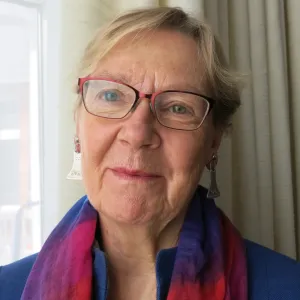
Dr. Bonnie Campbell is Professor Emeritus in Political Economy at the Faculty of Political Science and Law, Université du Québec à Montreal. Her research concerns international development, social exclusion and poverty, and governance issues in the extractive sector in West Africa. She has worked with international organisations including the United Nations Economic Commission for Africa (UNECA) on the revision of mining regimes in Africa. Professor Campbell’s research emphasises policy-oriented results and has been funded by various public organisations including the International Development Research Centre of Canada. She is a Member of the International Committee of the Royal Society of Canada and an Ordinary Member of the Governing Board of the International Science Council.