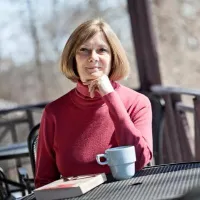
Whose stories become part of history – and whose are left out? Joan Sangster has spent more than four decades asking questions like these, examining the experiences of working women, labour activists, feminists, and women whose lives brought them into contact with the law. A Fellow of the Royal Society of Canada and Vanier Professor Emeritus at Trent University, Sangster is the author of eight monographs, including the award-winning Demanding Equality: A History of Canadian Feminism, Earning Respect: The Lives of Working Women in Small-Town Ontario, and The Iconic North: Cultural Constructions of Aboriginal Life in Postwar Canada.
For Women’s History Month, we spoke with Sangster about how women’s history has been shaped, what we can learn by asking new questions of the past, and why there is still so much more of the story to uncover.
Q: Please introduce yourself and tell us a bit about your work.
A: I am a feminist labour historian, focusing on women’s work, the labour movement, feminist organizing and left-wing mobilizations, as well as women’s encounters with the law. My research and writing have evolved, shifted, and changed over time, taking on new subjects and questions, but a thread for me has been women’s day-to-day experiences, social inequalities, and how people have mobilized to challenge exploitation and oppression, trying to imagine and chart a different future for themselves, their families and society as a whole.
Q: What first sparked your interest in history, and what led you to focus on women’s history more broadly?
A: When I was an undergraduate in the 1970s, there were no courses on women’s or labour history available to me – indeed to most history students. Yet, my fascination with social history and my own experiences led me to those topics as these areas of research were taking off and taking shape – really exploding -– in Canada in the late 1970s.
I took some time after an undergraduate degree in history, working and traveling, and returned to graduate school with new academic and political questions in the forefront of my mind: about the history of women’s paid labour, unions, feminist and socialist movements. Academic questions were intertwined with the politics of the time as a renewed women’s movement, left-wing, labour and other social movements were a vital part of my experience and the scene around me.
Q: Why are women’s stories so often left out of our history books – and what does that tell us about who gets to decide what counts as history?
A: A few historians had written about women’s lives before the 1960s and 1970s, but there was an explosion of new interest at that time, and a desire to ask exactly WHY women were so absent in written Canadian history. An exciting and dynamic confluence of politics, social change, and new ideas that accompanied women’s movements, created an entirely new area of research.
Canadian history, like many other national histories, had been largely dominated by economic and political topics, including political parties, leaders, and macro-economic developments. It was ‘history from above’ in one sense, while a new cohort of historians of women, working people, social movements, and Indigenous peoples were posing questions about power relations, social structures, and how ordinary people lived, worked – and resisted their various oppressions.
These new questions were shaped by two other factors: a partial democratization of higher education resulting in more young women and working-class Canadians attending university, anxious to know about their pasts, and second, feminist, labour, social and socialist movements which encouraged us to ask questions about the history of inequality, resistance and social change. These emerging historians hoped to alter the contours of the entire story of Canada, not simply add a few footnotes here and there.
Q: You’ve written that understanding the past can shape how people imagine their present and future. Why does that matter for women today?
A: When starting my studies decades ago, I felt that validating the fact that women had a history that was important, interesting, and instructive, was essential to feminism. A group without an acknowledged past is limited in how they can imagine their present and future.
Of course, histories of women, work, the law and politics also show us how complicated that past really was. Women’s and gender history cannot be written in a singular or celebratory mode: we need to understand the differences between women’s experiences based on class, race and colonialism, to note only a few things. We need to understand why and how they organized, how ideas and strategies changed over time, how groups struggled, argued and changed. The women’s movement was always collection of diverse political voices, never a singular entity singing in harmony! Women had very different understandings of what a better future for them, their families and communities would look like. Unpacking those differences makes women’s and gender history all the more interesting.
This is not unlike contemporary political life. We need to understand our histories, in all their complexity and contradiction – and conflict -– if we are to comprehend processes of political mobilization and social change over time. But there are no easy ‘lessons’ from the past, as history is all about ‘context’: the past does not repeat itself in simple ways. The best we can hope for is a clearer understanding of the changing dynamics of economic structures and social relations as well as the motivations, strategies and ideas of those who challenge them.
Q: Your research has taken you from working women to incarcerated girls and women to the colonial North. What keeps you curious enough to keep changing subjects?
A: My life-long takeaway is that we should allow ourselves to take risks, always exploring new subjects, theories and methods, not taking them for granted, but interrogating them as well. Every subject raises new questions and may take you down a new research path. My questions were sometimes sparked by my students and colleagues: at Trent, being in a graduate program in Canadian and Indigenous Studies, for instance, encouraged my research questions on colonial images of the Indigenous North.
Q: You’ve taught different generations of students. What did your students teach you?
A: I loved teaching and it informed my research, as my research informed my teaching. I especially liked seminars in which you could delve into a book or topic in more depth, and in the process, engage with students as they explored new ideas, sources and theories.
Their inquiries helped me formulate new research questions and also think of ways of presenting my research for different audiences: while much of my writing has been academic in nature, I’ve also tried more popular pieces and I co-wrote a play about women and the law.
Q: What is a “well-known” moment in Canadian women’s history that looks different when you dig beneath the surface?
A: Take the Royal Commission on the Status of Women, a well-known event that is often – correctly – seen as a liberal effort that stressed legislative reform, equality of opportunity, and often drew on the voices of white women with the resources to present briefs. All true enough. But we do not stress what the actual Royal Commission testimony and letters showed.
Women coping with poverty were often ignored; working-class women responded with their own issues; and women in the labour movement were sidelined by the government, even as they sometimes disagreed with their own leaders about issues such as abortion. I found reading the actual letters sent to the Commission by working women fascinating, revealing, and very moving. I had intended to write about the Commission briefs and report, but instead wrote about the letters from ordinary women, their day-to-day complaints, suggestions, and experiences.
Also noticeable is the way in which the report’s discussion of Indigenous women – who the commissioners did want to hear from – is quite limited. Other than better-known people like Mary Two-Axe Early, the lives of Indigenous women are presented in a one-dimensional manner if we only focus on the Commission’s recommendations. If we look deeper at the testimony given in the North, we find that Indigenous women presented their own list of concerns that had much to do with their experiences, material needs, and ultimately their efforts to confront colonialism.
So, in short, here is a well-known ‘event’ that could, with new questions posed, and especially by delving more deeply into the evidence, tell us much more about women on the ‘margins’ of society.
Q: If you could sit down with one woman from Canada’s history, who would it be – and what would you ask her?
A: There are so many! But I once gave a paper, based on my book on suffrage, that talked about my desire to interview one woman, Francis Marion Beynon, so I will choose her.
In the early twentieth century, Beynon was a Manitoba journalist, suffragist, and advocate for farm women on the prairies. Like some other suffragists, over time she became more sympathetic to labour and left-wing causes, though like many feminists of the time, she failed to understand Indigenous peoples and colonialism within Canada.
World War I further transformed her views. She opposed the war, and by doing so, allied herself against the government and against suffragists like Nellie McClung, who supported the war wholeheartedly. Beynon’s anti-war views went beyond a ‘maternal’ pacifism prevalent at the time; she saw the conflict as a ‘jingoistic’ one fought between imperialist powers, in which war profiteering was rampant.
Because of her views, she lost her journalism job and given how hostile – including physically harassing – pro-war supporters were, she escaped Winnipeg for the US. She wrote a moving novel, Aleta Dey, about an anti-war suffragist much like her. And she remained in the US. While other journalists who fled the nasty pro-war atmosphere, including her sister, went to the US but soon returned, Beynon did not, until later in her life. But there were no more novels, no more political journalism, no more writing that we know of on feminism.
So, I’d want to ask her what happened after that. What did she think after the war? Why remain in the US? What did she think about the rise of fascism? We don’t know, but I’d like to ask.
Q: Why is it important to celebrate Women’s History Month?
A: Compared to thirty years ago, there is more general awareness of some themes in women’s history; popular publications, websites, blogs and museums have explored this topic, and women’s history has been integrated into some general college texts and courses. Most important, many more researchers have contributed to our historical knowledge with exciting writing that spans many topics, themes, and diverse groups of women.
However, I think public awareness still needs to be nurtured, especially because new research is always emerging, and also because the topics presented to the public can be rather narrow, focusing on themes such as suffrage, political parties, notable leaders, and even then, the picture is very homogenous and narrow.
Even the more recent “suffrage series” that UBC Press published, based on regions in Canada, shows a new and different picture of the suffrage movement, of course detailing its partial views of equality, but also highlighting unknown activists, from feminist socialist Bertha Merrill Burns, a Vancouver writer, organizer and orator, to later suffrage proponents like Hideko Hyodo, who advocated for Japanese Canadian suffrage in the 1930s. Their histories have not yet really been absorbed in the popular imagination. Nor has the history of working-class women, Indigenous women, and racialized women been publicized as much as the history of some better-known women. When you think how fundamental work – paid, unpaid and often undervalued -– is to our lives, there is an argument that we need to feature working-class lives and working women far more. So, there is still much to be explored, discussed, and done.
So, for me, Women’s History Month is an opportunity not only to celebrate what we know, but to keep expanding the story – to ask new questions, bring new voices into view, and recognize how much there is still to explore, discuss, and understand.