G7 countries have committed to a significant increase of defence spending not seen since the end of WWII. In Canada, the discourse of “resiliency” and taking a “realist approach” (attributed at times to Thucydides made anew in Carney’s Davos speech) has meant a transformational commitment: defence security for economic benefit (“dual-use”), increased recruitment into the Canadian Armed Forces (CAF), and the reorienting of our established priorities through the lens of defence needs. Yet this has all taken place largely without a national discussion on what this dramatic social, cultural and economic turn might mean for Canadian society: the militarization of our democracy.
Registrer Here >
Moderator
Dr. Cynthia Milton
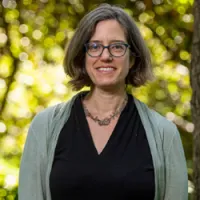
Dr. Cynthia Milton is Director for the Centre for Global Studies and Professor in the History Department at the University of Victoria. Prior to coming to UVic in 2020, she held a Canada Research Chair at the Université de Montréal and was a fellow with the Pierre Elliott Trudeau Foundation. Her interdisciplinary research is on the legacies of political violence and colonialism.
Her recent publications include Royally Wronged: The Royal Society of Canada and Indigenous Peoples and How the Military Remembers: Human Rights and Countermemories in Latin America. She is a Fellow of the Royal Society of Canada and Recipient of the King Charles III Coronation Medal.
Speakers
Andrew F. Cooper
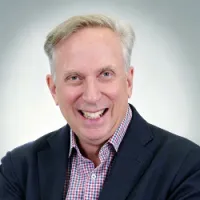
Andrew F. Cooper is a Professor, Department of Political Science within the School of Social, Political and Historical Research, University of Waterloo and Balsillie School of International Affairs. Among his most many publications are his books The Concertation Impulse in World Politics Contestation over Fundamental Institutions and the Constrictions of Institutionalist International Relations (Oxford University Press, 2024); Tests of Global Governance: Canadian Diplomacy and United Nations World Conferences (United Nations University Press, 2004); and Canadian Foreign Policy: Old Habits and New Directions (Prentice Hall Canada, 1997). He is the co-author of a major book on the role of middle powers, Relocating Middle Powers: Australia and Canada in a Changing World Order (University of British Columbia Press/University of Melbourne Press, 1993). His articles have appeared in leading journals such as International Organization, International Affairs, World Development, International Studies Review, and Global Policy Journal. He presently holds a SSHRC Grant on “Trump’s Personalist Approach to International Politics: Implications for Diplomatic Processes, Practices and Outcomes”. He is a new Fellow to the Royal Society of Canada.
Dr. Fannie Lafontaine
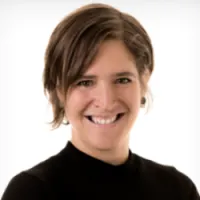
Dr. Fannie Lafontaine is a lawyer, full professor at the Faculty of Law at Université Laval and holder of the Canada Research Chair on International Criminal Justice and Human Rights from 2013 to 2023. She is the Project Director of the Canadian Partnership for International Justice and founder and co-director of the International Criminal and Humanitarian Law Clinic.
Dr. Lafontaine has worked at the Office of the UN High Commissioner for Human Rights, on the International Commission of Inquiry on Darfur and in NGOs and law firms. From 2015-2020, she acted as independent civilian observer of a criminal investigation into criminal acts alleged to have been committed by members of different police forces against Indigenous People in Quebec (public reports, 2016 and 2020). Dr. Lafontaine was the lead drafter of the National Inquiry on Missing and Murdered Indigenous Women and Girls’ Supplementary Report “Legal analysis on genocide”. She is the author of Prosecuting Genocide, Crimes Against Humanity and War Crimes in Canadian Courts and of many other publications on Canadian and international law.
Dr. Lafontaine is a member of College of New Scholars of the Royal Society of Canada (2017). In 2021, she was elected by the Canadian Lawyer Magazine in its prestigious annual Canada’s Top 25 Most Influential Lawyers. The Canadian Partnership for International Justice that she leads was awarded the SSHRC Impact Award (Partnership Award) in 2022 and the Governor General’s Innovation Award in 2023.
Val Napoleon
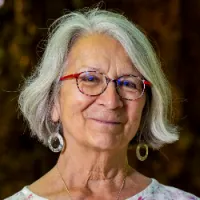
Val Napoleon is Cree from Saulteau First Nation, and she is adopted into Gitanyow [northern Gitxsan]. She is the co-founder of Juris Doctor and Juris Indigenarum Doctor (dual law degree program in Indigenous and Canadian law), and the founding director of the Indigenous Law Research Unit. She is the academic lead for the major national Next Steps Rebuilding Indigenous legal orders initiative. Napoleon researches and publishes on Indigenous legal traditions and methodologies, legal theories, intersocietal legalities,feminisms, legal pluralism, democracies and civil societies, and intellectual property. She is a professor and former acting dean of law, and she teaches Canadian and Gitxsan property.
Michel-Henri St-Louis
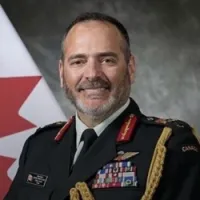
Major General Michel-Henri St-Louis (retired) is a highly decorated senior infantry leader of the Royal 22e Régiment, recently retired to civilian life following a career that has shaped Canadian defence policy, international military cooperation, and coalition operations across multiple theatres. His final roles in uniform included serving as Director General for the Planning of the Defence of Canada, where he laid the foundation for future strategic force development and national defence readiness, and as Canadian Defence Attaché to the United States, representing Canada’s military interests at the highest diplomatic and intergovernmental levels.
Previously, he held several of the Canadian Army’s most consequential leadership positions, including Acting Commander of the Canadian Army and Commander of the Canadian Army Doctrine and Training Centre, responsible for all Army training, doctrine, and professional military education. Over more than three decades, he has distinguished himself at the tactical, operational, strategic, and geopolitical levels, contributing directly to Canada’s military operations at home and abroad.
Mike has also deployed on six major overseas missions, with operational experience spanning Bosnia-Herzegovina, Croatia, Afghanistan, Kuwait, Lebanon, Jordan, and Iraq. Domestically, he has led and supported numerous national operations. He has completed three tours in the United States, strengthening bilateral defence collaboration between Canada and its most important ally.
The event is co-sponsored by the Pierre Elliot Trudeau Foundation.