On August 14, the academic community was shaken by the death of Jason Arday. This sociologist, who came from a modest background and faced personal challenges from a very early age, seemed to defy all expectations: a Ph.D., positions at several universities, a job offer from Cambridge, and a lucrative publishing deal. But his rise foreshadowed a subsequent descent into hell. The press and a group of unapologetic white supremacists accused him of plagiarism, and of embellishing his résumé and his life. The ensuing media harassment and racial predation eventually got the best of him. Cambridge’s lamentations and the British prime minister’s call for “a reflection” will not change the outcome: another Black man died. The Man Died, to borrow the title of Wole Soyinka’s work. What price must Black people pay to hold positions other than subordinate ones?
Stepping out of the Cabin
What happened to Arday has reignited divisions within white academic circles over the place of “others” in spaces where they are not expected. Arday only came to public attention when he was recruited to Cambridge, a bastion of conservatism. Universities must investigate allegations of plagiarism: academic integrity is non-negotiable. But there is a big difference between investigating and administring a public lynching. The former seeks the truth; the latter exploits outrage. Who remembers that Arday taught at Leeds Beckett, Roehampton, Warwick, or Glasgow? A Black man at Cambridge sticks out, draws attention, and triggers debates about legitimacy. If he had been teaching at an obscure college in Lancashire, would Arday have raised the same suspicions?
Cambridge does not shine for its diversity: in 2022, out of 795 professors, only 0.4% were Black. Compared to Oxford, MIT, Harvard, and Yale, Cambridge is dead last in that regard. European institutions fare little better. Arday was therefore out of place: he became hypervisible. The invisible Black man was meant to remain so. His excellence became an invitation to media scrutiny and exploitation. By transcending the racial geography of excellence, he refused the role assigned to him by the systems of domination—that modern-day Uncle Tom’s Cabin. Is the academic world still that white colonial city described by Fanon, where the indigenous person ventures only at the risk of punishment? To succeed, must a Black person be perfect?
“The First”: Recognition, Designation, and Solitude
For many, Arday was a parent or a colleague. For Black scholars, he also embodied what was theoretically possible. Yet his story reveals a troubling reality for a scholar whom his dean considered “the best in the world”. He wasn’t recruited simply because he was Black, but because he was an outstanding researcher. Diversity initiatives sometimes open doors, but they do not necessarily transform an institution’s culture. A university can hire Black people without treating them with the same humanity as others. Presented as “the youngest Black…,” was Arday a mascot, a trophy, or a public relations asset?
When breaking through the glass ceiling, women and people of color are not always recognized as experts: they become “the first woman,” “the first Indigenous,” “the first Black,” “the first Asian”—phrases that betray structural exclusion and condemn them to never appearing ordinary. Numerous studies show that white women have gained ground in terms of recognition, and this is something to be celebrated. Yet many female colleagues still have chilling stories to tell, especially in fields like science, technology, engineering, and mathematics. But at the five universities mentioned above, white women account for about 30 percent of the faculty, while other groups rarely reach double digits. Following the pro-equity enthusiasm sparked by Black Lives Matter, right wing actors and the trivialization of racism have reignited doubts: every Black person now seems to be perceived as an intellectually disabled privilege thief. Initiated by Wisdom Tettey, the Scarborough Charter reminds us that representation is not enough: institutions must create conditions where Black people can thrive, not merely survive. The tragedy of Jason Arday shows what happens when those conditions do not exist. Beyond mere proclamations, are universities actually willing to include others?
Fear of Black Excellence?
A few years ago, I co-authored Avoir peur (Being afraid), in which my colleague and I examine fear as a driving force in discourse. This fear is not a matter of fiction. Awad Ibrahim et al., in Nuances of Blackness in the Canadian Academy. Teaching, Learning, and Researching while Black, highlight the precariousness of scholars who have been rendered invisible and voiceless. I was recruited to Waterloo just as the smear campaign against Claudine Gay—Harvard’s “first”—was unfolding, and I heard a concern voiced by a headhunter: Black academics appear to be under intense scrutiny. Since Jason Arday’s death, a number of colleagues are now even more uncomfortable. Can they survive in an environment where some people continue to view them as mere byproducts of affirmative action policies? Are structural reforms against racism, antisemitism, homophobia, and transphobia even possible? After Jason Arday, who will be the next Black victim?
Transforming the University, Believing in Humanity
Academic institutions must not only institute reforms; they must evolve. Too often, inclusiveness is measured in numbers, appointments, or historic “firsts.” Yet being “the first” is not always a blessing: it often means bearing alone the weight of expectations, prejudices, and the contradictions of institutions that celebrate diversity without changing their structures of exclusion. Here is a central question for all Black people and other minorities: Should we stay out of decision-making forums to avoid being exposed and scrutinized, or should we be present and survive, torn between performance and resistance? In Canada, we have legal tools to combat systemic inequities. But fulfilling our moral commitments and enforcing our laws require a good dose of collective will. True inclusiveness isn’t just about allowing a person to enter a space; it requires that person to be able to stay, to thrive, and to be judged by the same standards as everyone else. This is possible. Because we must believe in humanity, that is in the better part of humanity.
About the Author
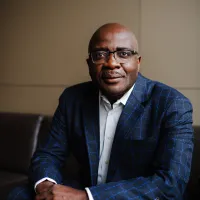
Alexie Tcheuyap’s research lies at the intersection of literature, film, media, and political science, with a particular focus on African postcolonial experiences. A native of Cameroon, his work focuses in particular on madness, film adaptations, African audiovisual productions, and issues of communication and governance.
His publications include Postnationalist African Cinemas (Manchester UP, 2011), Autoritarisme, presse et violence au Cameroun (Karthala, 2014), Avoir peur. Insécurité et roman en Afrique francophone (PU Laval, 2018; with Hervé Tchumkam) and African Documentary Cinema (Routledge, 2024). His next book, De la trahison en politique, will be published shortly by Karthala.
Alexie Tcheuyap has taught and held administrative positions at the University of Calgary and the University of Toronto, in addition to serving as a visiting Professor at several institutions around the world. A former Senior Fellow of the Réseau des instituts européens d’études avancées, he is a Fellow of the Royal Society of Canada, where he serves as secretary of the Academy of Arts and Humanities. He is currently Dean of the Faculty of Arts at the University of Waterloo.