On May 18–19, 2026, in Paris, the Science 7 (S7) brought together the national science academies of France, Canada, Germany, the United States, Italy, Japan, and the United Kingdom in the lead-up to the G7 Summit of Heads of State and Government in Evian from June 15-17. Organized by the Académie des sciences, the S7 is a scientific dialogue designed to inform international policymaking with the best-available scientific evidence.
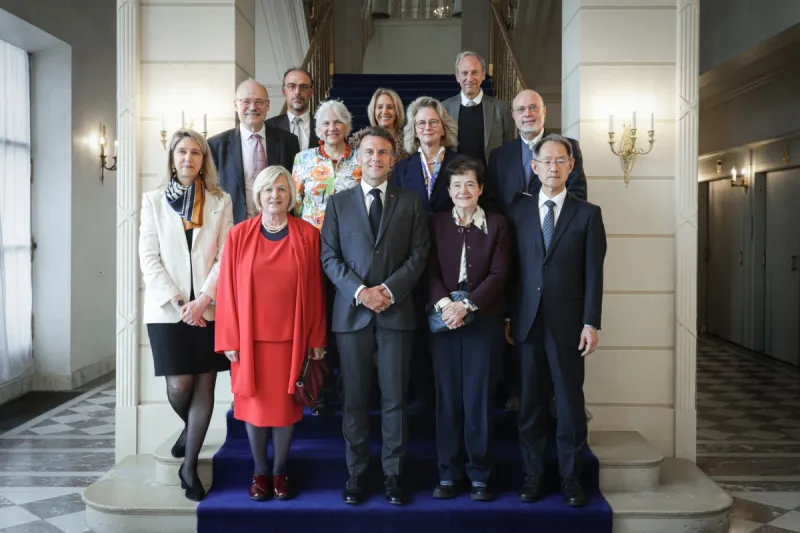
Photo : Académie des sciences/Mathieu Baumer – De gauche à droite : Stéphanie Debette, directrice générale de l'Institut du Cerveau; Mark Walport, délégué aux relations internationales et vice-président de la Royal Society (Royaume-Uni); Maria Cristina Marcuzzo, déléguée aux affaires internationales de l'Accademia Nazionale dei Lincei (Italie); Laurent Bopp, directeur de recherche CNRS; Françoise Baylis, présidente de la Société royale du Canada (Canada); Emmanuel Macron, président de la République; Marcia McNutt, présidente de la U.S. National Academy of sciences (USA); Bettina Rockenbach, présidente de la Nationale Akademie der Wissenschaften Leopoldina (Allemagne); Françoise Combes, présidente de l'Académie des sciences (France); Francis-André Wollman, vice-président délégué aux relations internationales de l’Académie des sciences (France); François Baccelli, directeur de recherche émérite à l'Inria; Mamoru Mitsuishi, président du Science Council of Japan (Japon)
For the 22nd consecutive year, the participating academies jointly prepared statements offering independent, science-based recommendations for G7 leaders.
“As global challenges accelerate, it is more important than ever that world leaders have access to the best-available knowledge to inform decisions about our shared future. This year’s Science 7 priorities – large satellite constellations, the global Arctic, and brain and mental health – address urgent and strategic issues that warrant serious attention in upcoming G7 discussions.” – Françoise Baylis (FRSC), RSC President
“The RSC has worked collaboratively with the other G7 Academies in developing these statements to reflect the best science available from across Canada and around the world. The importance of bringing forward expertise to inform international discussions has never been greater, and we are pleased to get this information in front of decision-makers ahead of the G7 summit.” – Andrew Weaver (FRSC), Vice-Chair of the RSC International Committee
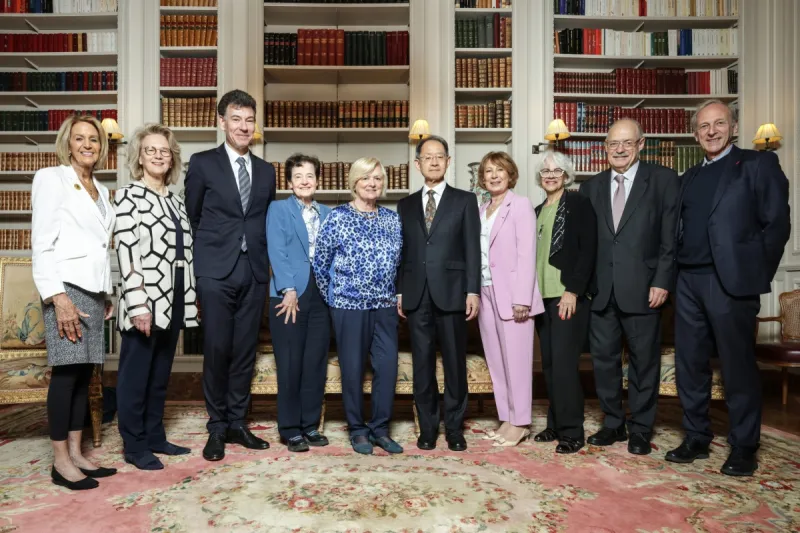
Photo : Académie des sciences/Mathieu Baumer – De gauche à droite: Marcia McNutt, présidente de la United States National Academy of Sciences (États-Unis) ; Bettina Rockenbach, présidente de la Leopoldina (Allemagne) ; Philippe Baptiste, ministre de l’Enseignement supérieur, de la Recherche et de l’Espace (France) ; Françoise Combes, présidente de l’Académie des sciences (France) ; Maria Cristina Marcuzzo, secrétaire aux relations internationales de l’Accademia Nazionale dei Lincei (Italie) ; Mamoru Mitsuishi, président du Science Council of Japan (Japon) ; Mona Nemer, conseillère scientifique en chef du Canada (Canada) ; Françoise Baylis, présidente de la Royal Society of Canada (Canada) ; Mark Walport, secrétaire aux relations internationales et vice-président de la Royal Society (Royaume-Uni) ; Francis-André Wollman, vice-président délégué aux relations internationales de l’Académie des sciences (France)
View the three statements
 Large Satellite Constellations: Prospects and Challenges
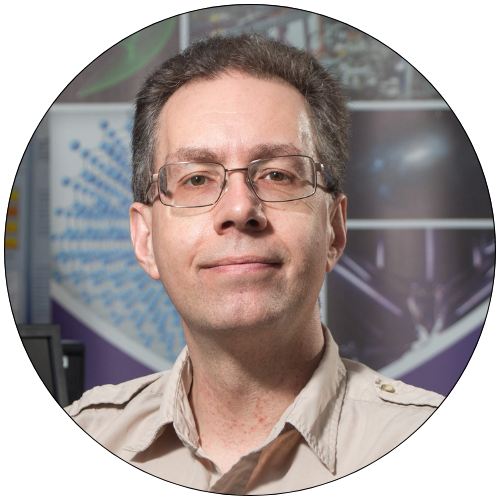
Perspectives from Peter G. Brown (Western University), Topic Lead, Canada
“The rapid growth in satellite launches is transforming how we use space, but it also brings rising risks from orbital congestion and collisions. Protecting future access to near-Earth space will require strong international partnerships, effective regulation, and continuous monitoring to ensure the long-term sustainability of satellite activity.”
Download the statement >
For additional insights: "As corporations race for the stars, we need international collaboration on space governance" >
 The Global Arctic: Unprecedented Transformations, Planetary Stakes
Perspectives from Jackie Dawson (FRSC, University of Ottawa), Topic Lead, Canada
“The Arctic is warming at four times the rate of the global average with widespread and cascading implications for Canada and the world. This important co-developed report recommends fundamentally important ways forward including the urgent need for enhanced national and international cooperation in Arctic science, a renewed commitment to climate change adaptation to reduce risks and limit loss and damage, and to advance innovations in cold-region infrastructure and industrial technologies for self-determined sustainable development pathways.”
 Promoting Brain Health (including Mental Health) for Global Societal Resilience
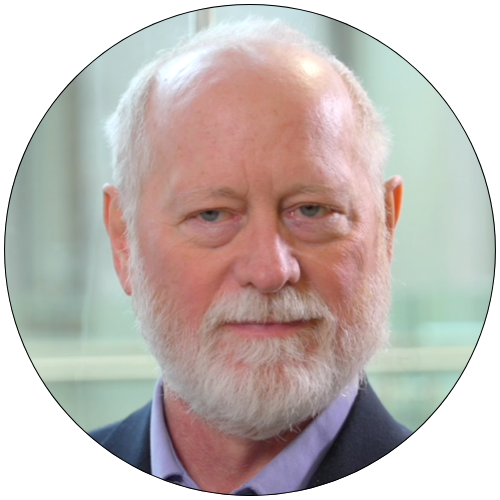
Perspectives from Guy Rouleau (FRSC, McGill University), Topic Lead, Canada
"Brain health is a fundamental human and societal priority requiring urgent, coordinated global action. Approaches grounded in open and collaborative science can accelerate discovery, enable equitable data sharing, and support policy alignment across borders. By integrating prevention and research across the lifespan, G7 leadership can strengthen resilience and reduce global burden."
Download the statement >
For additional insights: “Why brain health is an urgent priority for G7 member countries” >
Centring science in G7 discussions
The three statements were prepared by expert groups from the G7 Academies through an international collaborative process. They were reviewed and approved by each Academy prior to final adoption, presented to President Emmanuel Macron of the French state on the afternoon of Tuesday, May 19, 2026, and are now being forwarded to the government leadership of each G7 country through the Sherpa process.
About the Royal Society of Canada
Founded in 1882, the Royal Society of Canada (RSC) comprises The Academy of Arts and Humanities, The Academy of Social Sciences, The Academy of Science, and The College of New Scholars, Artists and Scientists. The RSC recognizes excellence, advises the government and the larger society, and promotes a culture of knowledge and innovation in Canada and with other national academies around the world.
For further information or media requests, contact Paige Beveridge, Communications Manager, at communications@rsc-src.ca.