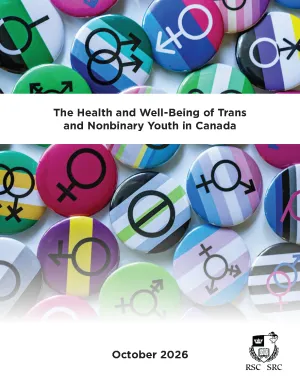
Trans and nonbinary (TNB) youth in Canada face higher levels of psychological distress, discrimination, and minority stress. However, they also exhibit remarkable resilience when supported within affirming environments. This report synthesizes current research on TNB youth in various areas: law and policy, minority stress, mental health, gender-affirming medical care (GAMC), family and school environments. It aims to provide a comprehensive picture of the challenges faced by these youth and the conditions that enable them to thrive.
Research indicates that TNB youth are disproportionately affected by mental health issues, including high levels of anxiety, depression, and suicidal ideation. These disparities are not inherent to gender diversity, but are primarily driven by external factors, such as stigma, discrimination, and hostile social environments, such as school bullying. When TNB youth receive support from their families, healthcare providers, and schools, these disparities significantly decrease.
Studies on gender-affirming medical care (GAMC) suggest that individuals who require it can benefit from access to puberty blockers, hormone therapy, and related treatments. These interventions have been shown to improve mental health and overall well-being, with no reported adverse effects in the available data. Some people argue for limiting access pending further “gold standard” research. However, experts say that such standards are often impractical or unethical in this context. Instead, a broad range of research—from observational longitudinal studies to qualitative research—provides strong support for the benefits of gender-affirming care.
Families also play a critical role. Parental support, for example, emerged as one of the most powerful protective factors for TNB youth. Additionally, schools, notably supporting staff and peers, are crucial in shaping TNB students’ well-being. Policies that foster gender inclusivity, supportive staff members, inclusive curricula, and safe school climates are all essential in reducing risk and promoting a sense of belonging.
Available data leave no doubt that TNB youth thrive in affirming, well-equipped, and welcoming settings. The report concludes with a series of tailored suggestions for families, professionals, researchers, and decision-makers. These recommendations aim to reduce disparities, enhance mental well-being, and ensure that TNB youth across Canada can experience safety, dignity, and opportunities in all areas of life.
Read the Full Report >
Executive Summary >
Authors (in alphabetical order)
- Emmanuelle Bernheim, RSC College, University of Ottawa
- Marie-Claude Geoffroy, RSC College, McGill University & Douglas Mental Health University Institute
- Robert C. Mizzi, RSC College, University of Manitoba
- Annie Pullen Sansfaçon, RSC College, Université de Montréal
- Anna Weinberg, RSC College, McGill University
Peer Review Committee
- Nicholas Chadi, Université de Montréal
- TJ (Travis) Salway, Simon Fraser University
For further information or media requests, contact Paige Beveridge, Communications Manager, at (613) 991-6990 / pbeveridge@rsc-src.ca.