

You are here
Prof. Malek Batal
RSC Fellow, Academy of Social Sciences
Affiliation: Université de Montréal
Induction Year: 2022
Malek Batal is the Director of the WHO’s TRANSNUT Collaborating Centre on Nutrition Changes and Development. Working with transdisciplinary teams, he studies the relationships between population health, the food system and the environment with the aim of addressing inequities in marginalized populations. He works with First Nations in Canada and with Indigenous and rural populations internationally, applying his research findings to improve public policies.
Malek Batal est directeur du Centre collaborateur de l'OMS TRANSNUT sur la nutrition humaine et le développement. À l’appui d’équipes transdisciplinaires, il étudie le lien entre la santé des populations, le système alimentaire et l'environnement, dans l’objectif de corriger les inégalités chez les populations marginalisées. Il travaille avec les Premières Nations au Canada et les populations autochtones et rurales internationales, mettant les résultats de ses recherches au service des politiques publiques.
Dr. Richard Bathurst
RSC Fellow, Academy of Sciences
Affiliation: Royal Military College of Canada
Keywords: Geosynthetics, reinforced earth, probabilistic design, geotechnical earthquake design, particle mechanics, Civil (Geotechnical) Engineering
Induction Year: 2017
BATHURST, Richard, Royal Military College of Canada
Professor Bathurst has made innovative and impactful contributions to the advancement and understanding of modern civil engineering geosynthetic reinforced earth retaining structures and slopes. His work demonstrates a multi-disciplinary approach to the design, analysis and sustainability of these structures. His many acclaimed contributions also include themes related to earthquake geotechnical engineering, probabilistic design, full-scale model earth structure testing, materials testing, soil-structure interaction, transparent surrogate granular soils and granular particle mechanics.
Le professeur Bathurst a apporté des contributions novatrices et de grand impact à l'avancement et à la compréhension des structures et des pentes renforcées de géosynthétiques. Son travail démontre une approche multidisciplinaire pour la conception, l'analyse et la durabilité de ces structures. Ses nombreuses contributions acclamées incluent également des thèmes liés à l'ingénierie géotechnique sismique, à la conception probabiliste, à l'étude à pleine échelle des ouvrages géotechniques, aux essais sur matériaux, à l'interaction sol-structure, aux sols granulaires transparents substituts et à la mécanique des particules granulaires.
Prof. Gerald Batist
RSC Fellow, Academy of Sciences
Affiliation: McGill University
Keywords: precision medicine
Induction Year: 2025
Gerald Batist is a consummate clinicianscientist whose vision and drive has
generated new biological insights and novel
treatment options. He created national
and international consortia to advance the
science and implementation of personalized
medicine (PM), including novel proteogenomic biomarkers and new treatments,
including innovations like nanorobots and
new molecules to overcome resistance to
effective treatments that arises in tumours.
Gerald Batist est un clinicien-chercheur
accompli dont la vision et le dynamisme ont
donné naissance à de nouvelles découvertes
biologiques et à des solutions thérapeutiques
innovatrices. Il a créé des consortiums nationaux
et internationaux pour faire progresser la
science et la mise en œuvre de la médecine
personnalisée (MP), notamment grâce à de
nouveaux biomarqueurs protéogénomiques et
de nouveaux traitements, et à des innovations
telles que les nanorobots et de nouvelles
molécules qui permettent de contrer la
résistance aux traitements que développent les
tumeurs.
Prof. Robert Batterman
RSC Fellow, Academy of the Arts and Humanities
Affiliation: Western University
Keywords: Physics, Philosophy, Applied Mathematics, Idealization, Emergence
Induction Year: 2009
Robert Batterman is an internationally recognized authority in the philosophy of science and the philosophy of physics. He has made substantial and ground-breaking contributions in a number of areas and has pioneered new approaches in the philosophy of physics.
------------------
BATTERMAN, Robert W. –Department of Philosophy, University of Western Ontario
Robert Batterman is Professor of Philosophy, Rotman Canada Research Chair in Philosophy of Science at the University of Western Ontario, and co-founder of the J.L. Rotman Institute of Science and Values. He is an internationally recognized authority in the philosophy of science and the philosophy of physics. He has made substantial and ground-breaking contributions in a number of areas including explanation, reduction, and the role of idealization in science. He has pioneered new approaches in the philosophy of physics, specifically in statistical mechanics and condensed matter theory where his work on the renormalization group has both redirected and reshaped philosophical debates about the nature of mathematical explanation and emergence in physics. His book and articles are cited frequently and have served as catalysts for changing the direction of research in philosophy of physics in several areas.
Dr. Marie Battiste
RSC Fellow, Academy of the Arts and Humanities
Affiliation: University of Saskatchewan
Induction Year: 2013
Marie Battiste is a Mi’kmaw humanist whose expertise has been developed through research, speaking, and extensive publications in Indigenous languages, epistemologies, pedagogies, and decolonizing the academy. She has expanded Indigenous knowledge in disciplinarity and interdisciplinarity, providing a new foundation for an inclusive, respectful, and rigorous learning spirit within and beyond the Indigenous humanities.
La professeure Marie Battiste est une humaniste micmaque qui s’est fait connaître grâce à ses recherches, ses conférences et ses nombreuses publications dans le domaine des langues, de l’épistémologie, de la pédagogie autochtone et de la décolonisation des universités. Elle a contribué à l’expansion des connaissances autochtones dans son domaine d’expertise et dans d’autres disciplines. Elle a posé les bases d’un apprentissage inclusif, respectueux et rigoureux, notamment au sein des sciences humaines autochtones.
Jean-Louis Baudouin
RSC Fellow, Academy of Social Sciences
Affiliation: Cour d'appel du Québec
Keywords: Jugement, droit, médecine, biologie, sciences
Juriste éminent, il a consacré plusieurs ouvrages, dont certains réédités à plusieurs reprises, au Droit civil et au Droit pénal. Ses articles sont parus dans des revues juridiques du Canada et, à l'étranger, sa participation à plusieurs colloques scientifiques témoigne de son rayonnement sur le plan international comme en témoigne par ailleurs son élection à la vice-présidence de l'Institut des droits des pays d'expression française.
Vice-président de la Commission de réforme du droit du Canada, il a pu mettre à l'oeuvre son savoir au service de la réforme du droit canadien. Son rayonnement dépasse une fois de plus les
frontières de la province pour se déployer à l'échelle du pays.
Prof. Helen Baulch
RSC College Member
Affiliation: University of Saskatchewan
Induction Year: 2023
Helen Baulch is an award-winning instructor and researcher. Her work centers water security, most notably water quality where she works with decisionmakers to guide research, and advance efforts to address the growing water quality crisis in Canada. Her focus is on issues of nutrient pollution and blooms, with broader interdisciplinary and transdisciplinary research and teaching aimed at understanding pathways towards more sustainable agricultural and environmental management practices.
Helen Baulch est enseignante et chercheuse. Elle a reçu de nombreuses distinctions et ses travaux portent sur la sécurité de l'eau, et plus particulièrement sur la qualité de l'eau. Elle collabore avec les décideurs pour orienter la recherche et faire progresser les efforts visant à résoudre la crise croissante de la qualité de l'eau au Canada. Elle se concentre sur les questions de pollution par les nutriments et les efflorescences, avec une recherche interdisciplinaire et transdisciplinaire plus large et un enseignement visant à comprendre les voies vers des pratiques de gestion agricole et environnementale plus durables.
Dr. Bernard Baum
RSC Fellow, Academy of Sciences
Affiliation: Agriculture and Agrifood Canada
Keywords: Classification, evolution, DNA systematics, nomenclature, computer analysis
An established botanist, with a book on "Tamarix" published in Israel, Dr. Baum reached Canada Dec. 1966 to study "Avena" and related grasses. A succession of papers on taxonomy, new characters and data-handling methods soon appeared; and books on oat registers (1969, 1973) to trace pedigrees of oat cultivars. His monograph on oats appeared in 1977, and, like the registers, met world acclaim. Dr. Baum, with 89 publications, is now revising barleys and other grasses. Recipient of the U.S.D.A. Merit Award and the Lawson Medal, he is in demand as a speaker. A recent, warmly received symposium address largely harmonizes taximetric and genomic grass classifications.
Dr. Joel Baum
RSC Fellow, Academy of Social Sciences
Affiliation: University of Toronto
Induction Year: 2020
Joel Baum has made multiple pioneering contributions to the understanding of competition and cooperation among organizations. His 100-plus peer-reviewed articles and chapters have reinvigorated research trajectories on organizational survival, organizational learning, and inter- organizational network formation, among others. Through all of this, Professor Baum has been a leader in incorporating managerial agency into the study of organizations, and thus in integrating the strategic management and organization theory fields more broadly.
Joel Baum a apporté de multiples contributions pionnières à la compréhension des processus de concurrence et de coopération entre les organisations. Ses plus de 100 articles et chapitres évalués par des pairs ont notamment redynamisé les trajectoires de recherche sur la survie des organisations, l’apprentissage organisationnel et la formation de réseaux entre les organisations. Grâce à tout cela, le professeur Baum a été un leader dans l’intégration de l’agence de gestion dans l’étude des organisations, et ainsi dans l’intégration plus large des domaines de la gestion stratégique et de la théorie des organisations.
Prof. Julia Baum
RSC College Member
Affiliation: University of Victoria
Keywords: Marine ecology, conservation, statistical ecology, coral reefs
Induction Year: 2017
Julia Baum is an Associate Professor in the Department of Biology at the University of Victoria. She studies marine ecosystems, how anthropogenic stressors are changing these ecosystems, and the mechanisms underlying their resilience to these stressors. Her research articles have appeared in Science and top ecology journals. For her research creativity and leadership, she has received a Sloan Research Fellowship and a Pew Fellowship in Marine Conservation, among other honours.
Julia Baum est professeure agrégée au sein du Département de biologie de l’University of Victoria. Elle étudie les écosystèmes marins, l’effet des agresseurs anthropiques sur ces écosystèmes et les mécanismes à l’origine de leur résilience à ces agresseurs. Ses articles ont été publiés dans Science et dans de grandes revues sur l’écologie. Elle a notamment reçu une bourse de recherche Sloan et une bourse Pew en conservation marine pour sa créativité et son leadership en matière de recherche.
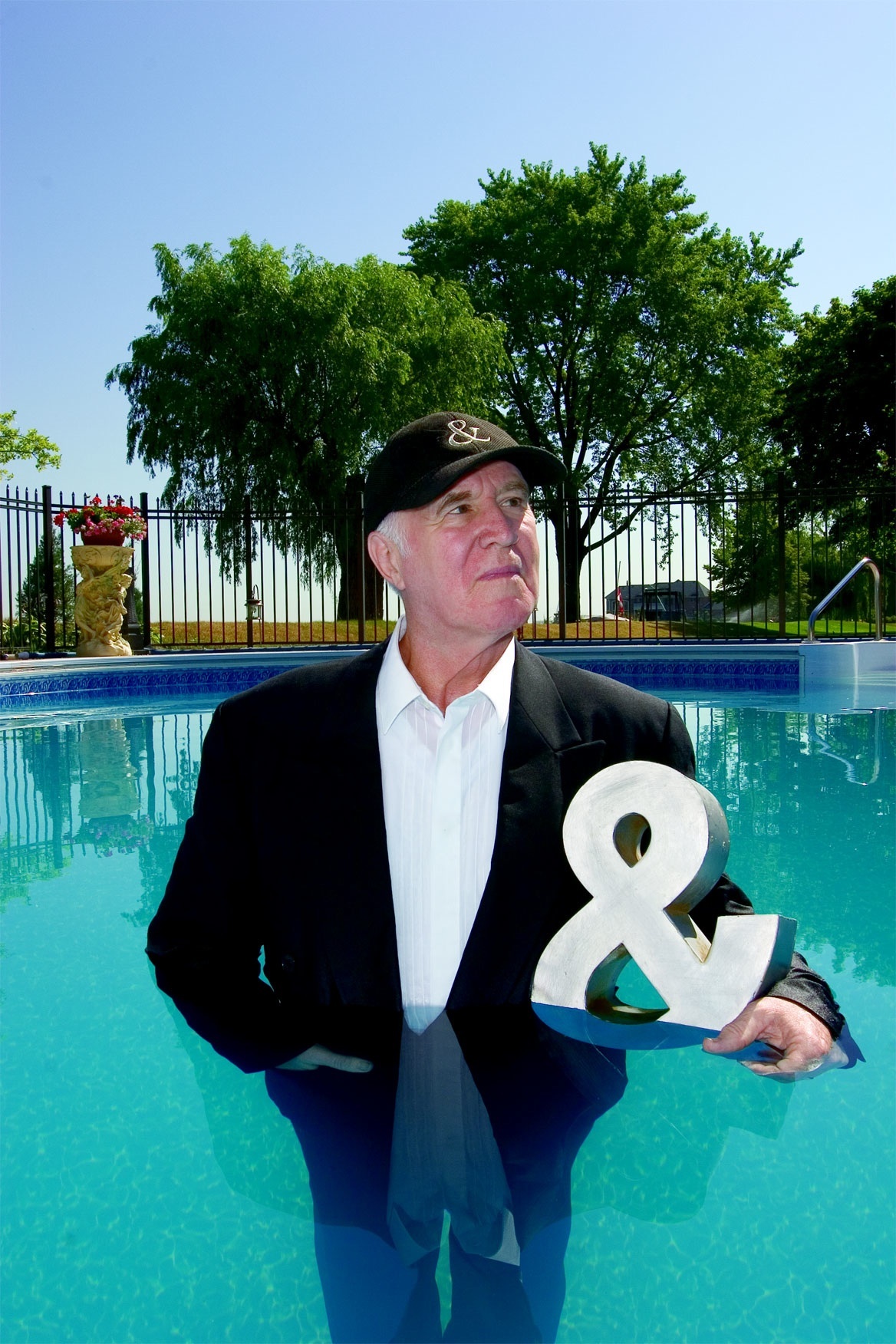
Mr. Iain Baxter
RSC Fellow, Academy of the Arts and Humanities
Affiliation: University of Windsor
Induction Year: 2013
Iain Baxter& is Canada’s first conceptual artist & one of the world’s leading contemporary artists. He has spent the last fifty years re-defining the Canadian & International art scene through cutting-edge conceptual, ecological, technological & informational art projects. His many initiatives, including being the founder of the N. E. Thing Co., have been recognized by multiple distinctions: four honorary doctorates, induction to three orders, & three national prizes for lifetime achievements.
Iain Baxter& est l’un des premiers artistes conceptuels au Canada et l’un des plus grands artistes contemporains. Il a passé les cinquante dernières années à repenser l’art canadien et international en réalisant des projets d’avant-garde en art conceptuel, écologique, technologique et informationnel. Ses nombreuses initiatives, dont la création de N. E. Thing Co, lui ont valu de multiples distinctions : quatre doctorats honorifiques, trois ordres et trois prix nationaux ayant récompensé l’ensemble de son œuvre.
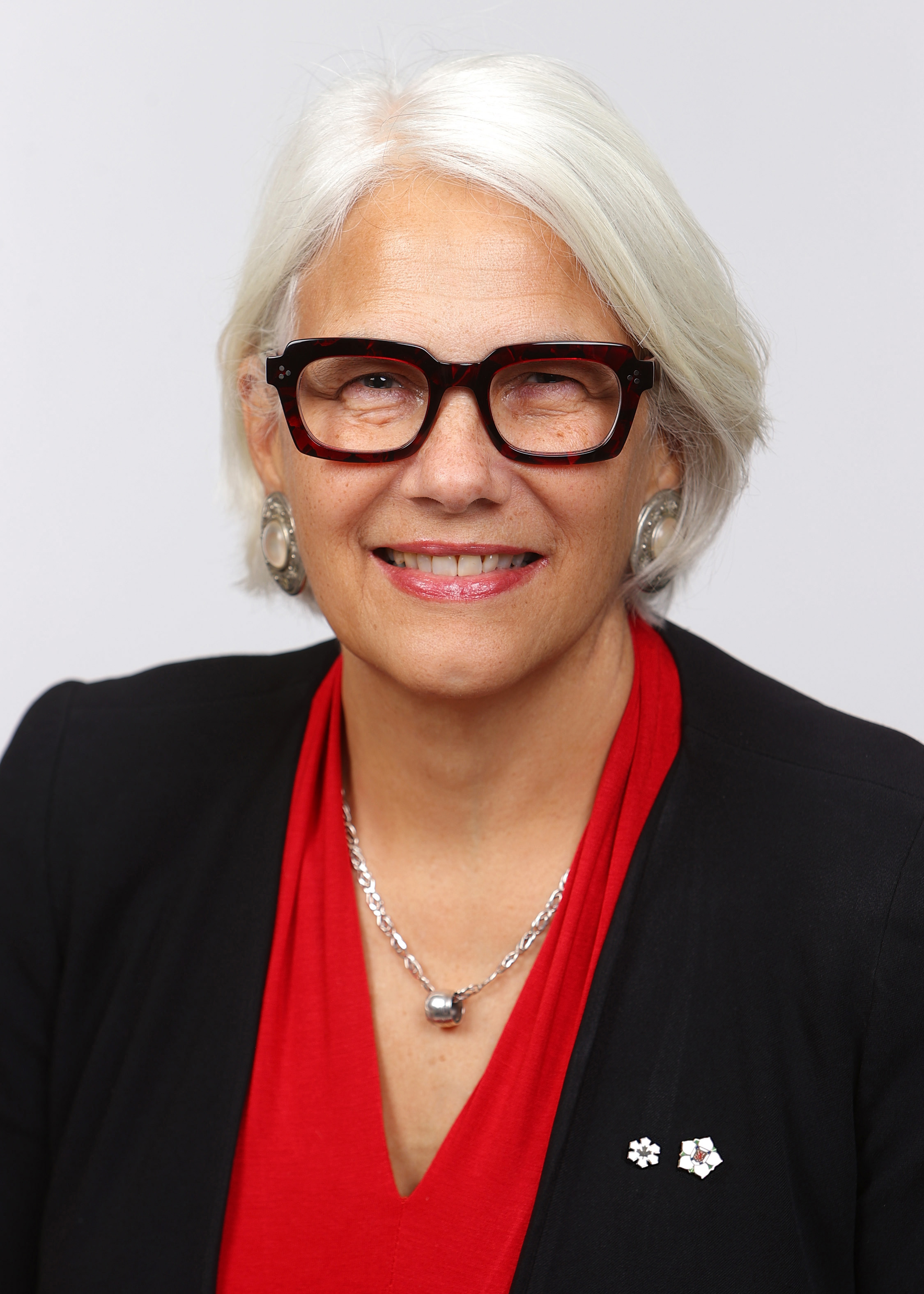
Dr. Françoise Baylis
RSC Fellow, Academy of the Arts and Humanities
Affiliation: Dalhousie University
Keywords: Ethics, Bioethics, Applied Ethics, Health Policy, Research Ethics, Research Involving Women, Embryo Research, Genome Editing, CRISPR, Life Sciences Research
Induction Year: 2007
Long Citation
Françoise Baylis is a philosopher whose innovative work in bioethics has stretched the very boundaries of the field. Her extensive publication record spans many topics, including research involving children, the role of bioethics consultants, women's health, human embryo research, and novel genetic technologies. At the center of her research lie questions of justice, especially intergenerational justice as it applies to our responsibility to future generations when we undertake research programs that may alter the nature of humans. Her work challenges readers to think broadly and deeply about the direction of health research and technology.
Short Citation
Françoise Baylis is a philosopher whose innovative work in bioethics has stretched the very boundaries of the field. Her extensive publication record spans many topics. At the center of her research lie questions of justice as it applies to our responsibility to future generations. Her work challenges readers to think broadly and deeply about the direction of health research and technology.
Magdalena Bazalova-Carter
RSC College Member
Affiliation: University of Victoria
Induction Year: 2023
Magdalena Bazalova-Carter is Tier 2 Canada Research Chair in Medical Physics and Associate Professor at the University of Victoria. An internationally recognized scholar, she integrates physics and medicine to advance scientific knowledge and health care applications of novel cancer radiotherapy technologies. Her research is leading to radiotherapy with better treatment outcomes, less damage to healthy tissues, lower cost and greater global accessibility.
Magdalena Bazalova-Carter est titulaire d'une Chaire de recherche du Canada de niveau 2 en physique médicale et professeure agrégée au sein de la University of Victoria. Chercheuse de renommée internationale, elle intègre la physique et la médecine pour faire progresser les connaissances scientifiques et les mises en œuvre sanitaires des nouvelles technologies de radiothérapie du cancer. Ses recherches ont débouché sur une radiothérapie offrant de meilleurs résultats thérapeutiques, moins de dommages aux tissus sains, un coût moindre et une plus grande accessibilité au niveau mondial.
Prof. Aimy Bazylak
RSC College Member
Affiliation: University of Toronto
Induction Year: 2020
As the Canada Research Chair in Thermofluidics for Clean Energy, Aimy Bazylak is advancing fuel cells, electrolyzers and batteries for clean power and energy storage in the absence of greenhouse gas emissions. Her research is focused on modelling and real-time imaging to design new materials for high efficiency and performance. She and her group are the first in North America to visualize operating fuel cells using synchrotron X-ray radiography
Aimy Bazylak, en tant que titulaire de la Chaire de recherche du Canada en thermofluidique pour l’énergie propre, fait progresser les caractéristiques des piles à combustible, des électrolyseurs et des batteries pour obtenir une énergie propre et la stocker en l’absence d’émissions de gaz à effet de serre. Ses recherches portent sur la modélisation et l’imagerie en temps réel pour concevoir de nouveaux matériaux à haut rendement et à haute performance. Son groupe et elle-même sont les premiers en Amérique du Nord à visualiser des piles à combustible en fonctionnement à l’aide de la radiographie synchrotron à rayons X.
Zdeněk Bažant
RSC Fellow, Academy of Sciences
Affiliation: Northwestern University
Induction Year: 2025
Zdeněk Bažant obtained transformational scientific contributions shaping frontiers of solid mechanics and engineering, especially concrete, rock, ice, and aircraft composites. He discovered the size-effect law for quasibrittle fracture and size-effect method for fracture energy testing. He developed the microplane material model, crack-band theory, nanopore adsorption-based concrete creep law capturing hygrothermal effects, and Gauss-Weibull and fishnet probability distributions of strength of heterogeneous materials. These are practice impacting results, likely of permanent value.
Zdeněk Bažant a apporté des contributions scientifiques décisives en repoussant les limites de la mécanique des solides et de l’ingénierie, notamment en ce qui concerne le béton, la roche, la glace et les composites aéronautiques. Il a découvert la loi de l’effet de taille pour la rupture quasi-fragile et la méthode de l’effet de taille pour les tests d’énergie de rupture. Il a développé le modèle de matériau à microplans, la théorie de la bande de fissure, la loi de fluage du béton basée sur l’adsorption des nanopores capturant les effets hygrothermiques, et les distributions de probabilité de Gauss-Weibull de la résistance des matériaux hétérogènes. Ces résultats ont probablement un impact permanent sur la pratique.
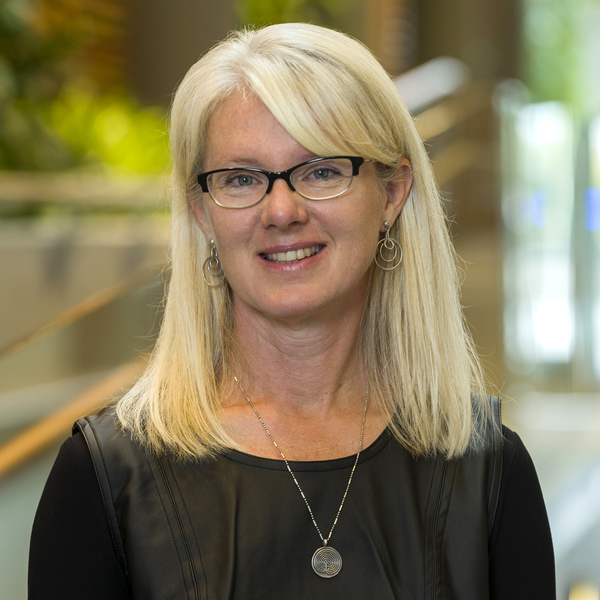
Prof. Lori G. Gail Beaman
RSC Fellow, Academy of the Arts and Humanities
Affiliation: University of Ottawa
Keywords: religious diversity, nonreligion, religion in canada, critical legal studies, secularism, social and cultural theory
Induction Year: 2015
Updated July 23, 2015
BEAMAN, Lori G. – Faculty of Arts, University of Ottawa
Lori G. Beaman is internationally recognized for her interdisciplinary, comparative and collaborative research on religion and diversity in Canadian society. Based on empirical evidence, her research challenges the narratives of competition, tolerance and accommodation and proposes instead a model based on deep equality, cooperation and collaboration. She provides a new paradigm that is changing academic thought and the way practitioners approach diversity.
Updated July 23, 2015
Lori G. Beaman est reconnue à l’échelle internationale pour sa recherche interdisciplinaire, comparative et collaborative sur la religion et la diversité au sein de la société canadienne. Sa recherche, fondée sur des preuves empiriques, défis les récits relatifs à la compétition, à la tolérance et à l’accommodement et suggère plutôt un modèle qui repose sur une égalité profonde, une coopération et une collaboration. Elle présente un nouveau paradigme qui vise à transformer la pensée académique et la manière dont la diversité est abordée par les professionnels dans le domaine.
Dr. Paul Beamish
RSC Fellow, Academy of Social Sciences
Affiliation: Western University
Keywords: Internationalization, Joint ventures, Management education
Induction Year: 2009
Paul Beamish, of the University of Western Ontario is widely recognized as the top contributor worldwide to the international joint venture literature, a core area of study within the international business scholarly domain.
------------------
BEAMISH, Paul –Ivey Business School, University of Western Ontario
Paul Beamish is widely recognized as the top contributor worldwide to the international joint venture literature, a core area of study within the international business scholarly domain. Beamish has authored 46 books and over 100 refereed papers, and supervised 23 PhD dissertations. He is a Fellow of the Academy of International Business, a Senior Fellow of the Asia Pacific Foundation of Canada, and holds a Canada Research Chair. He is currently extending his career work on joint ventures in emerging markets to the issue of poverty reduction through management education.
Dr. Richard Beamish
RSC Fellow, Academy of Sciences
Affiliation: Fisheries and Oceans Canada
Keywords: Fisheries
Richard James Beamish, Pacific Biological Station, Department of fisheries and Oceans, is an internationally recognized fisheries research scientist. He has demonstrated the profound influences of climate change on fish populations in the North Pacific and has forcefully argued the implications of these influences on the management of fish populations. Dr. Beamish greatly improved methods for ageing marine fish, determining that many Pacific groundfish were much older than previously thought, which has required more cautious management approaches. He has identified two new species of lamprey, and was the co-discoverer of acid rain in North America. He has published about 140 reviewed papers in addition to serving 13 years as Director of the Pacific Biological Station. In 1999 he was appointed a member of the Order of Canada for his scientific work.
Dr. Joyce Beare-Rogers
RSC Fellow, Academy of Sciences
Affiliation: Health Canada
Keywords: Nutrition, lipids, fatty acids, oils (dietary)
Dr. Joyce Beare-Rogers has spent her research career in the field of nutritional biochemistry, where her contributions have been largely in the application of lipid biochemistry to nutritional problems of fats and oils. In particular her studies of physiological changes, particularly cardiac lipid changes, in animals fed rapeseed oil containing erucic acid pointed to the need for the development of "zero erucic acid" rapeseed (Canola seed) which became a major oilseed crop in Canada. For her research in this area Dr. Beare-Rogers has won many Canadian and international awards and has been appointed to international Committees on the Nutrition of Fats and Oils. She has also contributed greatly to university teaching and laboratory training of students in nutritional biochemistry.
Prof. Bart Beaty
RSC Fellow, Academy of the Arts and Humanities
Affiliation: University of Calgary
Induction Year: 2021
Bart Beaty helped found Comics Studies as a scholarly field. Operating at the intersection of literary studies, art history, communication theory, and the sociology of culture, his scholarship, in seventeen books and more than 200 essays, has completely defined this nascent subfield and he has positioned the University of Calgary as one of the most important institutions for research on graphic narrative anywhere in the world.
Bart Beaty a aidé à fonder l’étude de la bande dessinée en tant que domaine universitaire. Opérant à l'intersection des études littéraires, de l'histoire de l'art, de la théorie de la communication et de la sociologie de la culture, ses recherches, dans dix-sept livres et plus de 200 essais, a complètement défini ce sous-domaine naissant et il a positionné l'Université de Calgary comme l'un des les plus importantes institutions de recherche sur la narration graphique partout dans le monde.
Prof. Ruth Beatty
RSC College Member
Affiliation: Lakehead University
Induction Year: 2021
Ruth Beatty is an award-winning settler educator and scholar known for her leadership in culturally responsive mathematics instruction. Her research on connections between Indigenous ways of knowing mathematics and the Western mathematics found in provincial curricula is changing the ways we teach and learn mathematics. Her collaborations with members of Anishinaabeg, Cree, and Métis communities support the development of innovative practices in elementary and secondary mathematics education that benefit all students.
Ruth Beatty est une éducatrice et une chercheuse colon primée, connue pour son leadership dans l'enseignement des mathématiques adapté à la culture. Ses recherches sur les liens entre les modes de connaissance des mathématiques des peuples Autochtones et les mathématiques occidentales que l'on retrouve dans les programmes provinciaux changent la façon dont nous enseignons et apprenons les mathématiques. Ses collaborations avec les membres des communautés Anishinaabeg, Cris et Métis soutiennent le développement de pratiques innovantes dans l'enseignement des mathématiques aux niveaux primaire et secondaire, au bénéfice de tous les élèves.
Prof. Miriam Beauchamp
RSC College Member
Affiliation: Université de Montréal
Keywords: traumatisme craniocérébral, pédiatrie, développement social, réadaptation, neuroimagerie
Induction Year: 2019
Miriam Beauchamp is a neuropsychologist nominated for her cutting-edge work to prevent and treat pediatric traumatic brain injuries. Her endeavours are relevant to scientists, clinicians, decision-makers, teachers, and parents working to improve the quality of life of children who experience neural, cognitive and social disruptions, and are critical for the optimal development of the youngest members of our society.
Miriam Beauchamp est une neuropsychologue nommée en reconnaissance de ses travaux d’avant-garde visant à prévenir et guérir les traumatismes crâniens chez les enfants. Ses travaux interpellent les scientifiques, cliniciens, décideurs, enseignants et parents œuvrant à l’amélioration de la qualité de vie des enfants victimes de perturbations neuronales, cognitives et sociales, et sont essentiels pour le développement optimal des plus jeunes membres de notre société.
Prof. Catherine Beauchemin
RSC College Member
Affiliation: Toronto Metropolitan University
Keywords: Virology, mathematical modeling, computer modeling, influenza, COVID-19, Covid-19, corona virus
Induction Year: 2017
Catherine Beauchemin founded the field of virophysics, a branch of biophysics in which the theoretical tools and quantitative rigour of physics are brought to bear on problems in virology. Her creative and innovative use of mathematical and agent-based models to analyse virus infection dynamics, incorporating important virological details, have resulted in significant advances in theoretical virology and the understanding of influenza virus infections, which have earned her international recognition.
Catherine Beauchemin a fondé le domaine de la virophysique, une branche de la biophysique qui met les outils théoriques et la rigueur quantitative de la physique au profit de la virologie. Son exploitation novatrice de modèles mathématiques et de systèmes multi-agents pour analyser la dynamique d’infections virales a entraîné des progrès significatifs en virologie théorique, une meilleure compréhension des mécanismes clés des infections grippales et lui vaut sa réputation internationale.
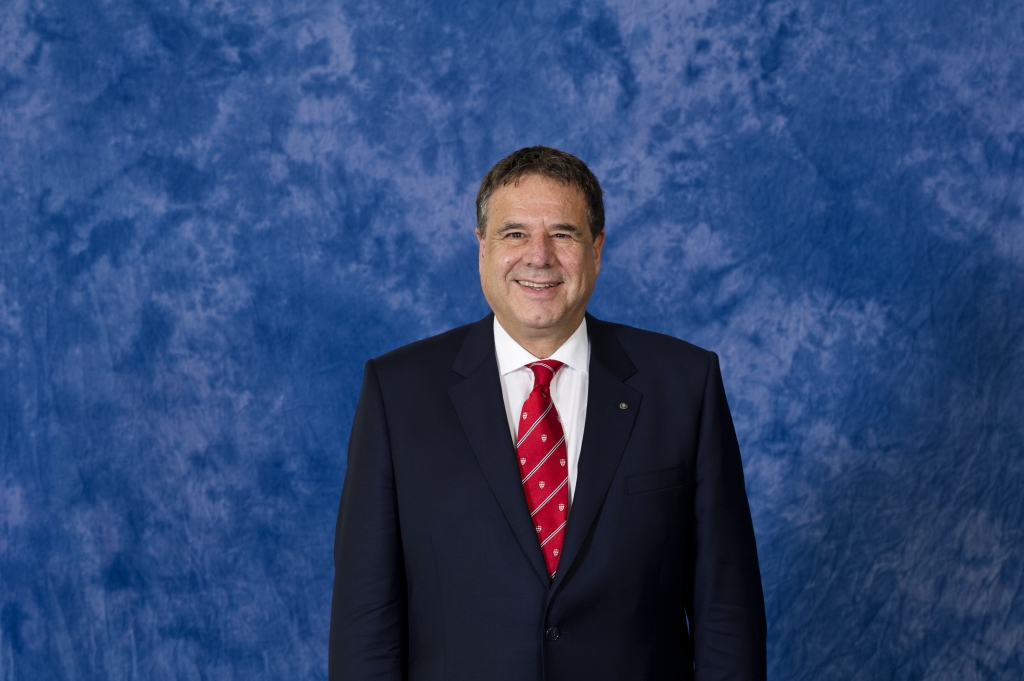
Alain Beaudet
RSC Fellow, Academy of Sciences
Affiliation: Canadian Institute of Health Research
Induction Year: 2012
BEAUDET, Alain - Canadian Institutes of Health Research
Dr. Alain Beaudet is a visionary, extraordinary leader, neuroscientist and research administrator. He has played a major role in developing Canada’s health research enterprise. As a scientist, he has shed new light on mechanisms underlying neuronal communication and was the first to propose the existence of non-synaptic neurotransmission in mammalian brain. Dr. Beaudet enjoys a well-deserved international reputation as a science innovation catalyst for his remarkable leadership and collaborative abilities.
BEAUDET, Alain - Instituts de recherche en santé du Canada
Alain Beaudet se distingue comme visionnaire, leader, chercheur en neurosciences et administrateur de programmes de recherche. Il a joué un rôle important dans le développement des entreprises de recherche en santé au Canada. Comme chercheur, il a jeté un éclairage nouveau sur les mécanismes sous-jacents des communications neuronales et a été le premier à postuler l’existence de neurotransmissions non-synaptiques dans le cerveau des mammifères. Il jouit d’une réputation internationale bien méritée de catalyseur de l’innovation scientifique en raison de ses qualités remarquables de leadership et de ses capacités de collaboration.