

You are here
Dr. Nathalie Jette
RSC Fellow, Academy of Sciences
Affiliation: University of Calgary
Keywords: Health services research, health outcomes, neuro-epidemiology, global health, clinical best practices, e-learning health systems
Induction Year: 2024
Nathalie Jette, a University of Calgary Professor of Neurology, is an internationally recognized clinician- scientist and health services researcher. Her highly cited research aimed at improving access to equitable care for all has been recognized through >75 awards, including the International Ambassador for Epilepsy Award. She has enhanced the lives of people with epilepsy globally through her influence on healthcare delivery and leadership with prominent organizations (e.g., International League Against Epilepsy).
Nathalie Jette, professeure de neurologie à la University of Calgary, est une clinicienne-scientifique et une chercheuse en services de santé de renommée internationale. Ses travaux visant à améliorer l’accès à des soins équitables pour tous ont été récompensés par plus de 75 prix, dont le prix de l’ambassadeur international de l’épilepsie. Elle a amélioré la vie des personnes atteintes d’épilepsie dans le monde entier grâce à son influence sur la prestation des soins de santé et à son leadership au sein d’organisations de premier plan, comme, la Ligue internationale contre l’épilepsie.
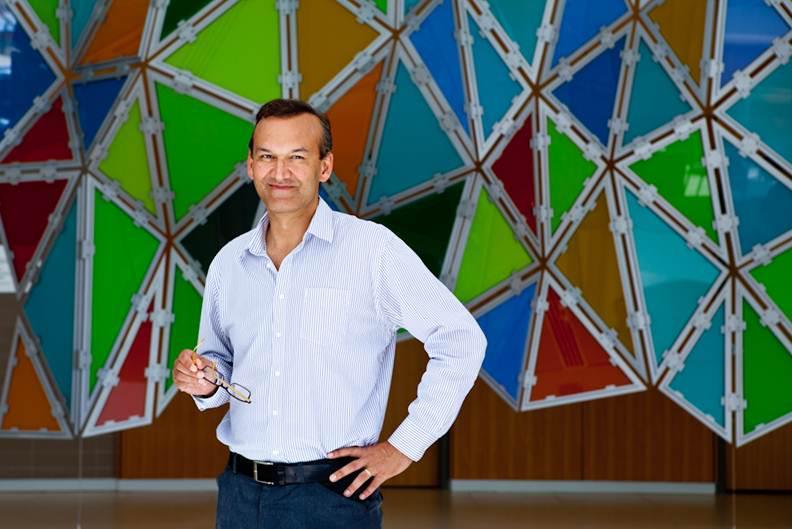
Dr. Prabhat Jha
RSC Fellow, Academy of Sciences
Affiliation: University of Toronto
Keywords: tobacco, epidemiology, economics, mortality statistics, COVID-19, Covid-19, corona virus
Induction Year: 2019
JHA, Prabat - Centre for Global Health Research and Dalla Lana School of Public Health, University of Toronto
Prabhat Jha has led pioneering epidemiological and economic studies which have established tobacco as the most important contributor to premature adult mortality and identified taxation as the most effective means to reduce tobacco consumption (enabling the first global treaty on health). Jha has done outstanding research on the reliable assessment of causes of death including the Million Death Study of a random sample of all deaths in India since 2001.
Jing (Jin) Jiang
RSC Fellow, Academy of Sciences
Affiliation: Western University
Induction Year: 2020
Jing Jiang, a Distinguished University Professor and NSERC Senior Industrial Research Chair, is an internationally renowned Canadian expert in fault-tolerant control, instrumentation/control systems for nuclear power plants, and renewable energy microgrids. His pioneering works have fundamentally revolutionized approaches to achieving high reliability in safety-critical systems, safer nuclear power plants, and more effective utilization of renewable energy. His seminal contributions have made impacts in both academic communities and industries worldwide.
Jing Jiang, éminent professeur d’université et titulaire d’une Chaire de recherche industrielle senior du CRSNG, est un expert canadien de renommée internationale en matière de commande de systèmes tolérants aux défaillances, de systèmes de commande et de mesures pour les centrales nucléaires et de micro-réseaux d’énergie renouvelable. Ses travaux d’avant-garde ont fondamentalement révolutionné les approches visant à atteindre une grande fiabilité dans les systèmes essentiels à la sûreté des centrales nucléaires et une utilisation plus efficace des énergies renouvelables. Ses contributions fondamentales ont eu un impact sur les communautés universitaires et auprès des industries du monde entier.
Prof. Alice Ming Wai Jim
RSC College Member
Affiliation: Concordia University
Keywords: contemporary art, ethnocultural art histories, global art histories, critical curating, Asian Canadian, diaspora, migration
Induction Year: 2019
Alice Ming Wai Jim is Full Professor of Contemporary Art History and Concordia University Research Chair in Ethnocultural Art Histories. She is co-editor-in-chief of the international journal Asian Diasporic Visual Cultures and the Americas. An art historian and curator, her research on diasporic art in Canada and contemporary Asian art has generated new dialogues within and between ethnocultural and global art histories, critical race theory, media arts, and curatorial studies.
Alice Ming Wai Jim est professeure titulaire d’histoire de l’art contemporain et titulaire de la Chaire de recherche de l’Université Concordia sur histoire de l’art ethnoculturel. Elle est corédactrice en chef de la revue internationale Asian Diasporic Visual Cultures and the Americas. Historienne de l’art et commissaire d’exposition, ses recherches sur l’art de la diaspora au Canada et l’art asiatique contemporain ont permis de nouvelles approches dans les domaines des histoires de l’art ethnoculturel et mondial, de la théorie critique de la race, des arts médiatiques et des études de la pratique curatoriale.
Dr. Gyan Johari
RSC Fellow, Academy of Sciences
Affiliation: McMaster University
Keywords: Amorphous solids, thermodynamics, dielectrics, physics of ice and glaciers, pharmaceutical's design and delivery
Gyan P. Johari is Professor and Chair of Glass Science and Technology, Department of Materials Science and Engineering, McMaster University.
Professor Johari's research has contributed significantly to our understanding of amorphous substances: His considerations of the thermodynamics of structural relaxation and its effects on the properties of glasses have led him to formulate a well-received theory of hierarchically constrained molecular motions which begin at particular sites and evolve with time; he has contributed much to the theories of fast-ion conduction in ionic glasses, and of dynamically controlled chemical reactions, and developed the concept of negative feedback between molecular diffusion and chemical reaction in the gelation and vitrification of thermoset polymers. He has developed calorimetric methods for distinguishing between amorphous and microcrystalling states, and techniques for hyperquenching of micron-size droplets for the study of partially metabolized states of biopolymers.
Dr. Sajeev John
RSC Fellow, Academy of Sciences
Affiliation: University of Toronto
Keywords: Photonic crystals, optics, materials science
Prof. Catherine L. Johnson
RSC Fellow, Academy of Sciences
Affiliation: The University of British Columbia
Induction Year: 2024
Catherine Johnson is a global leader in studies of terrestrial and planetary magnetism. Catherine’s work addresses fundamental questions related to how terrestrial planets and moons form and how their interiors function. Through key roles on science teams for NASA missions, she has pioneered studies of interactions among planetary magnetic fields, deep interior processes and the solar wind. Catherine is a Fellow of the American Geophysical Union and a member of the American Academy of Arts and Sciences and the National Academy of Sciences.
Catherine Johnson est une sommité mondiale dans le domaine de l'étude du magnétisme terrestre et planétaire. Les travaux de Catherine portent sur des questions fondamentales liées à la formation des planètes et des lunes terrestres et à leur fonctionnement interne. En jouant un rôle clé dans les équipes scientifiques des missions de la NASA, elle a été la première à étudier les interactions entre les champs magnétiques planétaires, les processus intérieurs profonds et le vent solaire. Catherine est membre de l'American Geophysical Union, de l'American Academy of Arts and Sciences et de la National Academy of Sciences.

Prof. Juliet Johnson
RSC Fellow, Academy of Social Sciences
Affiliation: McGill University
Keywords: International political economy, monetary and banking systems, Europe, Russia, post-communist world; memory and commemoration
Induction Year: 2019
JOHNSON, Juliet – Department of Political Science, McGill University
Juliet Johnson conducts internationally acclaimed research in two fields: international political economy, and memory and commemoration. Using a range of methods, she has explored the transformation of post-communist financial systems, central bank learning and the rise of financial nationalism after the global financial crisis, and political struggles over the fate of Soviet-era monuments and memorials. She has won numerous international prizes and is Lead Editor of the journal Review of International Political Economy.
Juliet Johnson mène des recherches de renommée internationale dans deux domaines : l’économie politique internationale et la mémoire et la commémoration. À l’aide de diverses méthodes, elle a exploré la transformation des systèmes financiers postcommunistes, l’apprentissage de la banque centrale et la montée du nationalisme financier après la crise financière mondiale, ainsi que les luttes politiques concernant le sort des bâtiments et monuments commémoratifs de l’ère soviétique. Elle a remporté de nombreux prix internationaux et est l’éditeur en chef de la revue Review of International Political Economy.
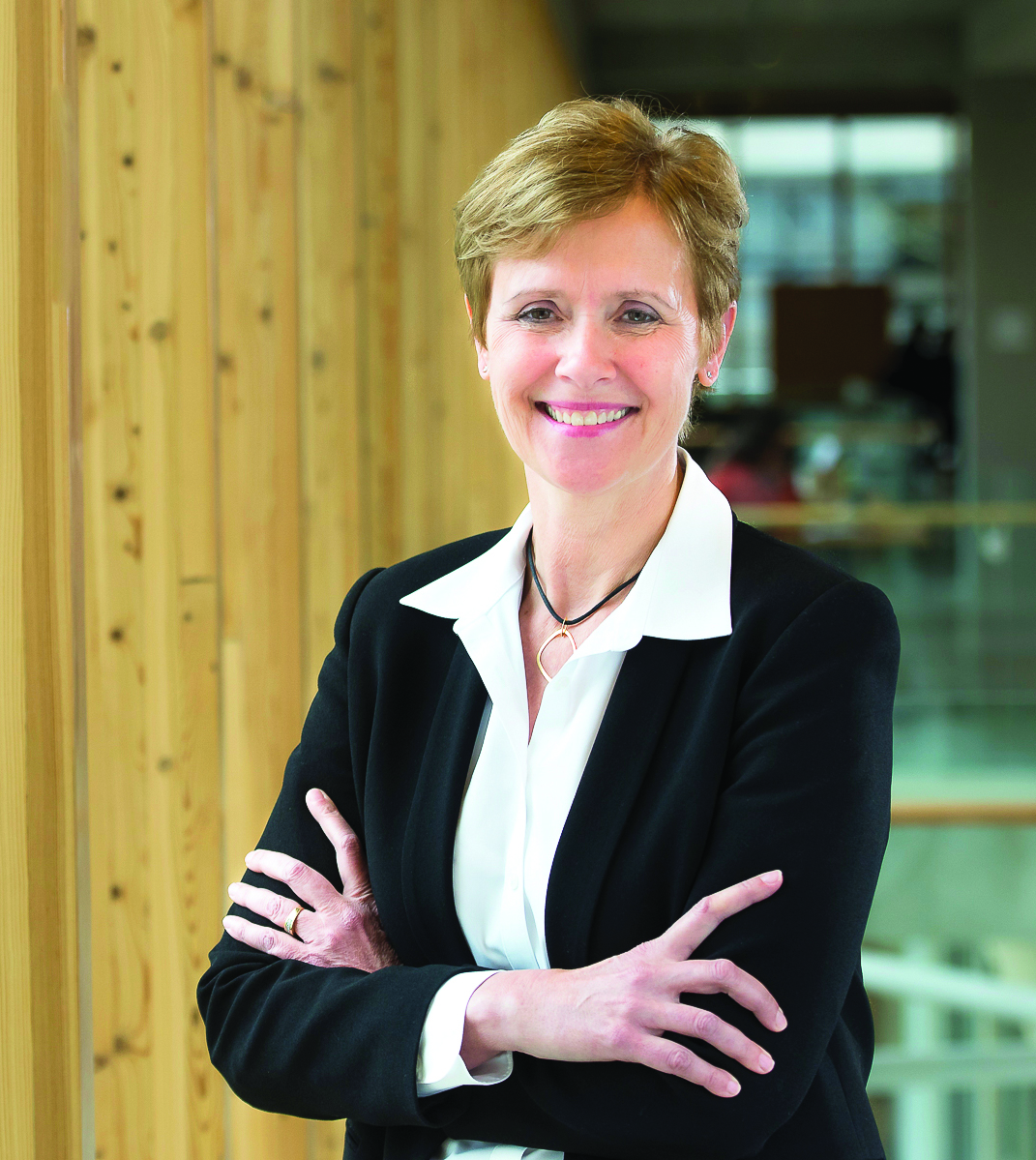
Prof. Joy Johnson
RSC Fellow, Academy of Social Sciences
Affiliation: Simon Fraser University
Keywords: sex, gender, health research, health promotion, health policy
Induction Year: 2019
JOHNSON, Joy – Faculty of Health Sciences, Simon Fraser University
Joy Johnson is a leading authority on health promotion and health behaviour who has advanced the understanding of sex and gender in health, particularly relating to substance use and mental health. SFU’s first female Vice-President, Research and the former director of the CIHR Institute of Gender and Health, she is internationally recognized for her leadership in building Canada’s health research capacity and shaping research, policy and practice for better health outcomes.
Joy Johnson est une référence incontournable dans le domaine de la promotion de la santé et des comportements sanitaires, qui a permis de mieux cerner la question du sexe et du genre en santé, particulièrement en ce qui concerne l’usage de substances psychoactives et la santé mentale. Première femme vice-présidente de recherche à la SFU et ancienne directrice de l’Institut de la santé des femmes et des hommes des IRSC, elle est reconnue sur le plan international pour son leadership dans le renforcement de la capacité du Canada en matière de recherche en santé et pour avoir façonné les recherches, les politiques et les pratiques pour de meilleurs résultats en santé.
Pierre Marc Johnson
RSC Fellow, Academy of Social Sciences
Affiliation: Lavery Avocats
Avocat, médecin et ancien Premier ministre du Québec, Pierre Marc Johnson enseigne présentement le droit de l'environnement et les politiques publiques à l'Université McGill. Il est également professeur au Centre de médecine, d'éthique et de droit, où, avec une équipe de jeunes chercheurs, il se penche en particulier sur les questions de l'incertitude scientifique en analyse des risques et des responsabilités administratives en matière d'environnement.
Ses préoccupations et ses recherches ont amené M. Johnson à jouer un rôle de plus en plus important dans certains organismes, telle la Table ronde nationale sur l'environnement et l'économie dont il est le vice-président et le responsable du comité des affaires étrangères. Il a également agi à titre de conseiller spécial du secrétaire général de la Conférence des Nations-Unies sur l'environnement et le développement qui a eu lieu à Rio en 1992. Depuis trois ans, il a prononcé une cinquantaine de conférences au Québec, au Canada et en Europe sur l'environnement et l'éthique.
Ses principales allocutions et ses nombreux articles témoignent d'une grande rigueur intellectuelle liée à un souci de rendre la problématique écologique intelligible au plus grand nombre.
Prof. Michele Johnson
RSC Fellow, Academy of the Arts and Humanities
Affiliation: York University
Induction Year: 2021
An international leader in Black History, Michele Johnson is esteemed for rigorous and methodologically innovative studies of cultural production and performance, race and racialization, gender relations and labour among persons of African descent in the Caribbean and Canada. Equally committed to networking and communicating with multiple audiences, Johnson has employed her global prominence to benefit students and scholars around the world, and to promote wider community engagement with Black History.
Cheffe de file international de l’histoire des Noirs, Michele Johnson est réputée pour ses travaux rigoureux et méthodologiquement novateurs sur la production culturelle, la race, les relations entre les genres et le travail chez les personnes d’ascendance africaine dans les Antilles et au Canada. Également engagée dans le réseautage et le dialogue avec divers publics, Johnson utilise sa notoriété au profit des étudiants et des universitaires du monde entier et s’investit dans la promotion d’un engagement communautaire plus large avec l’histoire des Noirs.
Dr. Alexandra Johnston
RSC Fellow, Academy of the Arts and Humanities
Affiliation: University of Toronto
A brilliant scholar of international repute, Dr. Johnston's work has revolutionized the study of Early English Drama. An innovative thinker, an assiduous scholar, she has demonstrated leadership in cooperative, interdisciplinary research at the crossroads between social history and dramatic history.
The editor of six volumes of meticulous scholarship, director of eleven others, author of numerous studies cited for their high standards of scholarship, Dr. Johnston is most frequently cited as a visionary and a leader in the academic community.
Dr. Johnston has changed the direction of research, basing theatre criticism on historical fact and social realities. Since this information was not available, she undertook a massive and entirely successful project. Member of the Order of Canada since 2018
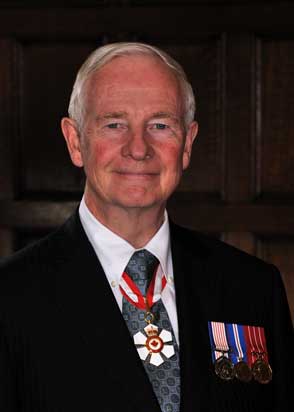
The Honourable David Johnston
RSC Fellow, Academy of Social Sciences
Affiliation: Governor General of Canada
Keywords: Law, History, Constitutional Matters, Canada, Family and Children
Induction Year: 2010
JOHNSTON, DAVID LLOYD – His Excellency the Right Honorable Governor General of Canada
David Johnston is a model of the virtuous academic life. A leading scholar in the law of securities regulation, corporations law and information technology, he has, through his research and public service, helped to reshape Canada’s regulatory framework in the corporate finance and business associations sectors. A pioneer in computer law, he is now recognized for his contributions to cyberlaw and more broadly to online learning and the building of “smart communities”. Through his chairmanship of the National Round Table on the Environment, the Information Highway Advisory Council, the National Broadband Task Force and the Canadian Institute for Advanced Research, he has integrated innovative scholarship with the key themes of Canadian public policy development, to generate a richer understanding of the relationship among law, science, technology and economic development. As president of two leading research universities, he has been a tireless champion for investment in education from early childhood through post-graduate research.
Dr. Pierre Jolicoeur
RSC Fellow, Academy of Social Sciences
Affiliation: Université de Montréal
Keywords: Cognitive psychology, attention, perception, cognitive science, electrophysiology
LONG
Professor Pierre Jolicoeur is known nationally and internationally for his pioneering empirical work and theoretical leadership in several foundational areas of human experimental psychology. His internationally acclaimed discoveries at the intersection of research on attention, memory, and perception over the last 25 years have profoundly influenced scientific development in each of these areas. He is particularly well known for his creative and elegant experimental designs, for theoretical innovation, for incisive logic, and for the clarity of his expositions. He is recognized today for outstanding contributions to basic knowledge, to scientific education and training, and to the scientific community.
SHORT
Professor Pierre Jolicoeur is a pioneer in experimental psychology. His work at the intersection of research on attention, memory, and perception is well known for its creative and elegant experimental designs, theoretical innovation, incisive logic, clarity of expositions. He is recognized for outstanding contributions to basic knowledge, to scientific education and training, and to the scientific community.
Paul Jolicoeur
RSC Fellow, Academy of Sciences
Affiliation: Université de Montréal
Paul Jolicoeur (M.D., Ph.D.) is Director of the Molecular Biology Laboratory of CRIM and an eminent biomedical researcher in the field of retroviruses and cancer. Major contributions have been on the molecular control of the Fv-1 gene, on the identification of several determinants of pathogenecity of murine leukemia retroviruses and on the isolation of revertant cells which are an extraordinary tool to study the interaction of cellular genes with the oncoprotein V-Fos. One of these retroviruses produces paralysis and neurological lesions similar to those produced by the AIDS virus. Jolicoeur has identified and cloned a defective retrovirus responsible for MAIDS (murine acquired immunodeficiency syndrome).
Recently his laboratory has developed a novel model of Aids in mice expressing HIV-1.
Dr. John Jonas
RSC Fellow, Academy of Sciences
Affiliation: McGill University
Keywords: Physical metallurgy, mechanical metallurgy, deformation processing
Prof. Jonas is Canada's foremost researcher on the hot deformation of steels. An internationally acknowledged leader in research in this area, he has published over 500 scientific papers, co-authored three books on the topic, and is currently Birks Professor of Metallurgy at McGill. He is a pioneer in the application of mathematical modelling to hot deformation of metals and one of the first to demonstrate that results obtained in the lab could be used in the design of industrial rolling processes. Consequently, most Canadian steel companies and indeed many others around the world use the results of Prof. Jonas' research in the design of their rolling schedules.
Prof. Brian Jones
RSC Fellow, Academy of Sciences
Affiliation: University of Alberta
Keywords: Carbonate Sediments, Diagenesis, Hot Springs, Microbes, Sedimentology
Induction Year: 2006
Long Citation
Brian Jones is an earth scientist whose research reflects his fascination with the interaction between organisms and their environment. His pioneering and continuing work has convincingly illustrated the importance of microbes on the precipitation of carbonate, silica, and precious metals in hotspring systems throughout geologic history. His major studies detailing the taxonomy, paleobiology, and geochemistry of fossil brachiopods has been fundamental to the interpretation of vast areas of Arctic geology. He is currently using Grand Cayman Island as an extensive natural laboratory to understand the processes of carbonate sedimentation, ecology, geochemistry, and hydrology of ancient, isolated, hydrocarbon-rich, reef platforms.
Short Citation
Brian Jones is an earth scientist whose work has convincingly illustrated the importance of microbes on the precipitation of carbonate, silica, and precious metals in hotspring systems throughout geologic history. He is currently using Grand Cayman Island as an extensive natural laboratory to understand the processes of carbonate sedimentation, ecology, geochemistry, and hydrology of ancient, isolated, hydrocarbon-rich, reef platforms.
Nina Jones
RSC College Member
Affiliation: University of Guelph
Keywords: Signal Transduction, Phosphotyrosine, Human Disease
Induction Year: 2016
Nina Jones is Associate Professor and Canada Research Chair (CRC) in Eukaryotic Cellular Signalling at the University of Guelph. Her research investigates fundamental mechanisms of cell communication, and she has made significant contributions in understanding how such signalling pathways become deregulated in prevalent human pathologies such as kidney disease, cardiovascular disease and cancer. Dr. Jones has received numerous awards throughout her career for her research accomplishments and community involvement.
Nina Jones est professeure agrégée et titulaire d’une chaire de recherche du Canada (CRC) en signalement cellulaire eucaryote à l’University of Guelph. Ses recherches portent sur les mécanismes fondamentaux de la communication cellulaire. Nina Jones a apporté des contributions notables visant à comprendre comment ces voies de signalement se dérèglent dans certaines pathologies humaines répandues, telles que les néphropathies, les maladies cardiovasculaires et le cancer. La Prof. Jones a reçu de nombreux prix tout au long de sa carrière pour ses recherches et réalisations et son engagement communautaire.

Dr. Esyllt Jones
RSC College Member
Affiliation: University of Manitoba
Keywords: COVID-19, Covid-19, corona virus
Induction Year: 2022
Esyllt Jones studies the interactions between inequality, disease and social movements. Her contributions have earned her numerous awards and established her as an expert in twentieth-century Canadian social history. Dr. Jones has an exceptional ability to engage the broader public with her research. She is an innovative scholar whose work crosses boundaries between social history and medical history, and who builds meaningful connections between the university and the larger community.
Esyllt Jones étudie les interactions entre l’inégalité, la maladie et les mouvements sociaux. Ses contributions lui ont valu de multiples prix et l’ont défini en tant qu’experte de l’histoire sociale canadienne du 20e siècle. La Dre Jones est dotée de capacités remarquables pour sensibiliser le grand public à ces recherches. C’est une érudite dont les travaux novateurs franchissent les frontières qui séparent l’histoire sociale et l’histoire médicale. Elle crée des liens étroits entre l’université et la communauté au sens large.
Prof. Christopher Jones
RSC Fellow, Academy of the Arts and Humanities
Affiliation: Harvard University
Keywords: Ancient history, epigraphy, ancient literature
Four impressive books, over fifty learned papers and numerous incisive reviews have made U.ofT.'s Christopher JONES the outstanding expert on the Roman Empire in its greatest days. Immersed in its literature and skilled in imperial epigraphy, he is a world authority on the interaction of its Greek-speaking and Latin-speaking halves. He has been guest lecturer at many institutions (including Harvard and Paris' prestigious Ecole Normale Supérieure de Jeunes Filles), twice a Fellow of Princeton's Institute for Advanced Studies, and repeatedly adviser to editors of learned periodicals such as "Zeitschrift für Papyrologie und Epigraphik" and "Phoenix".
W. Jones
RSC Fellow, Academy of the Arts and Humanities
Affiliation: University of Alberta
Keywords: Early-modern England
Born in England in 1932 Professor William John Jones took his degrees at University College, London, and soon became the recipient of numerous academic honours and distinctions on both sides of the Atlantic Ocean. His investigations of the late sixteenth century English legal system have resulted in a regular and notable series of publications on the law courts, in particular of the Elizabethan Chancery, which have added immensely to our knowledge in this field. His continuing work promises equally distinguished and informative studies for the future.
Dr. Russell G. Jones
RSC College Member
Affiliation: McGill University
Induction Year: 2015
Russell Jones’ research program is focused on deciphering the molecular programs that regulate cell growth and proliferation and their alteration in cancer. Specifically, his research investigates fundamental molecular processes that integrate cellular energy metabolism with various signal transduction pathways, and how this regulates checkpoints for normal and cancer cells including T-lymphocyte survival, homeostasis and tumorigenesis as well as breast cancer metastatic progression.
Le programme de recherche de Russell Jones est focalisé sur l’étude des programmes moléculaires qui régulent la croissance et la prolifération cellulaires et leur modification dans le cancer. Ses travaux de recherche décortiquent les processus moléculaires fondamentaux qui intègrent le métabolisme cellulaire avec différentes cascades de signalisation. Dr. Jones identifient quels sont les éléments de contrôle des cellules normales et cancéreuses. Il étudie les molécules contribuant à la survie des lymphocytes T, à l’homéostasie, à la tumorigenèse et la progression métastatique du cancer du sein.
Prof. Steven Jones
RSC Fellow, Academy of Sciences
Affiliation: BC Cancer Agency, The University of British Columbia
Keywords: Bioinformatics, genomics, oncology, drug discovery
Induction Year: 2011
Alister Jones
RSC Fellow, Academy of Sciences
Affiliation: None
Keywords: Spectroscopy, aeronomy, magnetosphere, aurora
Dr. A. Vallance Jones, is now retired from his position as a Principal Research Officer with the National Research Council which he joined in 1968. Previously, he was a Professor of Physics at the University of Saskatchewan. He received his Ph.D. in 1950 from the University of Cambridge, his M.Sc. and B.Sc. in 1946 and 1945 respectively from the University of New Zealand. He is a fellow of the Royal Society of Canada. His work has been primarily in the spectroscopy of aurora and airglow and in other studies of aurora by optical methods. He is a past associate editor (Space Science and Aeronomy) of the Canadian Journal of physics and past Chairman of the Aeronomy Division of the International Association of Geomagnetism and Aeronomy. He also served for a number of years as secretary of the NSERC Grant Selection Committee on Space Science and Astronomy. He is the author of over 100 scientific papers and books on aurora borealis.