

You are here
Mr. Dimitri Weiss
RSC Fellow, Academy of Social Sciences
Affiliation: Université Paris 1 Panthéon-Sorbonne
Keywords: Management, gestion des ressources humaines, relations industrielles, organisation, communication
Deceased Date: 2020-08-26
Dimitri Weiss, qui a été un des premiers docteurs en économie et administration des entreprises (1969) et le premier docteur d'État ès sciences de gestion en France (1975), est professeur à l'Université Paris 1 Panthéon-Sorbonne et directeur du département Gestion des ressources humaines et des relations d'emploi à l'Institut d'Administration des Entreprises, où il travaille depuis 1962.
Il est l'auteur de quelque 160 publications dans les domaines -dans lesquels il a joué un rôle de pionnier- des relations industrielles, de la gestion des ressources humaines, du management, de la communication et du consommérisme, parus en sept langues et douze pays, dont le Canada.
Il a fait connaître les auteurs et les travaux canadiens, particulièrement le « Dictionnaire canadien » de Gérard Dion, sur les innombrables tribunes internationales où il a dispensé son savoir. L'intérêt du professeur Weiss pour le Canada, le nombre et la qualité de ses travaux et de ses publications, ainsi
que son extraordinaire rayonnement à travers le monde ne sauraient être mieux reconnus qu'en l'accueillant comme membre étranger dans l'Académie des lettres et des sciences humaines de la Société royale du Canada.
Dr. William Wellington
RSC Fellow, Academy of Sciences
Affiliation: The University of British Columbia
Deceased Date: 2008-11-25
Professor Wellington is a distinguished scientist who has pioneered in two major areas. He first set the foundation for biometeorology in Canada, publishing results of critical new methods and insights that triggered extensive studies of climatic effects on behaviour and populations, particularly of insects. Secondly, he forced a dramatic new perception upon population ecologists internationally, by demonstrating that qualitative differences within populations of animals, interacting with spatial variability, are fundamentally important in population ecology. These achievements, plus his most recent mathematical modeling work, account for his international and national awards and for his involvement in senior roles within professional societies.
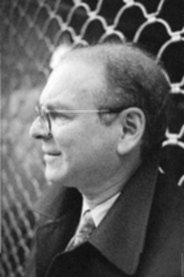
Dr. Barry Wellman
RSC Fellow, Academy of Social Sciences
Affiliation: University of Toronto
Keywords: Social networks, internet community
Deceased Date: 2024-07-09
Long Citation
Barry Wellman ranks among Canada's most prominent sociologists and among the world's foundational leaders in social network analysis. His substantive, theoretical and methodological innovations revolutionized the study of community, work, the Internet and family life. A pioneer in the field, he formulated an internationally respected paradigm for understanding human interaction as social networks. His research has produced an extensive and influential body of literature and provides a framework for future studies on community technology and social change. He has also played key roles in several professional associations, advancing the field of social network analysis and sociology as a whole.
Short Citation
Barry Wellman ranks among Canada's most prominent sociologists and among the world's foundational leaders in social network analysis. His substantive, theoretical and methodological innovations revolutionized the study of community, work, the Internet and family life. A pioneer in the field, his research has produced an extensive and influential body of literature and provides a framework for future studies on community, technology and social change.
Mr. John Wevers
RSC Fellow, Academy of the Arts and Humanities
Affiliation: University of Toronto
Deceased Date: 2010-07-23
John William Wevers, Chairman of the Department of Near Eastern Studies at the University of Toronto, is acquainted with modern linguistics and familiar with many of the languages of the ancient Near East. His wide interests are reflected in numerous articles and five volumes. Making his particular domain the study of the Greek versions of the Old Testament, he has made Toronto a centre for Septuagint studies and acquired an international reputation which led to his election as President of the International Organization for Septuagint and Cognate Studies and Corresponding Member of the Akademie der Wissenschaften in Göttingen in 1972.
Dr. Edward Whalley
RSC Fellow,
Deceased Date: 2000-03-21
For the past 13 years Edward Whalley has headed a laboratory devoted to Physical Chemistry at high pressures. This laboratory is now well known throughout the world. Whalley's work has dealt with the structures of products formed at high pressures such as poly and methyl vinyl acetate, poly aldehydes, poly carbon disulphide and high pressure ices; rates of chemical reactions as a function of pressure and the use of the data obtained to explain organic reaction mechanisms; compressibilities of liquids, an extensive study of the p.v.t. properties of water and the design of high pressure equipment. His scientific work has invariably been first rate.
Dr. Kenneth Whitham
RSC Fellow, Academy of Sciences
Deceased Date: 2009-04-22
Dr. Whitham has brought the training of a physicist, an original mind and an ability for penetrating and constructive criticism to illuminate several areas of the earth sciences. He was the first to devise a method for measuring the separate effects of uranium and thorium in rocks 'in situ'. He made the first
systematic study of magnetic variations at high latitudes, discovering the first major induction anomalies in North America and devising experiments in magnetic deep sounding, magneto-tellorics and heat flow to study these unusual features. He was the first to combine secular change magnetic field with the main field to investigate westward drift and its variability. Since becoming head of the seismology division he has reorganized and expanded the crustal study group, making it one of the most productive in the country, and has led the Yellowknife array group to major breakthroughs in the identification of underground nuclear explosions.
Prof. G. Wickens
RSC Fellow, Academy of the Arts and Humanities
Affiliation: University of Toronto
Deceased Date: 2005-01-26
His significant contributions to his field have all lain in the area of Persian and Arabic languages, literature and ideas. While most at home as a craftsman translating difficult technical prose and philosophical poetry, his most striking and controversial work has been on the 'focal theory' of imagery in the Persian mystical lyric. Among his stoutest supporters in this connection is the doyen of Czech Orientalists Jan Rypka, who writes (in his great "Iranische Literaturgeschichte", Leipzig 1959, passim) of Wickens' 'glänzende Studien'.