

You are here
Mr. Gérard Filion
RSC Fellow,
Keywords: Journalisme
Deceased Date: 2005-03-26
Gérard Filion, licencié en sciences commerciales en 1934, a fourbi ses armes de journaliste comme directeur-rédacteur de la « Terre de chez-nous », poste qu'il occupa pendant douze ans. Appelé à la direction du journal « le Devoir » en 1947, il a manifesté depuis lors une vigeur d'esprit et une envergure de pensée qui font honneur à la profession dont il est membre. Gérard Filion est un homme engagé dans les problèmes de son siècle, et cela non seulement par la parole et l'écrit mais aussi par l'ensemble de sa vie. La liste de ses publications est particulièrement significative à ce sujet. Ainsi les écrits qui s'échelonnent de 1939 à 1949 s'adressent-ils tous à un public très souvent oublié par notre élite, celui des campagnes, pour l'informer de ses tâches, augmenter sa compétence et lui apprendre à mieux vivre dans le milieu qui est le sien. « Les Confidences d'un commissaire d'école » publié en 1960 nous montre un Gérard Filion intimement mêlé à ce milieu pour lequel il a toujours écrit afin de l'aider à faire face aux problèmes particuliers que pose l'enseignement en milieu rural, problèmes qui s'enracinent tout autant dans les institutions que dans le caractère particulier des ruraux eux-mêmes. Comme directeur du journal « Le Devoir », Gérard Filion a élargi le cadre de ses lecteurs et celui de ses intérêts mais il est demeuré fidèle à lui-même, abordant franchement les problèmes les plus difficiles et les plus délicats (« 40 ans de combat », « Splendeurs et misères de l'Inde », « Rideau de fer ou rideau de préjugés », « Maurice Duplessis ») en essayant toujours de transmettre un message à ses compatriotes. Rien d'étonnant qu'il ait reçu deux fois en huit ans le Prix du journalisme canadien.
Mr. Gabriel Filteau
RSC Fellow, Academy of Sciences
Affiliation: Université Laval
Keywords: Océanographie biologique
Deceased Date: 2015-05-05
Ce qui caractérise Gabriel Filteau, c'est la constance et la ténacité démontrées au cours des 25 dernières années dans le domaine de l'enseignement et la recherche en biologie marine à I'Université Laval. Ses efforts soutenus furent couronnés par son rôle de catalyseur dans l'élaboration du programme de recherches interuniversitaires en océanographie de l'estuaire du Saint-Laurent (GIROQ). Grâce à ses travaux personnels et à ceux de ses collaborateurs, nous connaissons beaucoup mieux le zooplancton de cette nappe d'eau. Très généreux de son temps et de sa personne, il a assumé la direction de plusieurs sociétés savantes de même qu'une participation intense au bien-être de ses concitoyens de tous les milieux.
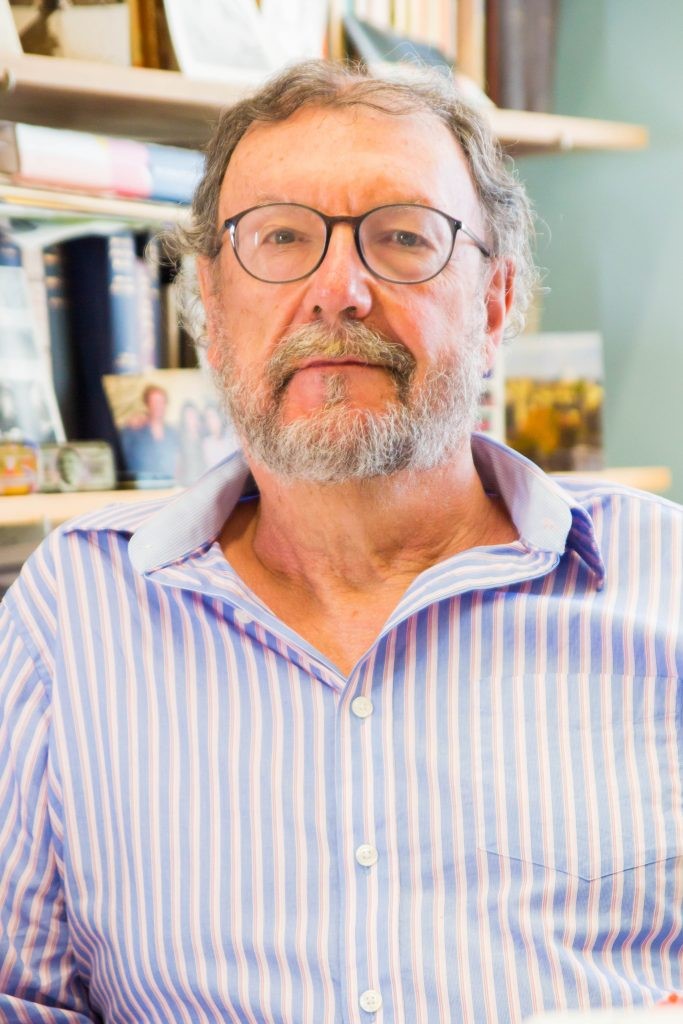
Prof. Len Findlay
RSC Fellow, Academy of the Arts and Humanities
Affiliation: University of Saskatchewan
Keywords: Canada, literature, culture, aboriginal, humanities
Deceased Date: 2023-05-25
Long Citation
Len Findlay trained at Oxford in European cultural history and produced influential work on Romantic and Victorian authors and movements. He has more recently turned to the reciprocal nineteenth-century flows of radical thought between Europe and Canada, and to the failure of Canadian radicals to show common cause with Canada's First Nations, Inuit, and Métis. He works on and for academic freedom, on decolonizing universities, and on the role of culture in nation-formation. For the past decade he has collaborated with Aboriginal colleagues in defining and promoting the Indigenous Humanities.
Short Citation
Len Findlay has produced influential work on Romantic and Victorian authors and movements. He has more recently turned to the reciprocal nineteenth-century flows of radical thought between Europe and Canada, and to the failure of Canadian radicals to show common cause with Canada's First Nations, Inuit, and Métis. For the past decade he has collaborated with Aboriginal colleagues in defining and promoting the Indigenous Humanities.
Duncan Fishwick
RSC Fellow, Academy of the Arts and Humanities
Affiliation: University of Alberta
Keywords: Roman Empire Imperial Cult, epigraphy
Deceased Date: 2015-08-06
Duncan Fishwick is a leading authority on the Roman Empire, a frequent participant in Ancient History colloquia in North America and in Europe and a key member of a group of scholars who have been producing a corpus of works on the history of religions in the Roman Empire. In the area of Emperor worship in particular he has revolutionized previous conceptions. In addition to his books, he has published extensively in scholarly journals of the highest reputation on both continents. His recent contribution to "Aufstieg und Niedergang der römischen Welt", provides the authoritative account of Roman provincial rulership in the West.
Dr. Michael Fleet
RSC Fellow, Academy of Sciences
Affiliation: Western University
Deceased Date: 2017-12-06
Michael Fleet is one of the leading mineralogists, x-ray crystallographers, solid state mineralogists and geochemists of Canada. For almost thirty years he has contributed to our understanding of mineral resources through his exact studies of the crystal structure of ore minerals and the thermodynamics of their formation in molten solid and fluid systems. His work on the factors influencing the distrituion of certain trace elements like nickel and the platinum group elements has been outstanding. Fleet has demonstrated his ability to use many of the classic techniques for solid state description such as x-ray crystallography and has been a pioneer in using the evolving techniques of Mössbauer and Ramon Spectroscopy. His work is recognized world wide.
Dr. John Flint
RSC Fellow, Academy of the Arts and Humanities
Affiliation: Dalhousie University
Keywords: History, Africa, British Empire, partition, decolonization
Deceased Date: 2021-08-29
John Edgar Flint is a Canadian educated in England, and who returned to Canada to become chairman of the History Department, Dalhousie University. He is distinguished by that happiest combination in historians, a fund of common sense joined to a lively imagination, and as a result his chairmanship was intelligent and purposeful. He is an incisive, yet sensitive scholar of African history, and has done much for the subject at Dalhousie and in Canada. His work has been remarkable for its range and its quality. He edited Vol. V, of The Cambridge History of Africa, C.V.P., 1976, reprinted 1985.
Dr. Robert Folinsbee
RSC Fellow, Academy of Sciences
Affiliation: University of Alberta
Deceased Date: 2008-05-01
Born Edmonton, Alberta, April 16, 1917. Graduated University of Alberta, B.Sc. Geology, 1938 (medallist). Master Science (1940), Ph.D (1942), University of Minnesota; petrology and economic geology; LL.D.(1972), University of Windsor; D.Sc.h.c.(1989), Universityof Alberta. Geological Survey of Canada 1936-1943 as Student Assistant and Assistant Geologist; 1941-1943 assisting in wartime production of scheelite concentrates from Canadian gold mines. 1943-1945 Royal Canadian Air Force, pilot. 1945-1946 Harvard University post-doctorate research; reflectivity ore minerals. 1946 to present University of Alberta, Assistant Professor to 1950, Associate Professor to 1955 to 1968 Professor and Chairman of Department of Geology from September, 1955. 1946-1950 in charge of field parties Geological Survey of Canada, Northwest Territories. 1954-1955 on sabbatical leave at University of California, Berkeley; research on potassium-argon dating.
Mr. Gilles Fontaine
RSC Fellow, Academy of Sciences
Affiliation: Université de Montréal
Keywords: Astrophysique, astronomic, astérosismologic, evolution stellaine, etoiles
Deceased Date: 2019-11-01
Gilles Fontaine, de I'Université de Montréal, se consacre à l'étude des étoiles de type naines blanches. L'étude de ces cadavres stellaires, leur autopsie en quelque sorte, représente un chapitre essentiel de l'astrophysique contemporaine, intéressant à la fois l'astronome et le physicien. Il ya quatre facettes des ses travaux actuels: mieux comprendre la nature des pulsations présentes dand certaines naines blanches; lqa d.termination de la composition chimique superficielle des naines blanches et la compréhension des variations observées; l'étude des étoiles sous-naines, génitrices d'une pantic des naines blanches; et l'exploration systématique de I'hémisphère sud pour y découvrir de nouvelles naines blanches et sous-naines.
Dr. Arthur Forer
RSC Fellow, Academy of Sciences
Affiliation: York University
Keywords: Chromosome movement, cell division
Deceased Date: 2024-06-06
Using a wide variety of light and electron microscopic techniques, Forer has challenged the assumption that chromosomes move during cell division by forces originating within the microtubules of the spindle fibres which connect chromosomes to the spindle poles. He has implicated the contractile protein, actin, as providing the force for chromosome movement, and is exploring the control of this movement. He is among the most influential leaders in this important field and is continuing to contribute actively to it.
Dr. P. Forsyth
RSC Fellow, Academy of Sciences
Keywords: Radio, aurora, ionosphere, space
Deceased Date: 2008-05-22
Peter Allan Forsyth is Professor of Physics, University of Saskatchewan. After seeing active service as a technical officer with the navy during the war, he returned to the University of Saskatchewan to apply his detailed knowledge of practical experience of radar equipment to the study of the aurora, and it was on this subject that he wrote his Ph.D. thesis at McGill University in 1951. Continuing his work on the upper atmosphere with the Defense Research Board he made notable discoveries; in particular, he developed the system of transmission of radio signals from meteor ionization known as 'Janet'. His originality and inventiveness have stimulated many other research workers.
Yves Fortier
RSC Fellow, Academy of Sciences
Affiliation: Geological Survey of Canada
Deceased Date: 2014-08-19
Prof. John Fossey
RSC Fellow, Academy of the Arts and Humanities
Affiliation: McGill University
Keywords: Archéologie, epigraphie, prosopographie, onomastique, grèce
Deceased Date: 2024-12-01
John M. Fossey, archéologue classique, épigraphiste et topographiste, est auteur de 12 livres sur la Grèce centrale, notamment sur la Béotie, la Locride et la Phocide où il a dirigé et pratiqué des fouilles avec des étudiants canadiens. Après avoir servi comme président-fondateur de l'Institut canadien d'archéologie à Athènes, il est le premier Canadien à s'être intéressé à la diaspora grecque dans la région de la Mer noire, en Bulgarie et en Géorgie. Ses recherches portent aujourd'hui tout particulièrement sur la géographie humaine et le développement des modèles des noms propres dans la Grèce ancienne. Il écrit et parle couramment le français, l'anglais et le grec moderne.