

You are here
Prof. William Seager
RSC Fellow, Academy of the Arts and Humanities
Affiliation: University of Toronto
Induction Year: 2025
William E. Seager is one of the world’s leading philosophers of mind. His impactful research addresses foundational metaphysical issues concerning the nature of consciousness and of mental representation. He is a principal defender of the view that consciousness is a fundamental feature of the world that cannot be explained in terms drawn from other scientific theories. Seager brings his original research in philosophy of science to philosophical issues about consciousness.
William E. Seager est l’un des principaux philosophes de l’esprit au monde. Ses recherches influentes portent sur des questions métaphysiques fondamentales concernant la nature de la conscience et de la représentation mentale. Il est l’un des principaux défenseurs du point de vue selon lequel la conscience est une caractéristique fondamentale du monde qui ne peut pas être expliquée par des termes tirés d’autres théories scientifiques. Seager apporte ses recherches originales en philosophie des sciences aux questions philosophiques sur la conscience.
Dr. Adel S. Sedra
RSC Fellow, Academy of Sciences
Affiliation: University of Waterloo
Keywords: Microelectronics, solid-state circuits, signal processing, electrical engineering, integrated circuits, analog electronics
LONG
Adel Sedra is internationally recognized for his scientific contributions to the field of microelectronics and in particular for his seminal research work on the design of analog filters used in communications and signal processing systems. By applying powerful analysis techniques to practical industrial applications, Dr. Sedra has helped to create new circuits and structures that are used in industry worldwide. Some of his notable achievements include the co-invention of the current conveyor, the development of low sensitivity structures for both active-RC and switched capacitor filters, and the development of a widely used filter design software package. In addition he has co-authored an internationally acclaimed microelectronics textbook.
SHORT
Adel Sedra is internationally recognized in the field of microelectronics and in particular for his seminal research on the design of analog filters used in communications and signal processing systems. Dr. Sedra has helped to create new circuits and structures that are used in industry worldwide. His achievements include the development of low sensitivity structures for both active-RC and switched capacitor filters.
Dr. Michael Sefton
RSC Fellow, Academy of Sciences
Affiliation: University of Toronto
Keywords: Biomaterials, regenerative medicine, biomedical engineering, tissue engineering
Induction Year: 2005
LONG CITATION
Michael Sefton is a pioneer in tissue engineering and a leader in biomaterials and biomedical engineering. He was the first to recognize the importance of combining living cells with synthetic polymers to create biological tissue and artificial organs – a field now known as tissue engineering. He is an internationally renowned leader in the development and biological application of new biomaterials. He is the inventor or co-inventor of many new ideas that are described in more than 10 patents, some of which are being commercially utilized for therapeutic purposes.
SHORT CITATION
Michael Sefton was the first to recognize the importance of combining living cells with synthetic polymers to create biological tissue and artificial organs – a field now known as tissue engineering. He is an internationally known leader in utilization of new materials for biological applications, including several novel uses for therapeutic purposes.
Dr. Nabil Seidah
RSC Fellow, Academy of Sciences
Affiliation: Université de Montréal
Keywords: Enzymology, molecular biology, protein analysis, neuroendocrinology, gene structure
Dr. Nabil Seidah was trained at Georgetown University in physical chemistry before joining the Institute first as as post-doctoral fellow and then as director of the laboratory on biochemical neuroendocrinology. Dr. Seidah is the co-discoverer of human beta-endorphin and has worked on its biosynthesis for four to five years demonstrating in particular the exact sites of cleavage during pulse-chase experiments. For this work, he received the Clarke Institute Award in 1978 (Toronto). He was the first to develop, in collaboration with the late Margaret Dayhoff, (in the mid 1970's) computer programs to identify protein fragments from data of partial sequence at 10-15 M range. Since 1979, he has tackled one of the most crucial and central aspects of brain chemistry which is the characterization of the enzymatic systems for the cleavage of precursors at pairs of basic amino acid residues. Only a few scientists have had the courage and the determination to tackle this complicated problem. He, Donald Steiner, Peng Loh and J. Thorner are the main leaders in the field. Even though the international competition was very high, Dr. Seidah is the first to have identified a new family of enzymes by reverse genetics which has all the properties of the cleavage enzyme.
Dr. Seidah is a superb protein biochemist and he has added molecular biology to his wide expertise by spending one year sabbatical at the Pasteur Institute in Paris in 1987. He is now working on the protein aspect of his discovery and he is superbly prepared to bring it to fruition. Dr. Seidah is a chemist who has become an excellent biochemist and a world leader in his field. The new enzymes he discovered, called convertases, are at the crossroads of the new chemistry of the brain i.e. the neuropeptides. The cleavage of their precursors is a universal phenomenon which helps the brain to produce the tens of thousands of molecules it needs to insure his numerous and varied functions.
Dr. Ervin Sejdić
RSC College Member
Affiliation: University of Toronto
Induction Year: 2022
Ervin Sejdić is the Research Chair in Artificial Intelligence for Health Outcomes at North York General Hospital and an Associate Professor in The Edward S. Rogers Sr. Department of Electrical & Computer Engineering at the University of Toronto. He is a leader in the development of biomedical devices and the application of machine learning to better understand markers of disease, particularly as they relate to swallowing and gait.
Ervin Sejdić est titulaire de la chaire de recherche en intelligence artificielle pour les résultats de santé au North York General Hospital et professeur agrégé au Département de génie électrique et informatique Edward S. Rogers Sr. de l’Université de Toronto. Il est une sommité en matière de développement de dispositifs biomédicaux et d’application de l’apprentissage automatique pour mieux comprendre les marqueurs des maladies, notamment en ce qui concerne la déglutition et la démarche.
Prof. Janet Selman
RSC Fellow, Academy of the Arts and Humanities
Affiliation: University of Alberta
Keywords: Theater, community-based, participatory theater, play development, directing
Induction Year: 2011
SELMAN, Jan - Department of Drama, University of Alberta
Jan Selman is a theatre director, dramaturg, editor and scholar who is recognized in Canada and
internationally as a founder of the Popular Theatre Movement. Her research emerges from
innovative practice. In her productive career, she investigates and develops ways of making
theatre a potent agent of social change.
SELMAN, Jan - Département d’art dramatique, University of Alberta
Jan Selman est une directrice de théâtre, une dramaturge, une éditrice et une érudite reconnue au
Canada et dans le monde entier comme étant l’une des fondatrices du mouvement du théâtre
populaire. Ses recherches émergent de pratiques innovantes. Au cours de sa carrière fructueuse,
elle a étudié et développé différentes façons pour que le théâtre joue un rôle majeur dans le
changement social.
Prof. Margo Seltzer
RSC Fellow, Academy of Sciences
Affiliation: University of British Columbia
Keywords: Computer Systems, Data Provenance, Interpretable Machine Learning
Induction Year: 2024
Guided by the goal of improving the experience of computer users and systems builders, and bringing formidable creativity and foresight to her work, Dr. Seltzer’s pioneering contributions to Computer Systems include flexible data storage systems for the internet, data provenance systems that support computational reproducibility and network security, and interpretable machine learning models that are transforming high-stakes decision making. She is a visionary leader, caring mentor and dedicated community builder.
Prof. Seltzer, mue par l’objectif d’améliorer l’expérience des utilisateurs d’ordinateurs et des concepteurs de systèmes, et faisant preuve d’une créativité et d’une clairvoyance formidables dans son travail, a apporté des contributions pionnières aux systèmes informatiques, notamment des systèmes de stockage de données flexibles pour l’internet, des systèmes de provenance des données qui soutiennent la reproductibilité des calculs et la sécurité des réseaux, et des modèles d’apprentissage automatique interprétables qui transforment la prise de décision à fort enjeu. Elle est une cheffe de file visionnaire, une mentore attentionnée et une bâtisseuse communautaire dévouée.
Prof. Christina Semeniuk
RSC College Member
Affiliation: University of Windsor
Induction Year: 2023
Dr. Christina Semeniuk is an internationally recognized predictive ecologist who applies integrative methodologies to theories of adaptive capacity in complex systems to forecast human and wildlife
responses to rapid environmental change. Her pioneering contributions are developing leading-edge
interdisciplinary solutions for conservation science within coupled human-and-animal systems in conflict
over resources. She embraces social justice and EDI measures to innovate responsible scientific and
knowledge exchange to ensure successful conservation for all.
Christina Semeniuk est une écologiste prédictive de renommée internationale qui applique des méthodologies intégratives aux théories de la capacité d'adaptation dans les systèmes complexes afin de prévoir les réactions humaine et animale aux changements environnementaux rapides. Ses contributions pionnières consistent à développer des solutions interdisciplinaires de pointe pour la science de la conservation au sein de systèmes couplés humains-animaux en conflit par rapport aux ressources. Elle intègre la justice sociale et les mesures EDI pour innover en matière d'échanges scientifiques et de connaissances responsables afin d'assurer une conservation réussie pour tous.
Dr. Gordon Semenoff
RSC Fellow, Academy of Sciences
Affiliation: The University of British Columbia
Keywords: Elementary particles, quantized fields, superstrings, matrix models, mathematical physics
Gordon Semenoff is a theoretical physicist who is well known for his fundamental ideas and pioneering work in quantum field theory, statistical mechanics and string theory. His studies include the formulation of quantum field theory in hot environments, pioneering work on the application of topology and geometry in physics, field theoretical models of particles with exotic statistics and non-trivial solutions of random matrix theories.
Prof. Josias Semujanga
RSC Fellow, Academy of the Arts and Humanities
Affiliation: Université de Montréal
Keywords: Littératures francophones-Identités-Discours social-Génocide
Induction Year: 2024
Josias Semujanga’s research focuses on the relationship between literature, linguistics, anthropology, and history. His main areas of research are literary genre theory, the novel, social discourse and the history of criticism and accounts of genocide. He has published numerous leading works on the Francophone literature of Africa and the Caribbean.
Les recherches de Josias Semujanga portent sur les relations entre la littérature, la linguistique, l’anthropologie et l’histoire. Ses principaux domaines
de recherche sont la théorie des genres littéraires, le roman, le discours social et l’histoire de la critique et
des récits de génocide. Il a publié de nombreux ouvrages sur les littératures francophones d’Afrique et de la Caraïbe qui font autorité en la matière.
Prof. Sylvain Senecal
RSC College Member
Affiliation: HEC Montréal
Keywords: marketing; internet; consumer; consumer neuroscience
Induction Year: 2017
Sylvain Sénécal is a Marketing Professor, the RBC Financial Group Chair and the Tech3Lab Co-Director at HEC Montréal. A pioneer in Internet marketing research, his work investigates consumers’ experiences when they use the Internet to make purchase decisions. He is the co-founder of the most important user experience research lab in North America, the Tech3Lab.
Sylvain Sénécal est professeur de marketing, titulaire de la Chaire de commerce électronique RBC groupe financier et codirecteur du Tech3Lab, à HEC Montréal. Pionnier de la recherche en marketing sur Internet, ses recherches portent notamment sur les expériences que vivent les consommateurs lorsqu’ils utilisent Internet dans leurs décisions d’achat. Il est cofondateur du plus important laboratoire de recherche en expérience utilisateur en Amérique du Nord, le Tech3Lab.
Prof. Charlene Senn
RSC Fellow, Academy of Social Sciences
Affiliation: University of Windsor
Induction Year: 2023
Dr. Charlene Senn applies social psychological theory and conducts rigorous research to better understand violence against women and girls and possible solutions. Her novel approach and expansion of sexual assault resistance education for young women to include sexuality education has produced the only intervention proven to dramatically reduce sexual violence experienced by women students. Her ground-breaking work has changed what comprehensive sexual violence prevention means on campuses in Canada and beyond.
Charlene Senn applique la théorie de la psychologie sociale et mène des recherches rigoureuses pour mieux comprendre la violence commise à l’égard des femmes et des filles et les solutions qui peuvent être apportées à ce problème. Son approche novatrice et son élargissement de l’éducation à la résistance aux agressions sexuelles pour les jeunes femmes afin d’y inclure l’éducation sexuelle ont donné lieu à la seule intervention dont il a été prouvé qu’elle réduisait considérablement la violence sexuelle subie par les étudiantes. Ses travaux novateurs ont changé la prévention globale de la violence sexuelle sur les campus du Canada et d’ailleurs.
Prof. Hsien Seow
RSC College Member
Affiliation: McMaster University
Keywords: palliative care, end of life, home and community care, primary care, quality indicators, family caregivers
Induction Year: 2025
Hsien Seow is the Canada Research Chair in Palliative Care and Health System Innovation and a Professor in the Department of Oncology, McMaster University. He publishes healthcare and policy research focused on improving care for patients with serious illness. He is the co-author of Hope for the Best, Plan for the Rest: 7 keys for navigating a life-changing diagnosis, and the co-host of The Waiting Room Revolution podcast.
Hsien Seow est titulaire de la chaire de recherche du Canada sur les soins palliatifs et l’innovation du système de santé et professeur au sein du département d’oncologie de McMaster University. Il publie des recherches sur les soins de santé et les politiques axées sur l’amélioration des soins pour les patients atteints d’une maladie grave. Il est coauteur de Hope for the Best, Plan for the Rest : 7 keys for navigating a life-changing diagnosis et coanimateur du balado The Waiting Room Revolution.
Prof. Apostolos Serletis
RSC Fellow, Academy of Social Sciences
Affiliation: University of Calgary
Keywords: Macroeconomics, Monetary Economics.
Induction Year: 2021
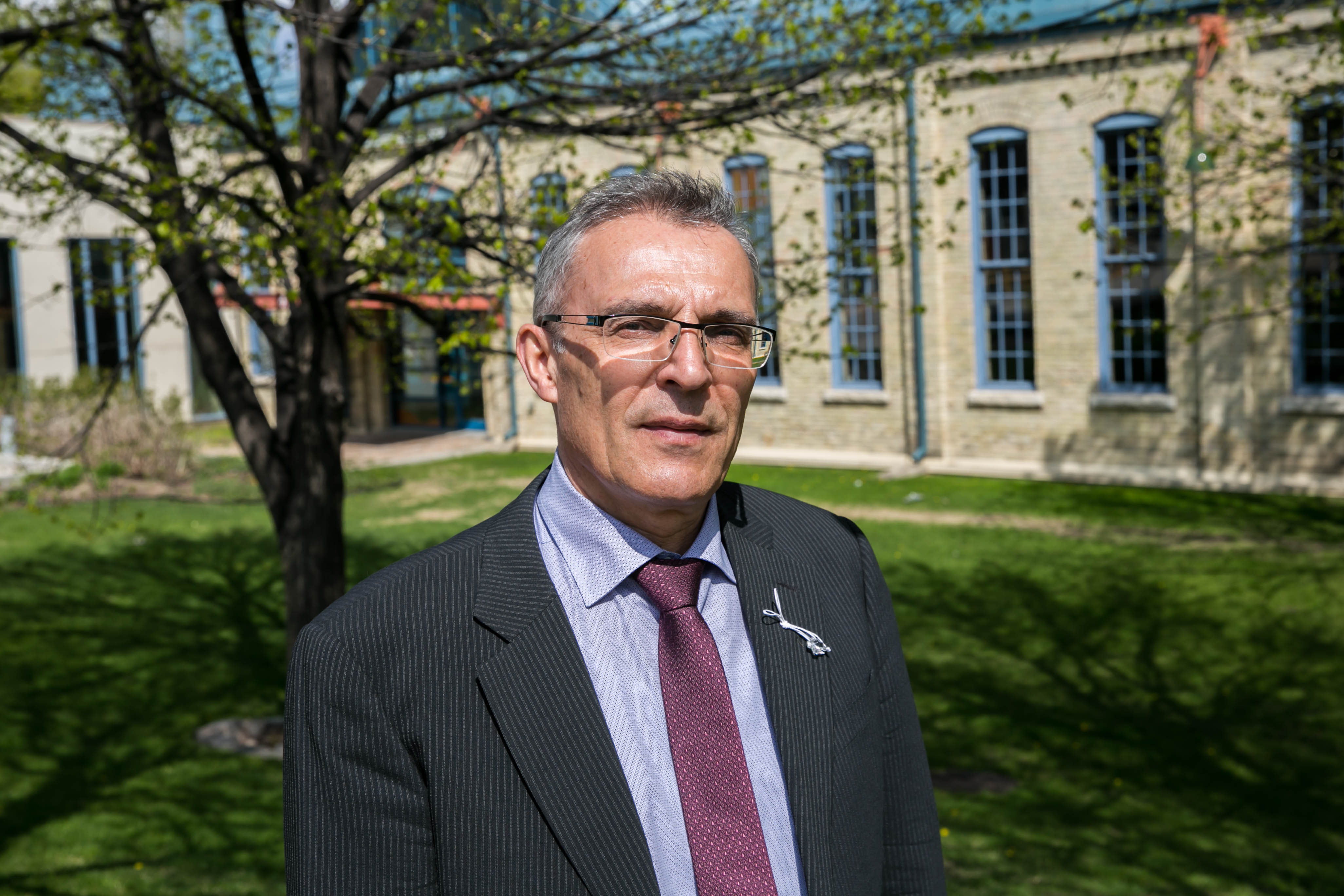
Apostolos Serletis is President of the Society for Economic Measurement and one of the world’s most eminent economists. His methodological and empirical innovations have advanced scholarship in several areas in the fields of macroeconomics and monetary economics. The result has been better measures of aggregated monetary services, better measures of productivity growth, and better estimation methods.
Apostolos Serletis est le président de la Society for Economic Measurement et l'un des économistes les plus éminents du monde. Ses innovations méthodologiques et empiriques ont fait progresser la recherche dans plusieurs domaines de la macroéconomie et de l'économie monétaire et ont permis le développement de meilleures mesures des services monétaires agrégés, de meilleures mesures de la croissance de la productivité et de meilleures méthodes d'estimation.
Dr. Barry Sessle
RSC Fellow, Academy of Sciences
Affiliation: University of Toronto
Keywords: Pain, neuroscience, motor control
BARRY JOHN SESSLE, Professor, Faculty of Dentistry and Department of Physiology, Faculty of Medicine, University of Toronto, has provided major insights into neural mechanisms underlying orofacial function and into the aetiology and treatment of several disorders of the face, mouth and jaws related to pain, chewing and swallowing. His extensive and pioneering studies have resulted in remarkable advances in knowledge of the central neural organization of the trigeminal system, specifically of the brainstem mechanisms involved in orofacial nociceptive transmission and its control and neuroplasticity, the brainstem pathways underlying orofacial motor behaviours such as chewing and swallowing, and the organization and role of the sensorimotor cerebral cortex in the initiation and regulation of these motor behaviours.
Suresh Sethi
RSC Fellow, Academy of Social Sciences
Affiliation: The University of Texas at Dallas
Keywords: Supply chain management with incomplete information, decision & forecast horizons, dynamic programming & optimal control, optimal investment /consumption problems with incomplete information
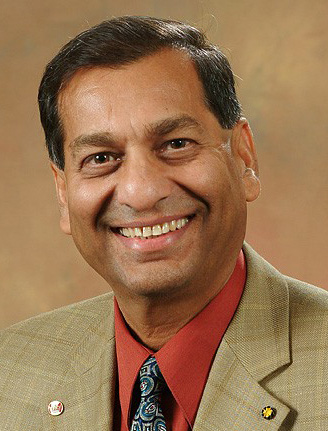
Suresh P. Sethi, Eugene McDermott Professor of Operations Management and Director of the Center for Intelligent Supply Networks at The University of Texas at Dallas, has established a distinguished international reputation in a number of distinct scientific communities.
Within the broad discipline of management, he has made pathbreaking contributions toward improving decision making in the functional areas of operations management, marketing, and finance, respectively, for his work in production planning and scheduling in manufacturing systems and inventory problem with incomplete information, dynamic control models in advertising and optimal consumption/investment problems. Within the broad discipline of industrial and systems engineering, he is world-renowned for his significant research on decision and forecast horizons in dynamic optimization problems, and on the development and use of optimal control theory to resolve important issues in management sciences.
He has written 7 books and published nearly 400 research papers in the fields of manufacturing and operations management, finance and economics, marketing, and optimization theory. He initiated and developed the doctoral programs in operations management at both University of Texas at Dallas and University of Toronto. He serves on the editorial boards of several journals including Production and Operations Management and SIAM Journal on Control and Optimization.
Sethi is a polymath and his contributions to knowledge have been recognized by honors that include General Motors Research Professorship at University of Toronto (1988-92), Erskin Fellow (New Zealand, 1991), C. Y. O'Connor Fellow (Australia, 1998), Fellow of The Royal Society of Canada (1994), Award of Merit of the Canadian Operational Research Society (1996), NYAS Fellow (1999), IC2 Institute Senior Research Fellow (2000), IEEE Fellow (2001), INFORMS Fellow (2003), AAAS Fellow (2003), POMS Fellow (2005), Distinguished Alum of Indian Institute of Technology, Bombay (2008), SIAM Fellow (2009), POMS President (2012), Alumni Achievement Award , Tepper School of Business, Carnegie Mellon University (2015). Two conferences were organized and two books edited in his honor in 2005 and 2006.
Prof. Bharati Sethi
RSC College Member
Affiliation: Trent University
Induction Year: 2025
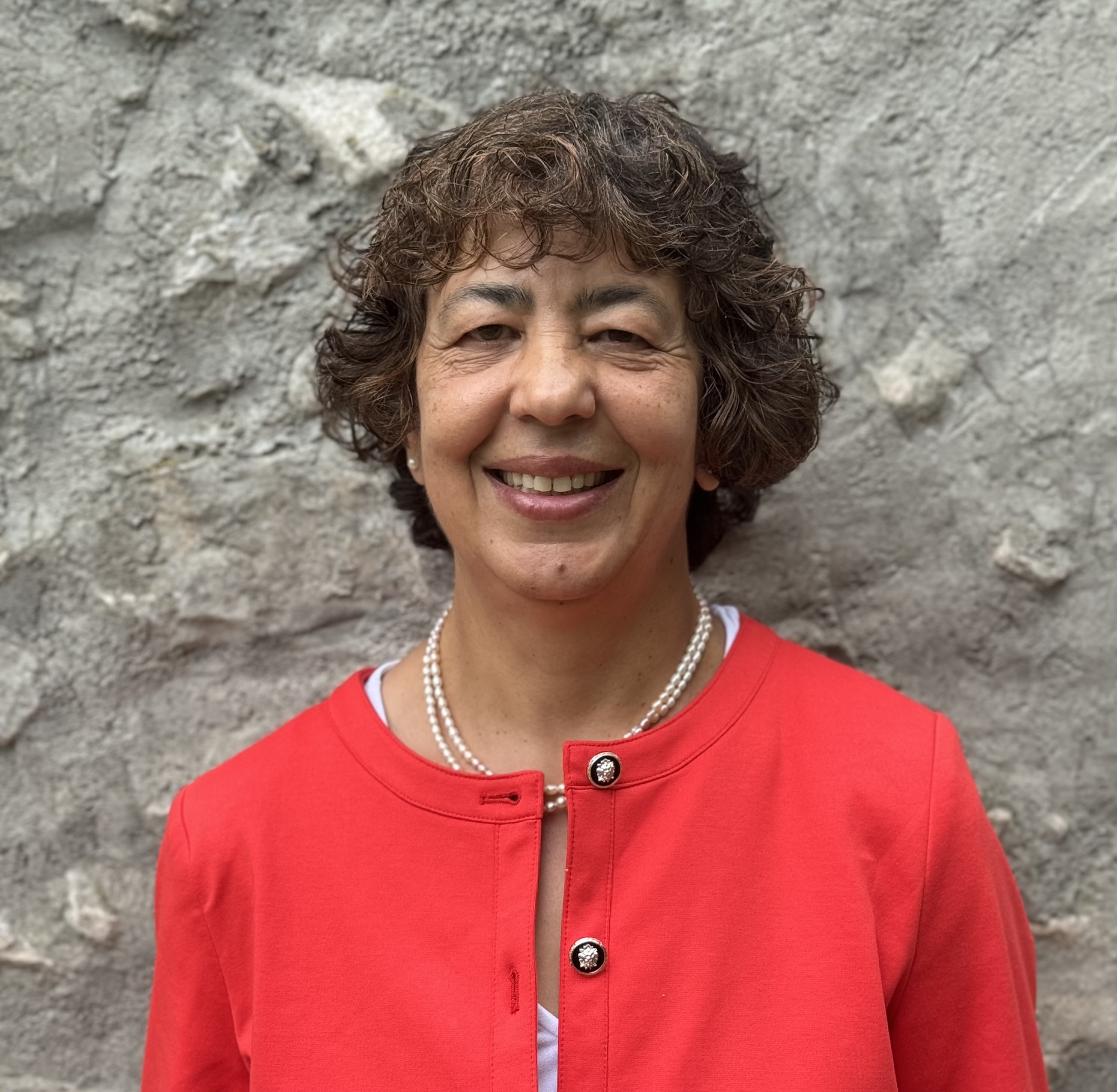
Bharati Sethi is a Canada Research Chair in Care Work, Ethnicity, Race and Aging at Trent University. She is renowned for her community-based arts-informed research projects that aim to promote the social, political, and economic inclusion of immigrants and refugees into Canadian society. Bharati has received prestigious academic and community awards in recognition of her pioneering work in fostering the resettlement of newcomers in small towns and rural regions.
Bharati Sethi est titulaire d’une Chaire de recherche du Canada sur les soins, l’ethnicité, la race et le vieillissement à Trent University. Elle est reconnue pour ses projets de recherche communautaires axés sur les arts, qui visent à promouvoir l’inclusion sociale, politique et économique des immigrants et des réfugiés au sein de la société canadienne. Mme Sethi a reçu de prestigieux prix universitaires et communautaires en reconnaissance de son travail novateur dans le domaine de l’aide à la réinstallation des nouveaux arrivants dans les petites villes et les régions rurales.
Prof. Ayelet Shachar
RSC Fellow, Academy of Social Sciences
Affiliation: University of Toronto
Keywords: citizenship; immigration
Induction Year: 2014
SHACHAR, Ayelet – Faculty of Law, University of Toronto
Ayelet Shachar has achieved international recognition for her innovative scholarship on citizenship and
multiculturalism. Her award-winning work combines methods and insights from law and political theory
with concrete, problem-solving institutional design. It has inspired a whole new generation of thinking
about how best to mitigate tensions between religious diversity and gender equality, as well as between citizenship
and global justice, and has proved influential in public policy debates in Canada and abroad.
HACHAR, Ayelet – Faculty of Law, University of Toronto
Ayelet Shachar a acquis une réputation internationale pour ses travaux sur la citoyenneté et le
multiculturalisme. Ces travaux, qui lui ont valu plusieurs distinctions, associent des méthodes et des
points de vue empruntés à la théorie du droit et de la politique et sont orientés vers la solution de
problèmes concrets au sein des institutions. Ils ont inspiré toute une nouvelle génération de chercheurs en
renouvelant la façon d’apaiser les tensions que provoquent la diversité religieuse et le principe d’égalité hommesfemmes,
de même que les relations entre les citoyens et le système judiciaire. Enfin, les travaux du professeure
Shachar se sont révélés utiles tant au Canada qu’à l’étranger lors des débats publics portant sur l’élaboration de
politiques.
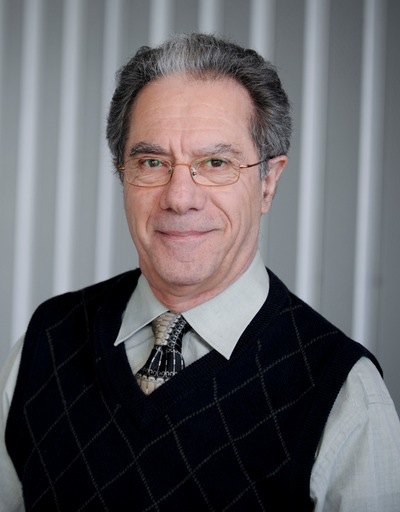
Dr. Lotfollah Shafai
RSC Fellow, Academy of Sciences
Affiliation: University of Manitoba
Keywords: Applied electromagnetics, radiating systems, antennas, microwaves, numerical computation
Lotfollah Shafai, Professor, Department of Electrical and Computer Engineering, University of Manitoba, has contributed significantly in two areas of Applied Electromagnetics and Radiating systems. He has developed a generalized transformation method that relates the geometry and material property of objects to their electromagnetic field. He has pioneered the special decomposition technique that is used widely for computation of large structure scattering. He has also developed numerous efficient computational algorithms for complex problems in corona remote sensing and layer media. In the area of radiating systems he has pioneered the development of high performance and miniaturized reflector antennas, has pioneered wideband conformal sensors and antennas and developed award winning CAD tools for modelling and design of both. He has also contributed significantly to the development of low loss arrays at extremely high frequencies and millimeter waves.
Dr. Jai Shah
RSC College Member
Affiliation: McGill University
Keywords: early intervention, psychosis, serious mental illness, youth mental health, mental health services, clinical staging
Induction Year: 2024
Jai Shah is Associate Professor at the Douglas Hospital and
McGill University. Working with a range of stakeholders, he is
an international leader in understanding trajectories from early
phases of mental health problems to severe mental illnesses
such as psychosis. His efforts have advanced transdiagnostic
perspectives and clinical staging in psychiatry, and are influencing the design
of early intervention and youth mental health service systems in Canada and
beyond.
Jai Shah, MD FRCPC, est professeur agrégé du Douglas
Hospital et de l’Université McGill. En collaboration avec
divers intervenants, il est un chef de file international dans la
compréhension des trajectoires depuis les phases précoces
des problèmes de santé mentale jusqu’aux maladies mentales
graves telles que la psychose. Ses travaux ont fait progresser les perspectives
transdiagnostiques et la stadification clinique en psychiatrie, et influencent
la conception des systèmes d’intervention précoce et des services de santé
mentale pour les jeunes au Canada et ailleurs.
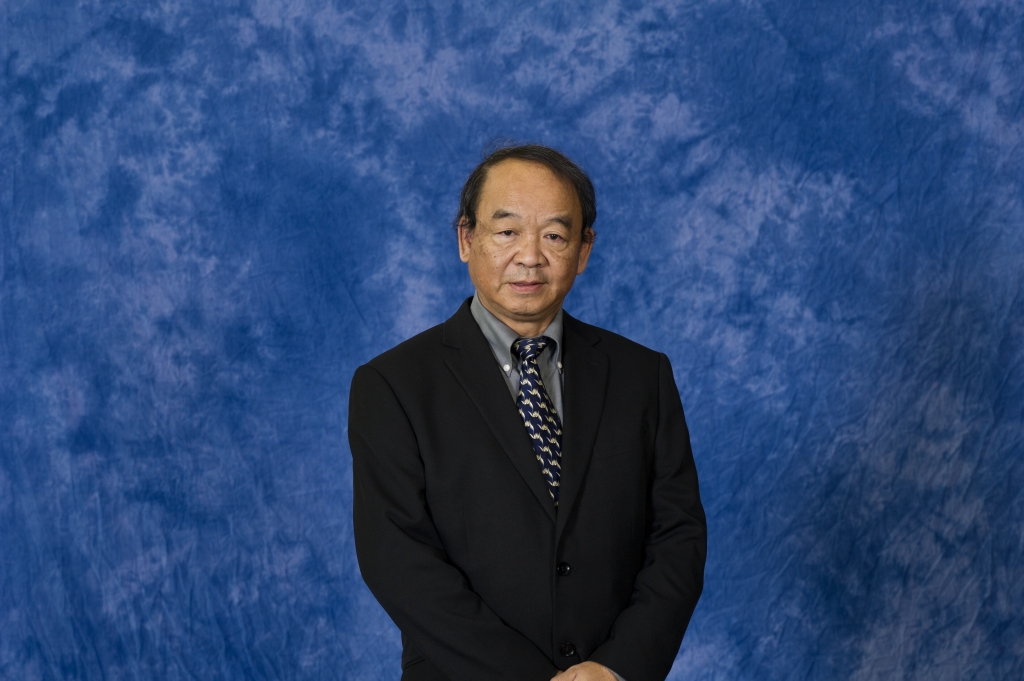
Dr. Tsun-Kong Kong Sham
RSC Fellow, Academy of Sciences
Affiliation: Western University
Keywords: materials, synchrotron radiation, x-rays
Induction Year: 2012
SHAM, Tsun-Kong - Department of Chemistry, Western University
For three decades, Prof. T.K. Sham has been a Canadian and international leader in the development and use of soft X-ray synchrotron techniques for the study of matter and has become internationally known for his unique studies of nanomaterials. He has developed three novel techniques: conductivity XAFS of liquids; x-ray excited optical luminescence (XEOL); and time-resolved XEOL (TRXEOL). The latter two have been applied to obtain unique structural and electronic information for a variety of technologically important materials.
SHAM, Tsun-Kong - Département de chimie, Western University
Au cours des 30 dernières années, le professeur Sham a été à l’avant-garde mondiale du développement et de l’utilisation des techniques des rayons X mous émis par synchrotron dans l’étude de la matière. Il a acquis une réputation mondiale par ses recherches sur les nanomatériaux. Il a mis au point trois nouvelles techniques : la conductivité XAFS pour les liquides, la luminescence optique excitée par les rayons X (XEOL), et la luminescence chronométrique (TRXEOL). Les deux dernières ont été mises en application pour obtenir des informations structurales et électroniques uniques pour plusieurs matériaux importants en technologie.
Prof. James Shapiro
RSC Fellow, Academy of Sciences
Affiliation: University of Alberta
Keywords: liver, transplantation, pancreatic cancer, diabetes
Induction Year: 2011
Prof. Azim Shariff
RSC College Member
Affiliation: University of British Columbia
Keywords: psychology, morality, religion, technology
Induction Year: 2024
Azim Shariff is a Professor and Canada 150 Research Chair in the
Department of Psychology at the University of British Columbia.
He is one of the world’s leading young scholars in the areas of
social psychology. He has gained international acclaim for his
research, which delves into subjects such as the connection between religion
and morality, and the way that people emotionally and intellectually react to
emerging technologies.
Azim Shariff est professeur, titulaire de la chaire de recherche
Canada 150 et éminent spécialiste de la psychologie morale. Ses
travaux ont permis de mieux comprendre le rôle que la religion
a joué dans la moralité humaine au fil du temps. Des recherches
plus récentes ont appliqué les connaissances de la psychologie morale à des
questions sociales modernes telles que la punition et l’inégalité économique,
ainsi qu’à des défis futurs tels que l’intelligence artificielle et la protection de
la vie privée.
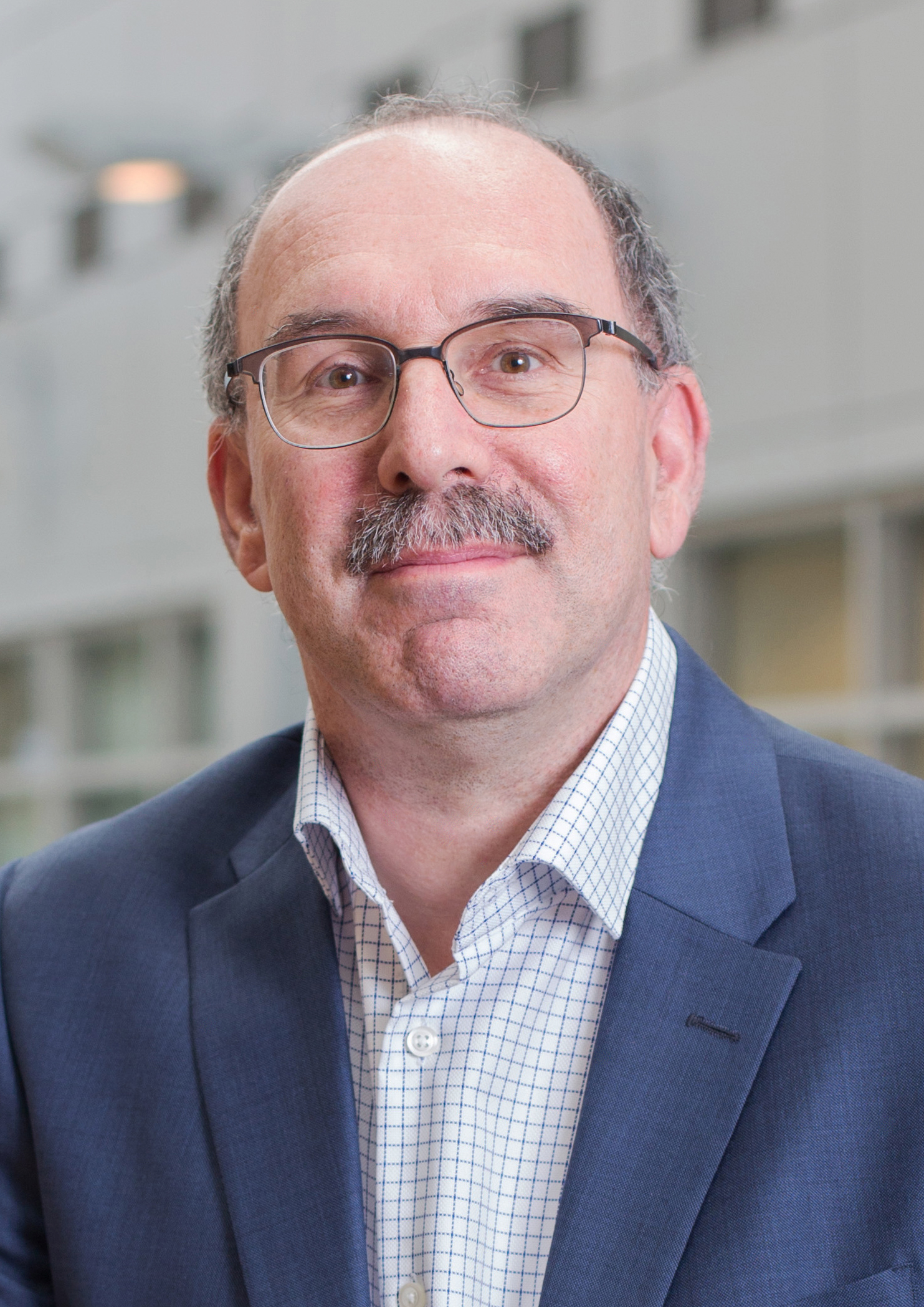
Dr. Keith Sharkey
RSC Fellow, Academy of Sciences
Affiliation: University of Calgary
Keywords: Gastrointestinal physiology, enteric nervous system, endocannabinoid system, myenteric plexus, brain-gut axis
Induction Year: 2024
Keith Sharkey has made outstanding contributions to understanding the neural control of the gastrointestinal tract and the brain-gut connection. His innovative research on enteric glia, and enteric neuroplasticity is recognized internationally and has led to new insights into the etiology of inflammatory bowel disease. He has made transformative discoveries on the role of the endocannabinoid system in the brain-gut axis. His findings will improve our ability to treat gastrointestinal disorders.
Keith Sharkey a apporté une contribution exceptionnelle à la compréhension du contrôle neuronal du tractus gastro- intestinal et du lien entre le cerveau et l’intestin. Ses recherches novatrices sur la glie entérique et la neuroplasticité entérique sont reconnues au niveau international et ont permis de mieux comprendre l’étiologie des maladies inflammatoires de l’intestin. Il a fait des découvertes révolutionnaires sur le rôle du système endocannabinoïde dans l’axe cerveau-intestin. Ses découvertes amélioreront notre capacité à traiter les troubles gastro-intestinaux.