

You are here
Prof. Julie Aitken Schermer
RSC Fellow, Academy of Social Sciences
Affiliation: Western University
Induction Year: 2025
Julie Aitken Schermer (formerly Harris) is an internationally recognized scholar in the psychological field of human individual differences. Her scholarship is focused on personality, loneliness, humour, intelligence, and vocational interests. She has demonstrated that loneliness has a genetic component, that there are environmental predictors of loneliness, including where people live and their activities, and that loneliness is strongly linked with personality and how people use humour. She has created a vocational interest scale for use in research and has demonstrated that many career interests have a genetic component and are associated with personality traits.
Julie Aitken Schermer (anciennement Harris) est une chercheuse de renommée internationale qui œuvre dans le domaine de la psychologie des différences individuelles chez l’humain. Ses travaux portent principalement sur la personnalité, la solitude, l’humour, l’intelligence et les intérêts professionnels. Elle a montré que la solitude a une composante génétique, qu’il existe des déterminants environnementaux de la solitude, notamment le lieu de résidence et les activités de la personne, et que la solitude est étroitement liée à la personnalité et à la façon dont les gens emploient l’humour. Elle a créé une échelle des intérêts professionnels à des fins de recherche et a démontré que de nombreux intérêts professionnels ont une composante génétique et sont associés à des traits de personnalité.
Dr. Ernesto L. Schiffrin
RSC Fellow, Academy of Sciences
Affiliation: McGill University
Keywords: Hypertension, vascular remodeling
Induction Year: 2006
Long Citation
Ernesto Schiffrin is one of the great clinical scientists in Canada, and a world leader in the field of the mechanisms and management of arterial hypertension. Amongst many contributions, he demonstrated that anti-hypertensive drugs interfering with the renin-angiotensin-aldosterone system correct blood pressure and the structural remodeling of resistance arterioles, and he showed the role of endothelin in this vascular remodeling. Dr. Schiffrin brings together a profound knowledge of molecular and clinical medicine. His fundamental work has been recognized amongst many honours by his election as President of the American Heart Association Council for High Blood Pressure Research.
Short Citation
Ernesto Schiffrin is one of the great clinical scientists in Canada, and a world leader in the field of the mechanisms and management of arterial hypertension. Amongst many contributions, he demonstrated that anti-hypertensive drugs interfering with the renin-angiotensin-aldosterone system correct blood pressure and the structural remodeling of resistance arterioles. He also showed the role of endothelin in this vascular remodeling.
Peter Schiller
RSC Fellow, Academy of Sciences
Affiliation: Université de Montréal
Keywords: Peptides, peptide hormones and neurotransmitters, analgesia, drug design, opioid peptides
Dr. Schiller is a world leader in peptide chemistry. He has developed new concepts in receptor-selective opioid analogs on the basis of the so-called membrane compartment concept. One of them, carrying a high positive charge, displayed unprecedented µ-selectivity is by far the most selective µ-agonist known to date and appears to have considerable potential for clinical applications. In 1987, he received the Max-Bergmann Medal which is one of the highest recognition in peptide research. He received the Galen Award (Prix Galien) for excellence in pharmaceutical research (1995), an NIH Merit Award (1997) and the Vincent du Vigneaud Award of the American Peptide Society (1998). He was elected a Fellow of The American Association of Pharmaceutical Sicentists in 1998. In 1999, he was appointed "officier" of the Ordre national du Québec".
Prof. Aaron Schimmer
RSC Fellow, Academy of Sciences
Affiliation: University of Toronto
Induction Year: 2023
Dr. Aaron Schimmer is an international authority in cancer research focused on blood cancers known as leukemia. Through multiple pioneering discoveries, he has demonstrated how
mitochondrial and metabolic pathways influence the development and progression of acute
myeloid leukemia. As a clinician-scientist, he has translated these breakthroughs into the clinic
by launching early phase clinical trials to evaluate new treatments for the disease.
Aaron Schimmer est une sommité internationale dans le domaine de la recherche sur les cancers sanguins, connus sous le nom de leucémies. Grâce à de nombreuses découvertes pionnières, il a démontré l’influence des voies mitochondriales et métaboliques sur le développement et la progression de la leucémie myéloïde aiguë. En tant que clinicien-scientifique, il a lancé des essais cliniques de phase précoce pour évaluer de nouveaux traitements de la maladie.
Dr. Benjamin Schlesinger
RSC Fellow, Academy of Social Sciences
Affiliation: University of Toronto
Keywords: Families, Canadian, in transition, seniors, to the future
Professor Schlesinger has published, and continues to publish, extensively in Family Welfare and has an international reputation unparalleled in Canada for his contributions to the literature on issues such as multi-problem families, sociocultural aspects of family life, the Jewish family, sexuality and the family, patterns of marriage and remarriage, single parent families, child abuse and elder abuse, and the 'sandwich generation'.
He has done original research; reviewed the literature; published widely in books, chapters, articles, and the media; presented seminars, workshops, scholarly lectures, and public lectures; and fostered interest and scholarship on issues that have since become matters of wide interest and concern.
He is the author/editor of 23 books.
Prof. Thomas Schlich
RSC Fellow, Academy of the Arts and Humanities
Affiliation: McGill University
Keywords: History of Medicine, history of science, history of technology, history of surgery
Induction Year: 2019
SCHLICH, Thomas – Social Studies of Medicine, McGill University
Thomas Schlich is an eminent scholar in the history of modern surgery. His research has examined the rationale for surgery—why surgeons open the body—and the techniques they developed to do so—how they do it. Schlich’s work thus elucidates the history of medical innovation in its scientific, intellectual and social context, including organ transplants, metal implants in fracture treatment and minimally invasive surgery.
Thomas Schlich est un éminent chercheur en histoire de la chirurgie moderne. Ses recherches portent sur la logique de la chirurgie – les raisons pour lesquelles les chirurgiens ouvrent le corps – et sur les techniques développées à cette fin – les manières dont ils le font. Ses travaux éclairent ainsi l’histoire de l’innovation médicale dans ses contextes scientifique, intellectuel et social, y compris les transplantations d’organes, les implants métalliques dans le traitement des fractures et la chirurgie non effractive.
Prof. Adolphe Schluter
RSC Fellow, Academy of Sciences
Affiliation: The University of British Columbia
Keywords: Evolutionary biology, ecology
Induction Year: 2001
Dolph Schluter is Canada's foremost evolutionary biologist. He developed the analytical tools for measuring natural selection surfaces. His field studies showed that species occupy peaks on selection surfaces corresponding to features of environment, and that resource competition promotes peak shifts in adaptive radiation. He demonstrated that speciation in nature was caused by divergent natural selection, and that adaptive divergence is biased in the direction of maximum genetic variance within populations.
Prof. Louis Schmidt
RSC Fellow, Academy of Social Sciences
Affiliation: McMaster University
Keywords: temperament, socioemotional development, risk, early adversity, culture, mental health
Induction Year: 2025
Louis Schmidt is the Science Research Chair in Early Determinants of Mental Health and a Pickering Award recipient. He is an internationally recognized expert in socioemotional development who has championed the importance of viewing personality development and developmental risk through individual, familial, and cultural lenses. His innovative interdisciplinary approach has transformed our understanding of socioemotional development across the lifespan, reduced stigma around mental illness, and challenged cultural stereotypes.
Louis Schmidt est titulaire de la chaire de recherche scientifique sur les déterminants précoces de la santé mentale et lauréat du prix Pickering. Il est un expert reconnu sur le plan international dans le domaine du développement socioémotionnel qui a défendu l’importance de considérer le développement de la personnalité et le risque de développement à travers un prisme individuel, familial et culturel. Son approche interdisciplinaire innovante a transformé notre compréhension du développement socioémotionnel tout au long de la vie, réduit la stigmatisation de la maladie mentale et remis en question les stéréotypes culturels.
Dr. Bonnie Schmidt
RSC Fellow, Academy of Sciences
Affiliation: Western University
Keywords: science promotion, STEM outreach, learning and engagement, leadership, youth education, public outreach
Induction Year: 2018
SCHMIDT, Bonnie - Department of Science, Engineering, Social Sciences, Health Sciences, Western University
Bonnie Schmidt, the founder of “Let’s Talk Science”, is a pioneer in science education for Canadian school children and teachers. Due to Bonnie’s drive and exceptional dedication, the initiative she started as a graduate student over 20 years ago is now a multi-dimensional national programme, providing over six million Canadian children, regardless of gender, race or social standing, the opportunity to develop their skills in problem solving and critical thinking.
Bonnie Schmidt, fondatrice de Parlons sciences, est une pionnière au chapitre de la formation scientifique s’adressant aux enfants, aux adolescents et aux enseignants d’un bout à l’autre du pays. Grâce à son dynamisme et à son dévouement, l’initiative qu’elle a lancée alors qu’elle terminait ses études universitaires il y a plus de 25 ans s’est transformée en un organisme de bienfaisance d’envergure nationale qui a déjà touché près de sept millions de Canadiens. Parlons sciences suscite l’intérêt de tous les jeunes indépendamment de leur sexe, de leurs antécédents culturels ou de leur situation géographique, les aidant à développer les compétences et les attitudes dont ils auront besoin pour répondre aux exigences professionnelles et citoyennes d’un monde en rapide évolution.
Dr. Morris Schnitzer
RSC Fellow, Academy of Sciences
Affiliation: Agriculture and Agrifood Canada
Keywords: Bio oil, bio diesel, mass spectrometry, NMR, nanochemistry
Dr. M. Schnitzer is the leading world authority on soil organic matter, with emphasis on chemical structure of humic substances, mechanisms of interactions of humic materials with metals and minerals, and the isolation and identification of complex nitrogen compounds from soils. From extensive chemical and spectroscopic studies, he established a novel structural concept for humic materials. His research findings, embodied in 340 refereed papers and a textbook, have had an enormous impact on world agricultural production and environmental protection. In addition, he has edited two books and trained and inspired soil scientists worldwide. His contribution has been recognized by Fellowships in the CSSS, SSSA and the ASA, and the Wolf Prize in 1996.
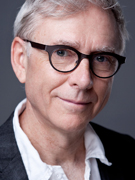
Stephen Schofield
RSC Fellow, Academy of the Arts and Humanities
Affiliation: Université du Québec à Montréal
Keywords: arts visuels, sculpture
Induction Year: 2015
SCHOFIELD, Stephen – Arts visuels et médiatiques, Université du Québec à Montréal
Professor and renowned artist for the variety and the quality of his practice namely in sculptures, Stephen
Schofield has lead an exceptional career for over thirty years in Canada and abroad. Considered as one the
most important artists who have transformed Canadian contemporary sculpture, his works are exhibited
in the most famous museums, galleries and artist centres in Canada.
SCHOFIELD, Stephen – Arts visuels et médiatiques, Université du Québec à Montréal
Professeur et artiste reconnu pour la richesse et la variété de sa pratique, notamment en sculpture, Stephen
Schofield mène une carrière remarquable depuis trente ans au Canada et à l’étranger, notamment à New
York et Paris. Considéré comme l’un des artistes canadiens ayant le plus transformé le paysage de la
sculpture contemporaine au Canada, ses oeuvres sont exposées dans les plus importants musées, galeries et centres
artistiques au pays.
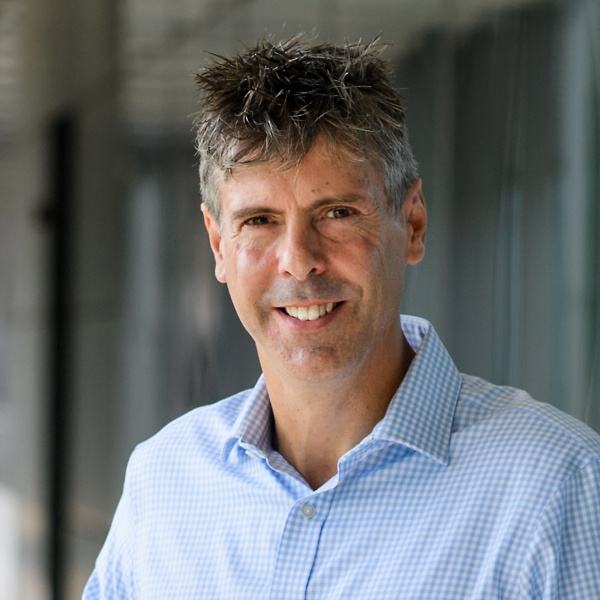
Prof. Gregory Denton Scholes
RSC Fellow, Academy of Sciences
Affiliation: University of Toronto
Keywords: nanoscience, spectroscopy, photovoltaics, photosynthesis, ultrafast dynamics
Induction Year: 2009
Greg Scholes is an international leader in the study of how light interacts with complex nanoscale systems. His principle contributions include the elucidation of mechanisms by which the energy of light absorbed by a molecule can be transferred efficiently to other molecules; a process predominant in photosynthetic antenna systems and organic light-emitting diodes.
------------------
SCHOLES, Gregory –Department of Chemistry, University of Toronto
Greg Scholes is an international leader in the study of how light interacts with complex nanoscale systems. His principle contributions include the elucidation of mechanisms by which the energy of light absorbed by a molecule can be transferred efficiently to other molecules; a process predominant in photosynthetic antenna systems and organic light-emitting diodes. In other work he has contributed to our comprehension of the basic electronic and optical properties of semiconductor nanocrystals, where new viewpoints needed to be elucidated to extrapolate our understanding between molecules and bulk semiconductors.
Prof. Gary J. Schrobilgen
RSC Fellow, Academy of Sciences
Affiliation: McMaster University
Keywords: Fluorine chemistry, main-group inorganic chemistry, noble-gas compounds, high oxidation state compounds, structure and bonding, transition-metal coordination chemistry
Gary John Schrobilgen, Department of Chemistry, McMaster University, has made important contributions in two major areas of main-group inorganic chemistry: fluorine chemistry and the polyatomic anions of the main-group elements. He is best known for his outstanding contributions to the experimentally challenging field of fluorine chemistry, encompassing the syntheses and structural characterization of a significant number of the known compounds of the noble gases as well as fluoro- and oxofluoro-derivatives of the main-group and transition elements in their highest oxidation states and at the limits of coordination. He is particularly known for the syntheses of new xenon-nitrogen bonds and for the first krypton-nitrogen and krypton-oxygen bonds and for his application of multi-nuclear magnetic resonance (NMR) and Raman spectroscopy and X-ray crystallography to the elucidation of the structures of highly unstable compounds. His work has been of importance in our understanding of structure and chemical bonding in so-called "hypervalent" molecules and in main-group ring, cage and cluster molecules.
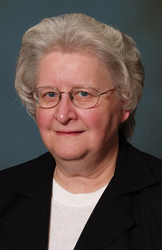
Prof. Eileen Schuller
RSC Fellow, Academy of the Arts and Humanities
Affiliation: McMaster University
Induction Year: 2015
SCHULLER, Eileen – Department of Religious Studies, McMaster University
Eileen Marie Schuller holds the Senator William McMaster Chair in Social Sciences. Dr. Schuller is
Canada’s pre-eminent scholar of the Dead Sea Scrolls. One of only a handful of international researchers
responsible for the Scrolls’ initial decipherment and publication, she has been instrumental in educating
other scholars and the general public about the Scrolls and their significance.
SCHULLER, Eileen – Department of Religious Studies , McMaster University
Eileen Marie Schuller occupe la Senator William McMaster Chair en sciences sociales. Madame Schuller
est une éminente spécialiste des manuscrits de la mer Morte au Canada. Elle est l’une des rares
chercheures au monde qui est responsable du déchiffrement initial et de la publication des manuscrits, et
elle a joué un rôle important auprès d’autres chercheurs et du grand public pour les sensibiliser aux manuscrits et à
leur signification.
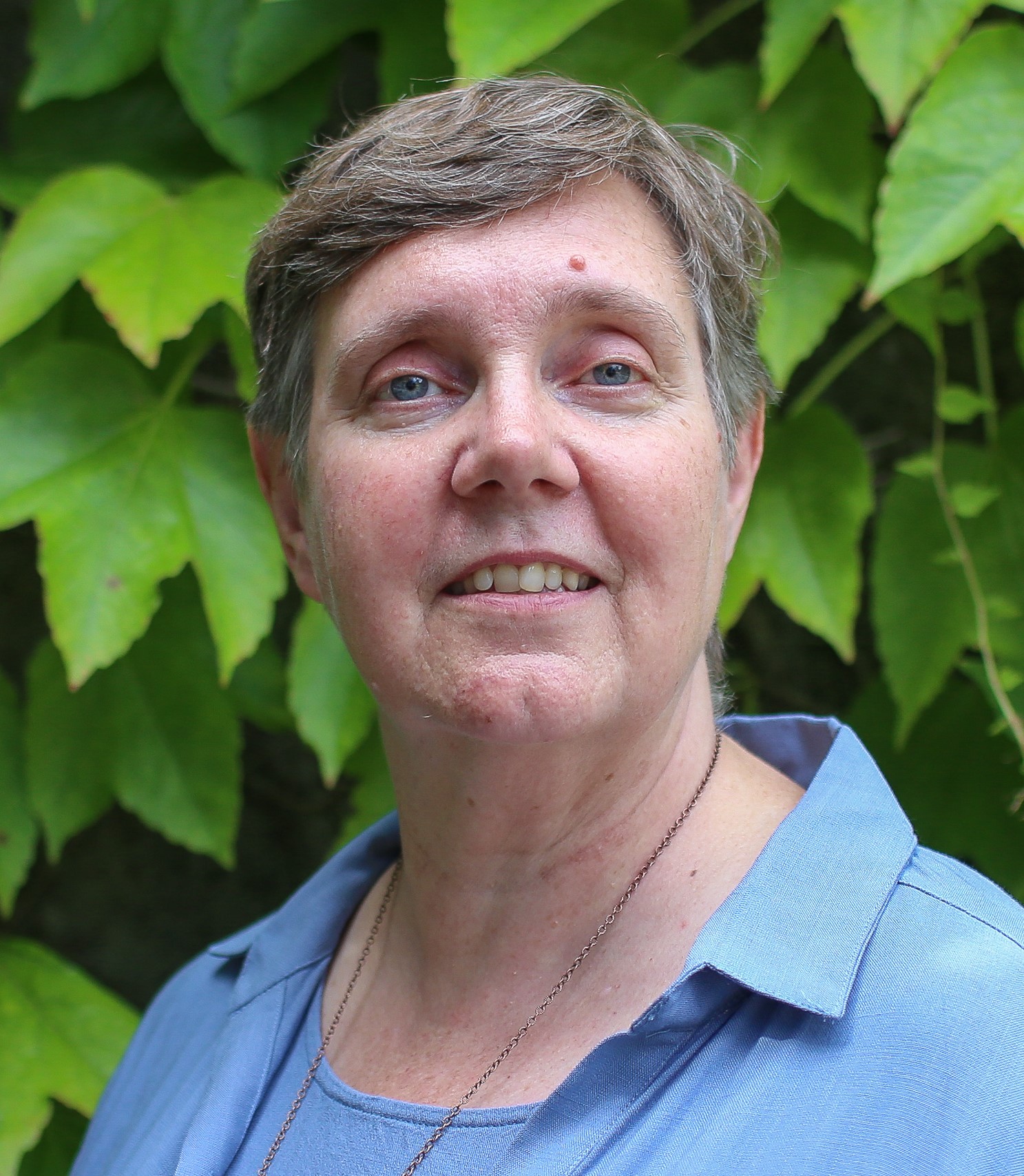
Dr. Patricia M. Schulte
RSC Fellow, Academy of Sciences
Affiliation: The University of British Columbia
Keywords: Environment, Adaptation, Fish, Genomics
Induction Year: 2019
SCHULTE, Patricia M. – Department of Zoology, The University of British Columbia
Patricia Schulte is a world-leading authority in evolutionary physiology. She is internationally recognized for her work linking genomics, epigenomics, biochemistry and physiology to assess the performance of fishes in a changing environment. Her pioneering work on the molecular mechanisms that underlie inter-individual variation in resilience to environmental change has had significant implications for both the conservation of natural fish populations and aquaculture in a changing world.
Patricia Schulte est une spécialiste mondiale dans la physiologie évolutive. Elle est reconnue internationalement pour ses travaux associant la génomique, l’épigénomique, la biochimie et la physiologie afin d’évaluer l’évolution des poissons dans un environnement changeant. Ses travaux novateurs sur les mécanismes moléculaires sous-tendant les variations interindividuelles de la résilience aux changements environnementaux ont eu des implications importantes pour la conservation des populations naturelles des poissons et pour l’aquaculture dans un monde en mutation.
Dr. Elisabeth Schulze-Busacker
RSC Fellow, Academy of the Arts and Humanities
Affiliation: Università Degli Studi Di Pavia
Keywords: Médiévistique, langues et littératures romanes, ancien et moyen français;; ancien occitan, philologie, française, parémiologie romane, romance philology
Elisabeth Schulze-Busacker est une médiéviste de réputation internationale qui occupe, en raison de l'éminente qualité de ses travaux, une position de premier ordre au plan de la recherche. Grâce à une triple formation en philologie française et romane, en littératures romanes et germaniques et en histoire, elle a pu orienter sa recherche aussi bien vers la littérature médiévale (française et occitane) et l'histoire des mentalités que vers la parémiologie ou étude des proverbes médiévaux. Les spécialistes d'Amérique et d'Europe sont unanimes à rendre hommage à l'originalité de sa recherche, à sa rigueur méthodologique et à son sens de l'innovation.
Dr. Henry Schwarcz
RSC Fellow, Academy of Sciences
Affiliation: McMaster University
Keywords: Geochemistry, archaeological science, paleoclimate, bone
H.P. Schwarcz has made numerous and brilliant contributions to geochemistry, quaternary geology and archaeology. Oxygen, sulphur and carbon isotope ratios have been used to interpret the history of metamorphic rocks, sulphide ores and, more recently, cave deposits. The innovative analysis of speleotherm growth rings to measure past climatic temperature, when caves were forming, led him to search for a way to measure their age. This was achieved in the establishment of the first Canadian uranium-series dating laboratory, leading to a series of articles with students and collaborators (notably D.C. Ford) recording climate changes back through the Pleistocene. These successes led in turn to his current collaborations with archaeologists, measuring critical deposits and artifacts to establish an absolute time scale for human pre-history. He has a wide diversity of interests and brings a fertile creative mind and a warm human enthusiasm to all his activities.
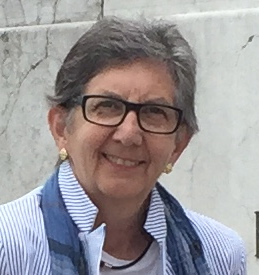
Prof. Joan M Marsha Schwartz
RSC Fellow, Academy of the Arts and Humanities
Affiliation: Queen's University
Keywords: archives, historical geography, History of Photography
Induction Year: 2016
SCHWARTZ, Joan M. – Department of Art History and Art Conservation, Queen’s University
Joan M. Schwartz is an internationally recognized photographic historian, archival theorist, and historical geographer. As the leading authority on early photography in Canada, and an advocate of its importance to archival collections, she has pioneered new understandings of photographs as spaces of power and sites of knowledge production. Her research challenges traditional approaches to photographs in historical analysis and provides creative strategies for scholarly engagement with visual images across a range of disciplines.
Joan M. Schwartz est historienne de la photographie, théoricienne archiviste et géographe historienne internationalement reconnue. En tant que sommité des premières photographies au Canada et pionnière de la défense de leur importance pour les collections archivistiques, elle a développé de nouvelles interprétations de photographies en tant qu’espaces de pouvoir et lieux de production de savoir. Ses recherches remettent en question les approches traditionnelles des photographies en matière d’analyse historique et fournissent des stratégies créatives pour l’engagement intellectuel avec des images visuelles dans un éventail de disciplines.
Prof. Marlis Schweitzer
RSC College Member
Affiliation: York University
Keywords: performance
Induction Year: 2019
Marlis Schweitzer’s award-winning scholarship explores the dynamic relationships that shaped performance culture in Canada, the US, and Britain in the long nineteenth century. Since graduating in 2005, she has held multiple SSHRC grants, published two monographs, edited three essay collections, and helmed two major journals. Between 2016-18, she served as President of the Canadian Association for Theatre Research. She is currently the chair of the Department of Theatre at YorkU.
Marlis Schweitzer explore les relations dynamiques qui ont façonné la culture de la performance au Canada, aux États-Unis et en Grande-Bretagne au cours du XIXe siècle et ses recherches ont remporté de nombreux prix. Depuis l’obtention de son diplôme en 2005, elle a reçu de nombreuses bourses du CRSH, publié deux monographies, édité trois recueils d’essais et dirigé deux revues importantes. De 2016 à 2018, elle a été présidente de l’Association canadienne de la recherche théâtrale. Elle dirige actuellement le département de théâtre de l’Université York.
Dr. Stephen Scobie
RSC Fellow, Academy of the Arts and Humanities
Affiliation: University of Victoria
Keywords: Canadian, poetry, interdisciplinary, modernism, cubism
Dr. Scobie is a distinguished critic of Canadian literature, and is also a recipient of the Governor-General's award for poetry. Much of his work concentrates on areas where literature intersects with other forms of discourse, including Cubist painting, popular song, and the writings of the theoretician, Jacques Derrida. In five important book-length studies, Dr. Scobie deals with a wide range of Canadian authors, whom he places in an international context through a comprehensive vision of developments in modem culture since the 1920's. There is a strong coherence between his criticism and the eighteen volumes of poetry he has published to date. He is also an energetic and effective ambassador for Canadian literature, especially in Europe.
Dr. Shannon Dawn Scott
RSC Fellow, College Members
Affiliation: University of Alberta
Keywords: child health, knowledge translation, research-to-practice, evidence-based practice
Induction Year: 2015
Shannon Scott is a leader in ensuring that research informs children’s healthcare. Outstanding contributions include leading the largest needs assessment of Canadian emergency departments, developing the first Canadian pediatric nursing textbook, and engaging healthcare consumers to co-design arts-informed knowledge tools. Leading a large knowledge translation program, Dr. Scott is an in-demand researcher who serves on several national peer-review committees and holds the Canada Research Chair in Knowledge Translation in Children's Health.
Shannon Scott est un chef de file déterminée d’assurer que la recherche favorise les soins de santé des enfants. Ses contributions exceptionnelles comprennent diriger la plus grande évaluation des besoins dans les services d’urgence au Canada, développer le premier manuel de soins pédiatriques canadien, et d’engager les consommateurs des services de santé de concevoir les connaissances fondés sur les arts. Dirigeant un vaste programme d’application des connaissances, Dr. Scott est une chercheuse très sollicitée. Elle siège à plusieurs comités par les pairs nationaux et elle est titulaire de la Chaire de recherche du Canada en l’application des connaissances en soins de santé des enfants.
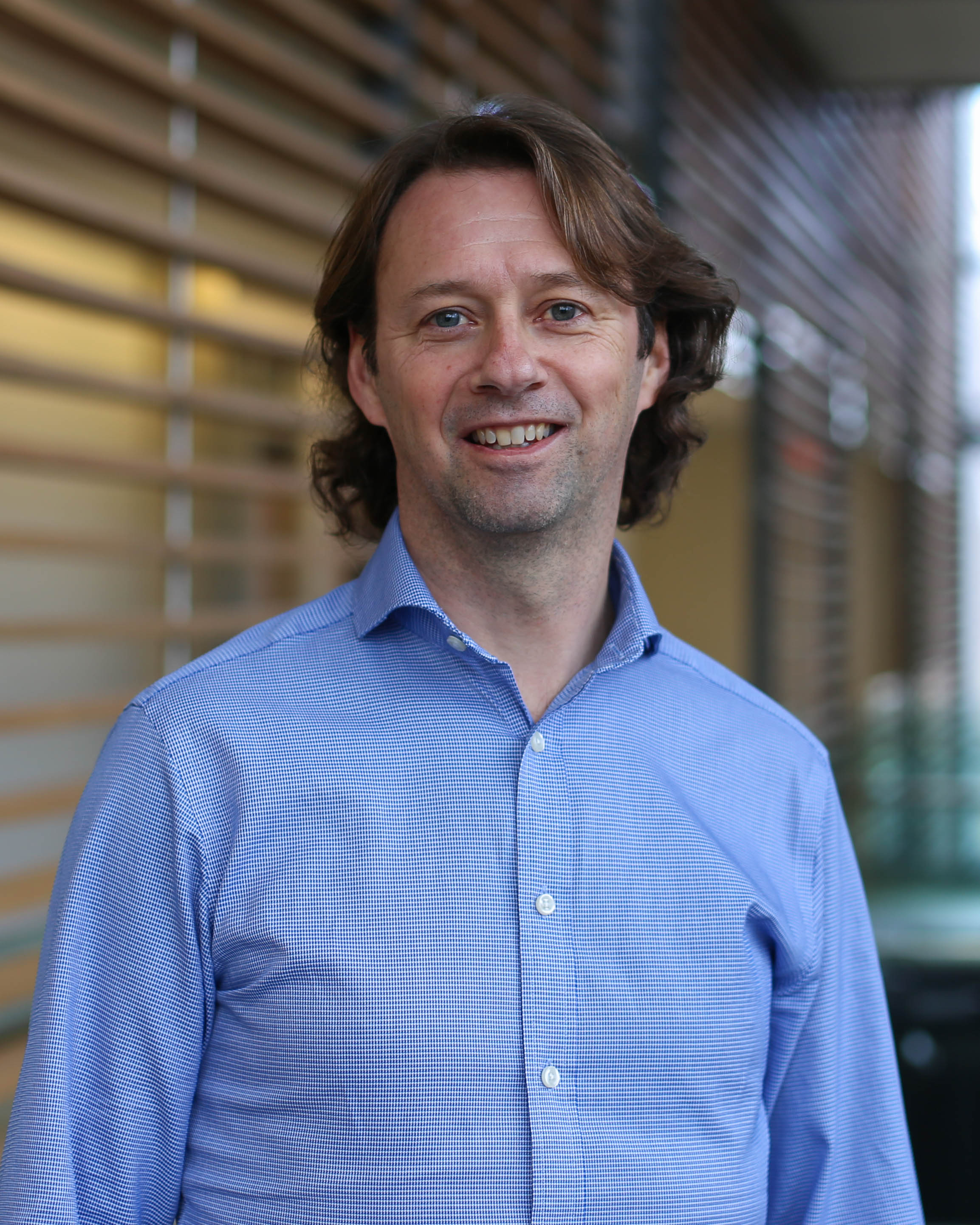
Stephen Scott
RSC Fellow, Academy of Sciences
Affiliation: Queen's University
Induction Year: 2022
Professor Stephen Scott from Queen’s University is a world leader in the computational, neural, mechanical and behavioural aspects of voluntary motor control. He invented Kinarm, interactive robotic technologies that provide unprecedented experimental control over arm motor function, which he has used to transform our understanding of the intimate link between cortical circuits and limb biomechanics. Kinarm robots are now widely used around the world to quantify brain function and dysfunction.
Le professeur Stephen Scott de l’Université Queen’s est un chef de file mondial dans les domaines computationnel, neural, mécanique et comportemental du contrôle moteur volontaire. Il a inventé Kinarm, des technologies robotiques interactives qui fournissent un contrôle expérimental sans précédent sur la fonction motrice du bras, qu'il a utilisé pour transformer notre compréhension du lien intime entre les circuits corticaux et la biomécanique des membres. Les robots Kinarm sont maintenant largement utilisés dans le monde pour quantifier les fonctions cérébrales et les dysfonctionnements.
Prof. Daniel Scott
RSC Fellow, Academy of Social Sciences
Affiliation: University of Waterloo
Induction Year: 2023
Daniel Scott is a globally recognized and respected researcher regarding sustainable tourism and climate change. He has influenced policy outcomes at municipal, provincial, national and global scales, in many countries and regions, and is recognized as one of most prolific, cited and internationally connected scholars in his field. His research also has been reported in media around the world (eg., NY Times, Wall Street Journal, The Economist, BBC, NBC).
Daniel Scott est un chercheur respecté et reconnu sur le plan international dans le domaine du tourisme durable et du changement climatique. Il a influencé les résultats des politiques à l'échelle municipale, provinciale, nationale et mondiale, dans de nombreux pays et régions. Il est reconnu comme l'un des chercheurs les plus prolifiques, les plus cités et les plus connectés à l'international dans son domaine. Ses recherches ont également fait l'objet d'articles dans les médias du monde entier (par exemple dans le NY Times, Wall Street Journal, The Economist, BBC, NBC).
Geoffrey Scudder
RSC Fellow, Academy of Sciences
Affiliation: The University of British Columbia
Keywords: Biodiversity, conservation, biosystematics, entomology
Geoffrey Scudder is the world's authority on the lygaeid bugs, a family of insects that includes some of the world's most damaging agricultural pests. He has studied these insects in all the major museums, and has himself collected them on four continents. This work in systematics and distribution is only part of the much broader interest in the mechanism of organic evolution, where his studies include the adaptive mechanism of corixid bugs living in saline lakes, the functional morphology of the flight muscles, and the evolutionary significance of cardiac glycosides - brightly coloured poisonous compounds which some bugs sequester from plants and use as warning colours. Professor Scudder is recognized as an outstanding and knowledgeable teacher both in the University and community; he is one of Canada's most dedicated and productive zoologists.